


This book examines the evolution and application of direct metallization in PCB fabrication, highlighting its emergence as a reliable alternative to traditional electroless copper processes. Drawing on decades of advancements in chemistry and equipment, the author explores how modern PCB complexity—driven by multilayer designs and high-performance demands—requires greater precision in hole formation and metallization. The book takes a comprehensive approach, covering drilling, desmear, process optimization, and integration with electrolytic copper plating. It also addresses sustainability advantages, including reduced resource consumption and hazardous materials, while evaluating reliability and performance considerations critical to both fabricators and OEMs.
ISBN: 978-1-959894--26-1
POD ISBN: 9781959894278
Carmichael Gugliotti is a seasoned technical leader in the advanced materials and electronics manufacturing industries. In his current role, he oversees the development, launch, and commercial implementation of next-generation primary metallization chemistries and processes that enable high-performance printed circuit boards.
Over the course of his 12-year career at MacDermid Alpha Electronics Solutions, Gugliotti has been a key driver of innovations such as Shadow® Plus, a cutting-edge graphite-based direct metallization technology designed to replace traditional electroless copper for making holes conductive. Before serving as a Line of Business Director, he worked as a product manager, applications manager, applications specialist, and chemist focused on acid copper plating solutions. He has authored multiple papers on metallization and holds a patent for through-hole filling.
Beyond product leadership, Gugliotti’s role requires deep expertise in plating chemistry, process engineering, and application support. He connects R&D, manufacturing, sales, and customer support to ensure that innovative metallization solutions meet rigorous performance, yield, and cost standards in practical production settings.
With an MBA from Quinnipiac University and a Bachelor of Chemistry from the University of Connecticut, the author brings a strong focus on sustainability, process efficiency, and customer-centric innovation to his work and is passionate about advancing electronics manufacturing toward greener, more reliable, and higher-density solutions.
MacDermid Alpha Electronics Solutions, a business unit of Element Solutions Inc, is a global leader in high-performance specialty chemicals, materials, and process technologies for every stage of the electronics manufacturing process. With expertise spanning circuitry formation, wafer-level packaging, circuit board assembly, semiconductor assembly, and film and smart surfaces, MacDermid Alpha delivers advanced, sustainable, and integrated solutions that drive innovation and reliability across the electronics supply chain. Operating worldwide and backed by more than a century of innovation, the organization supports a broad range of industries including automotive, consumer electronics, data infrastructure, high-performance computing, and telecommunications enabling next-generation electronics.
For more information, visit macdermidalpha.com
 Jerry Magera Senior Principal Product Development Engineer, RTX
 Michael (Mike) Carano Consultant, Industry Intelligence and Technology Solutions, Global Electronics Association
 Venkat Raja President & Founder, Advint, Inc.
Chapter Summaries
-
Chapter 1
The History of Metallization
This chapter traces the evolution of metallization in PCB fabrication, from early electroless copper processes to modern direct metallization technologies.
-
Chapter 2
Drilling and Desmear
The author examines the critical role of drilling and desmear in preparing PCB substrates for metallization, detailing both mechanical and laser drilling methods and their associated challenges.
-
Chapter 3
Making Holes Conductive: Electroless Copper
This chapter details the electroless copper process for primary metallization, explaining its chemistry, steps, and reliability as the dominant method for making PCB holes conductive.
-
Chapter 4
Making Holes Conductive: Direct Metallization
Direct metallization uses carbon or graphite coatings to enable copper plating with fewer steps, offering improved efficiency, material compatibility, and sustainability over electroless copper.
-
Chapter 5
Sustainability
This chapter highlights how direct metallization improves PCB sustainability by reducing water, energy, chemicals, waste, and emissions compared to electroless copper, supporting cost savings and environmental goals.
-
Chapter 6
Direct Metallization and Periodic Pulse Reverse Plating in Through-Holes
Here, the author demonstrates that pulse plating improves throwing power, reduces copper usage and costs, increases throughput, and maintains equivalent reliability performance.
-
Chapter 7
Direct Metallization and Microvias
This chapter explains microvia plating, highlighting via-fill chemistry, design challenges, and reliability, showing full via-fill with direct metallization improves performance and reduces defects in high-density PCBs.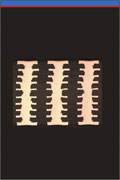
-
Chapter 8
Direct Metallization Reliability
PCB reliability testing includes assembly and life testing to simulate manufacturing and use conditions; results show direct metallization meets or exceeds electroless copper reliability across multiple tests.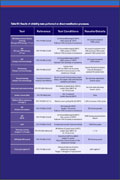
-
Chapter 9
A PCB Fabricator's Guide to Direct Metallization
PCB demands are evolving with advanced technologies like AI and HPC, requiring improved metallization; direct metallization enables higher reliability, finer features, and more sustainable, efficient manufacturing processes.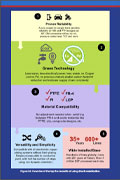
-
Chapter 10
An OEM's Guide to Direct Metallization
This chapter guides OEMs on adopting direct metallization, emphasizing sustainability, reliability, and supply chain influence, highlighting their critical role in driving industry adoption of advanced PCB manufacturing processes.
Print-on-demand paperbacks are available for this title. Click below to order from our distributor.
What Our Readers Are Saying
Sustainability and reliability go hand in hand in printed circuit board fabrication.
Mike Carano, Consultant, Global Electronics Association
Gugliotti provides the critical technical validation required to transition from conventional electroless copper to the proven reliability of direct copper-to-copper bonding.
Venkat Raja, President & Founder, Advint, Inc.
Carmichael Gugliotti’s book offers a clear and practical perspective on direct metallization for today’s innovators working to advance PCB technology.
Jerry Magera, Sr. Principal Engineer, RTX