


The Printed Circuit Assembler's Guide to... Via Structures: Reflow Process Survivability, Reliability, and Robustness challenges long-held assumptions about how the electronics industry evaluates PCB via structures. Drawing on decades of experience, Bob Neves distinguishes three often-confused concepts—process survivability, reliability, and robustness—and explains why each requires a different testing strategy. The book demonstrates why assembly process survivability must be validated before reliability testing begins, examines the limitations of traditional microsection analysis and daisy chain testing, and introduces performance-based assessment methods capable of detecting failures as they develop rather than after they occur. Readers gain a practical understanding of modern test methodologies, including real-time electrical monitoring, the HATS² test system, and single via structure testing, while learning how these approaches improve statistical confidence and reveal failure mechanisms hidden by conventional techniques. Combining technical depth with practical guidance, the book provides engineers and manufacturers with a roadmap for evaluating today's increasingly complex via structures with greater accuracy and confidence.
ISBN: 978-1-959894-29-2
ISBN: 978-1-959894-30-8
 Bob Neves is chair and CTO of Reliability Assessment Solutions Inc., manufacturer of HATS², a via structure and solder joint reliability and robustness tester, and founder of Microtek Laboratories, an independent test facility with operations in California and Jiangsu, China. He previously served as president of IRTS, manufacturer of the original HATS tester.
A recognized leader in the electronics industry, Neves is a past chair of the Global Electronics Association (formerly IPC) Board of Directors and a member of its Hall of Fame, the association’s highest lifetime honor. He has also received the President’s Award and the Dieter Bergman Fellowship Award for his outstanding industry contributions.
Throughout his career, Neves has chaired numerous Global Electronics Association committees and task groups and has participated in more than 50 technical committees. Internationally, he chaired IEC TC91 Working Group 10 on Printed Wiring Test Methods.
Neves has authored dozens of technical papers and articles on reliability, testing, and failure analysis, contributed the PCB Acceptability section to the sixth edition of Coombs’ Printed Circuits Handbook, and has taught industry courses and consulted extensively on electronic systems reliability.
About Reliability Assessment Solutions Inc.
Reliability Assessment Solutions (RAS) is a specialized electronics reliability company focused on helping manufacturers evaluate the robustness and long-term performance of electronic products and systems. Founded by industry expert Robert Neves, the company combines consulting, test equipment manufacturing, and intellectual property development to support reliability engineering and failure prevention in the electronics industry. RAS is best known for its HATS² test system, designed to identify circuit interconnection and isolation failures through advanced thermal and electrical bias testing methods. The company provides tools and methodologies used to assess product durability, reliability, and failure mechanisms in printed circuit boards and electronic assemblies. Drawing on decades of industry leadership and technical expertise, RAS supports engineers and manufacturers in improving product quality, reducing field failures, and enhancing overall system performance. Its work emphasizes practical reliability testing techniques that help companies develop more robust and dependable electronic products. For more information about Reliability Assessment Solutions Inc. visit Reliability-Assessment.com.
For more on the HATS² Test System itself—including coupon designs, test profiles, and licensing for the patented HATS² Single Via Coupon—visit www.HATS-Tester.com.
 Dennis Fritz President, Fritz Consulting
Dennis Fritz is a veteran electronics industry professional with more than 50 years of experience in printed circuit boards, semiconductor materials, and defense electronics manufacturing. Now a part-time consultant, he focuses on the reliable manufacture of defense electronics using modern [...]
 Todd MacFadden Senior Technology Development Engineer, Bose
Todd MacFadden is a principal development engineer at Bose, where he has worked for 21 years. He supports the evaluation and adoption of new microelectronic technologies for wearable products, and he leads technical evaluations of competitors’ products. Prior to Bose, MacFadden worked for 10 years [...]
Chapter Summaries
-
Chapter 1
The Three R's: Reflow Process Survivability, Reliability, and Robustness
Introduces the critical distinction between reflow process survivability, reliability, and robustness, explaining why each requires different test methods and why confusing the three leads to inaccurate assessments and costly engineering decisions.
-
Chapter 2
What High Reliability Means When It Comes to Via Structures
Examines how modern electronics have transformed the meaning of "high reliability," arguing that legacy qualification methods no longer adequately evaluate today's advanced via structures, materials, and operating environments.
-
Chapter 3
Robustness Testing: Faster Than Real Life, and Sometimes Misleading
Explains the purpose and limitations of robustness testing, showing how accelerated testing effectively compares materials and processes while cautioning against using robustness data to predict real-world product life.
-
Chapter 4
Reflow Process Survivability: The Test That Has to Come First
Demonstrates why reflow simulation must precede all reliability and robustness testing, emphasizing that meaningful reliability assessment begins only after a PCB has survived the thermal stresses of assembly.
-
Chapter 5
The Microsection: Still Useful, No Longer the Reliability Tool It Once Was
Reassesses the role of microsection analysis, showing its continued value for construction verification and failure analysis while explaining why performance-based testing provides a more accurate assessment of modern via reliability.
-
Chapter 6
Performance-Based Assessment: The HATS² Test System
Introduces the HATS² test system as an integrated platform for survivability, reliability, and robustness testing, highlighting its ability to monitor via performance in real time with greater speed, precision, and statistical confidence.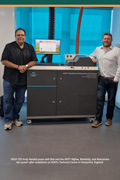
-
Chapter 7
Daisy Chains: What They See, What They Miss
Explains the strengths and limitations of daisy-chain testing, demonstrating why traditional chain measurements often miss early-stage via degradation and are better suited to detecting fully developed failures.
-
Chapter 8
Single Via Structure Testing: Watching the Failure Begin
Presents single via structure testing as a breakthrough methodology that enables engineers to detect failure initiation, improve statistical sampling, and combine single via and daisy chain approaches for more complete reliability assessment.
Print-on-demand paperbacks are available for this title. Click below to order from our distributor.
What Our Readers Are Saying
If you are looking to better understand the factors that influence long-term microvia performance and PCB quality, read this book.
Dennis Fritz, Fritz Consulting
With this book, Bob Neves provides an important update to our understanding of via testing by articulating the distinction between their reliability and robustness.
Todd MacFadden, Bose