










 It’s Only Common Sense: Leadership Isn’t a Democracy—Stop Running Your Company by Committee
 The Marketing Minute: New Year, New Marketing Momentum
 Punching Out: Former Owners Talk About Life After Selling





Optic Nerve Stimulation to Aid the Blind
August 21, 2019 | EPFLEstimated reading time: 2 minutes
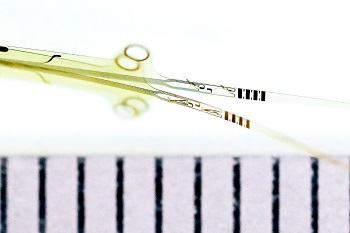
Scientists from EPFL in Switzerland and Scuola Superiore Sant’Anna in Italy are developing technology for the blind that bypasses the eyeball entirely and sends messages to the brain. They do this by stimulating the optic nerve with a new type of intraneural electrode called OpticSELINE. Successfully tested in rabbits, they report their results in Nature Biomedical Engineering.
“We believe that intraneural stimulation can be a valuable solution for several neuroprosthetic devices for sensory and motor function restoration. The translational potentials of this approach are indeed extremely promising,” explains Silvestro Micera, EPFL’s Bertarelli Foundation Chair in Translational Neuroengineering, and Professor of Bioelectronics at Scuola Superiore Sant’Anna, who continues to innovate in hand prosthetics for amputees using intraneural electrodes.
Blindness affects an estimated 39 million people in the world. Many factors can induce blindness, like genetics, retinal detachment, trauma, stroke in the visual cortex, glaucoma, cataract, inflammation or infection. Some blindness is temporary and can be treated medically. How do you help someone who is permanently blind?
The idea is to produce phosphenes, the sensation of seeing light in the form of white patterns, without seeing light directly. Retinal implants, a prosthetic device for helping the blind, suffer from exclusion criteria. For example, half a million people worldwide are blind due to retinitis pigmentosa, a genetic disorder, but only a few hundred patients qualify for retinal implants for clinical reasons. A brain implant that stimulates the visual cortex directly is another strategy albeit risky. A priori, the new intraneural solution minimizes exclusion criteria since the optic nerve and the pathway to the brain are often intact.
Previous attempts to stimulate the optic nerve in the 1990s provided inconclusive results. EPFL’s Medtronic Chair in Neuroengineering Diego Ghezzi explains, “Back then, they used cuff nerve electrodes. The problem is that these electrodes are rigid and they move around, so the electrical stimulation of the nerve fibers is unstable. The patients had a difficult time interpreting the stimulation, because they kept on seeing something different. Moreover, the cuff electrodes probably had limited selectivity because they recruited superficial fibers.”
Intraneural electrodes may indeed be the answer for providing rich visual information to the subjects. They are also stable and less likely to move around once implanted in a subject, according to the scientists. Cuff electrodes are surgically placed around the nerve, whereas intraneural electrodes pierce through the nerve.
Together, Ghezzi, Micera and their teams engineered the OpticSELINE, an electrode array of 12 electrodes. In order to understand how effective these electrodes are at stimulating the various nerve fibers within the optic nerve, the scientists delivered electric current to the optic nerve via OpticSELINE and measured the brain’s activity in the visual cortex. They developed an elaborate algorithm to decode the cortical signals. They showed that each stimulating electrode induces a specific and unique pattern of cortical activation, suggesting that intraneural stimulation of the optic nerve is selective and informative.
As a preliminary study, the visual perception behind these cortical patterns remains unknown. Ghezzi continues, “For now, we know that intraneural stimulation has the potential to provide informative visual patterns. It will take feedback from patients in future clinical trials in order to fine-tune those patterns. From a purely technological perspective, we could do clinical trials tomorrow.”
With current electrode technology, a human OpticSELINE could consist of up to 48-60 electrodes. This limited number of electrodes is not sufficient to restore sight entirely. But these limited visual signals could be engineered to provide a visual aid for daily living.
Share on:


Testimonial
"Your magazines are a great platform for people to exchange knowledge. Thank you for the work that you do."
Simon Khesin - Schmoll MaschinenSuggested Items
On the Line With… Releases Episode 11: Beyond UHDI—The Future of PCB Technology
12/10/2025 | I-Connect007I-Connect007 is pleased to announce the release of Episode 11 of On the Line With… American Standard Circuits: Ultra HDI. In this episode, host Nolan Johnson continues his conversation with ASC’s John Johnson, turning the spotlight toward the next decade of PCB innovation and what lies beyond today’s breakthroughs in Ultra High Density Interconnect (UHDI).
Learning With Leo: What Is the Cost of Quality Brought About by Training?
12/03/2025 | Leo Lambert -- Column: Learning With LeoIn electronics manufacturing, conversations about training often revolve around one narrow question: What does it cost? Training requires time, materials, instructor fees, and occasionally travel. Under tight budget constraints, it is understandable that organizations scrutinize these expenses. However, this perspective misses a far more important and financially meaningful point: What is the cost of quality brought about by training? Framed differently: What does it cost when training does not occur?
Power Integrity: Effective Decoupling Radius
11/26/2025 | Kirk Fabbri, Siemens EDAPower delivery on modern systems is an important and challenging problem facing hardware designers. These challenges are even more apparent as device operating speeds and current demands increase. Modern FPGAs, processors, and other devices feature fast switching currents and demand precise voltage levels.
Inside the Machine: Power Electronics Driving the Road to Reliability
11/21/2025 | Stanton Rak, SF Rak CompanyThe silent, seamless propulsion of an EV masks the incredible complexity and engineering finesse required to make it all happen. Beneath the vehicle’s floor or under its hood lies a dense cluster of power electronics systems comprised of coordinated, high-performance modules that collectively control, convert, and condition energy from the battery to the wheels. These systems not only govern how smoothly an EV accelerates or how efficiently it uses its charge but also play a defining role in the long-term reliability, safety, and serviceability of the vehicle.
Enhancing Reliability in Harsh Environments
11/18/2025 | Real Time with...SMTAISLB is a leading technology OEM in the energy sector, providing technology, equipment, and services to support oil exploration, drilling, production, and processing. This is big business, and the technology can be complex. Chintan Sanghani—a new voice in SMT007 Magazine—is SLB’s expert in quality and process improvement, and I had the opportunity to meet him while in Chicago in October.