















 The Marketing Minute: If Your Marketing Budget Gets Cut in Half, Then What?
 Punching Out: How Are the Big Boys in Electronics Doing?
 It’s Only Common Sense: Complexity Is the Enemy of Profit





Webinar Review, Part 2: Building the AI Backbone at IBM on Systems-level Packaging
April 20, 2026 | Marcy LaRont, I-Connect007Estimated reading time: 3 minutes
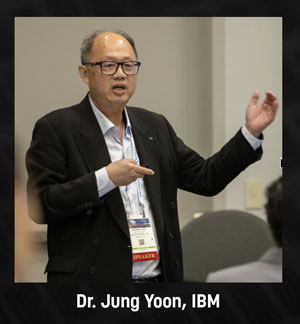
The second presentation in a recent Global Electronics Association’s Executive Pulse webinar series widened the lens on advanced packaging, moving beyond the component level to a systems-level view of how AI is reshaping the electronics landscape. Building on Dr. Hemanth Dhavaleswarupu of AMD’s previous discussion of chip-level packaging innovation, Dr. Jung Yoon of IBM explored the broader infrastructure implications, from the data center floor to the global supply chain.
At the center of this transformation is the explosive growth of large language models. These workloads are driving unprecedented demand for compute capacity, both for training and inference, and the scale of investment is rising just as quickly. Projections point to more than $500 billion in spending on AI-optimized data centers in 2026. Adoption is accelerating across industries such as healthcare, finance, legal services, and e-commerce, where AI is rapidly becoming embedded in everyday operations.
But the infrastructure challenge extends far beyond processors. Modern AI systems must also support massive storage hierarchies and high-speed networking to efficiently move and process enormous datasets. Yoon said that the AI buildout has become a full-stack engineering problem, spanning silicon, packaging, interconnect (PCB and PCBA), power delivery, and cooling.
To frame these pressures, he outlined six foundational pillars shaping AI infrastructure development: performance, system resilience, quality and reliability, security, power consumption and sustainability, supply chain resilience, and cost. Performance remains the primary driver, enabled by advanced silicon nodes, heterogeneous integration, and the bandwidth scaling delivered by high-bandwidth memory and next-generation interconnect standards. Density is equally critical, as AI platforms require the highest-capacity DRAM, flash, and I/O to meet low-latency training and inference requirements. At the same time, reliability, security, lifecycle management, and economics are becoming defining constraints as AI systems scale into mainstream deployment.
From a technology standpoint, silicon scaling continues aggressively toward 2 nm and below, but packaging has become a defining enabler of progress. The industry’s shift to 2.5D and 3D heterogeneous integration, advanced interposers, and emerging substrate approaches, such as glass, is now central to sustaining bandwidth and performance gains as traditional scaling slows.
A major theme of the presentation was the need for system-level co-optimization. Historically, chip, package, and system development could proceed sequentially, with designs handed off downstream. In today’s AI environment, the interactions among silicon, packaging, PCBs, mechanical constraints, and thermal solutions are far too complex for siloed approaches. Future progress will require integrated chip-to-system methodologies that optimize across the entire stack.
Power and cooling challenges illustrate this shift clearly. GPU-driven AI workloads are pushing power densities beyond the limits of air cooling, accelerating the transition toward liquid-cooled architectures. Advanced packaging also introduces new thermal complexity, particularly as high-bandwidth memory stacks evolve from today’s HBM3E deployments toward future HBM4 configurations with even greater capacity and bandwidth. These advances raise the importance of new materials, improved thermal interfaces, and robust cooling strategies. At the same time, the rapid expansion of AI infrastructure is creating growing concerns about electrical grid capacity and long-term sustainability.
Yoon also mapped the essential building blocks of AI systems, spanning compute, memory, storage devices, power subsystems, copper and optical interconnect, PCB and PCBA technologies, cooling, and advanced assembly and test. Copper, which addresses both supply chain resilience and cost constraints, remains vital for short-reach, low-latency connectivity, while optical solutions and co-packaged optics are gaining importance for efficiently scaling bandwidth at the system level.
Finally, the presentation highlighted AI-driven manufacturing as a key accelerator for the electronics industry. Machine learning is increasingly being applied to simulation, inspection, defect detection, and process control to improve yield, accelerate product ramps, and meet the throughput demands of AI infrastructure growth.
The AI era represents both an extraordinary opportunity and a profound systems-level challenge. Continued progress will depend on holistic innovation across silicon, packaging, component- and system-level interconnect, power, cooling, manufacturing, and resilient supply chains, all supported by the talent and investment needed to sustain this historic expansion.
Share on:



Subscribe
Stay ahead of the technologies shaping the future of electronics with our latest newsletter, Advanced Electronics Packaging Digest. Get expert insights on advanced packaging, materials, and system-level innovation, delivered straight to your inbox.
Subscribe now to stay informed, competitive, and connected.
Suggested Items
I-Connect007 Announces Upcoming Issue of Advanced Electronics Packaging Digest
05/13/2026 | I-Connect007The next issue of Advanced Electronics Packaging Digest examines the materials, architectures, and integration strategies shaping the next phase of electronics innovation, from reinforcement materials under thermal and frequency pressure to heterogeneous integration and advanced packaging as a system-level scaling factor.
ASE, WUS Announce Strategic Collaboration to Build Advanced AI Packaging Hub in Kaohsiung
05/08/2026 | ASE GroupAdvanced Semiconductor Engineering, Inc. (ASE) and WUS Printed Circuit Co., Ltd. (WUS) announced today a strategic collaboration for the construction of a state-of-the-art manufacturing facility in the Nanzih Technology Industrial Park, Kaohsiung.
SEMI 3D & Systems Summit to Advance AI, Hybrid Bonding, and Chiplet Ecosystem
05/06/2026 | SEMIGlobal experts in advanced semiconductor packaging and 3D integration will convene at the annual SEMI 3D & Systems Summit, June 17–19, 2026, in Dresden, Germany.
AI Interconnect Boom Drives Southeast Asia Outsourcing Expansion
05/05/2026 | TrendForceGlobal shipment volume of optical transceivers is projected to more than triple from 26.5 million units in 2023 to over 92 million units by 2026, according to TrendForce’s latest AI infrastructure research.
U.S. Semiconductor Industry Convenes at Glass4Chips Summit
05/04/2026 | NY CREATESThe 2026 Glass4Chips Summit will bring together leaders and innovators across industry, academia, and government to address a framework for accelerating the adoption of glass substrates in next-generation semiconductor manufacturing and packaging.