












 It’s Only Common Sense: When the Cheapest Board Becomes the Most Expensive
 The Chemical Connection: Employee and Operator Empowerment in the Age of AI
 The Big Picture: Not One, But Three Grey Rhinos





What makes an intelligent apartment socially competent, allowing it to provide optimal support to its guests? Researchers at Bielefeld University’s Cluster of Excellence Cognitive Interaction Technology (CITEC) have been investigating this question in a large-scale project.
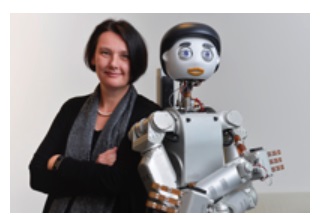
Image caption: Prof. Dr. Britta Wrede, from the Cluster of Excellence CITEC, is one of leaders on this project, which networks Floka the robot – pictured here with a “social head” – with a smart apartment. Photo: CITEC/Bielefeld UniversityProf. Dr. Britta Wrede, from the Cluster of Excellence CITEC, is one of leaders on this project, which networks Floka the robot – pictured here with a “social head” – with a smart apartment. Photo credit: CITEC/Bielefeld University
The main result of this project has been the creation of an intelligent apartment in the CITEC building, which can be used around the clock as a research apartment. Among the innovations developed by the researchers include an “emotional” robot head, a sound-based energy consumption notification system, and a light signaling system in the kitchen. The project, called the “caring apartment,” will officially be concluded at the end of October. The researchers have presented the results of their project in the previous at the international conference “Human Agent Interaction” (HAI), which has been held at CITEC. A new video gives a glimpse into the research on the cognitive robot service apartment.
A new video presents the intelligent apartment at the CITEC building
“In this project, we have been researching how humans interact with an intelligent apartment in their everyday lives. How they can connect and communicate with it – and how a robot can help with this,” says CITEC researcher Professor Dr. Britta Wrede, who heads the project together with Privatdozent Dr. Sven Wachsmuth and Dr. Thomas Hermann. “The apartment adjusts to different situations and is not limited to individual services. This concept of flexible learning makes the apartment special,” explains the computer scientist.
Floka the Robot and its Facial Expressions
A central part of the project is the service robot Floka. CITEC researchers connected it to the apartment’s sensors and control system. This allows the apartment to immediately direct the robot to where its assistance is needed. The robot’s head is exchangeable and perceives both color and depth. Floka’s “social head” was specially developed at CITEC, and it enables the robot to react to its human counterpart with facial expressions. “This form of body language ensures that what Floka says is more easily subconsciously understood by people,” says Dr. Sven Wachsmuth. According to studies at CITEC, a robot with emotional facial expressions is more readily accepted by humans as an assistant or conversation partner than a robot with a rather technical appearance.
“The robot doesn’t just provide assistance. It also serves as a ‘contact person’ for guests so that they can speak to the apartment,” says Britta Wrede. “Otherwise, the users would just have to speak into the room – and this feels unnatural to many people.” Another contact person in the apartment is Flobi, who is actually also a robot. In the apartment, Flobi appears as an avatar (virtual character) on display screens. Flobi greets guests and helps them find their way around the kitchen.
Page 1 of 2