















 Flex Connections: Four Lessons in Engineering Judgment for PCB Designers
 Flexible Thinking: ‘Let There Be Light’–Emitting Diodes!
 Target Condition: Flex and Rigid-flex Solutions in A&D Display Electronics





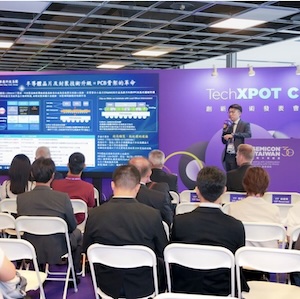
Artificial intelligence (AI) is expanding rapidly, with almost no field left untouched by the wave of computing power-driven transformation. At the SEMICON Taiwan 2025 Innovation Technology Conference on Sep 11, Allen Chien, Senior Manager of Zhen Ding Technology Holding Co., Ltd., highlighted that global computing power is expected to surge nearly a hundredfold by 2030 compared to 2021. This growth is driving cloud service providers to invest heavily in AI servers and data centers. This infrastructure race is not only accelerating the advancement of the semiconductor industry but also underscoring the indispensable role of PCBs in the era of computing power.
As Moore’s Law approaches its limits, breakthroughs in computational performance increasingly rely on advanced packaging and heterogeneous integration. Most mainstream high-performance computing chips now adopt multi-chip module designs, integrating logic computing units, high-bandwidth memory, and other components closely on the same substrate. This approach shortens signal transmission distances, reduces power consumption, and enhances computing efficiency. Such technological evolution has transformed PCBs from merely serving as signal transmission and structural support components into the core backbone determining system performance.
With the growing importance of PCBs, material and process advancements are progressing at an unprecedented pace. For instance, high-end IC substrates require low dielectric constant and low-loss characteristics, with line width and spacing shrinking to below 5μm. Warpage control and thermal management of large-sized substrates have also become critical to ensuring reliability. Additionally, the push for high-speed transmission in server platforms is driving the evolution of CCL materials from Mid Loss to Super Ultra Low Loss to support advanced applications like PCIe 6.0 and DDR5. The demand for enhanced high-speed computing capabilities is also making multi-process integration designs, such as HDI+HLC, increasingly common.
As the world’s largest PCB manufacturer, Zhen Ding, under its "One ZDT" strategy, has long been committed to full-process and full-product-line deployment. This approach has not only built a solid foundation but also endowed the company with exceptional process integration capabilities to meet diverse customer needs across various application scenarios. Moreover, Zhen Ding actively promotes AI-driven automated production and smart manufacturing, enabling more precise process management and higher production yields to meet the stringent demands of advanced processes.
As AI reshapes the industry landscape, PCBs have become a strategic component supporting the core of computing power. Leveraging its profound technological expertise and scale advantages, Zhen Ding is accelerating its expansion from traditional PCB domains into semiconductors, solidifying its irreplaceable role in the era of computing power.


