





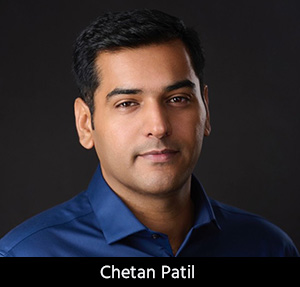







I-Connect007 Announces Newest Columnist Chandra Gupta of Remtec
February 12, 2026 | I-Connect007 Editorial TeamEstimated reading time: 1 minute
I-Connect007 is excited to announce its latest columnist, Chandra Gupta, whose new column, Below the Surface, will explore what truly determines performance in advanced electronic packaging, long before a product ever reaches assembly or test.
Gupta is a seasoned practitioner who cuts through industry buzzwords to explain how substrate physics, materials, and manufacturing realities actually govern performance in high-reliability electronics. With a sharp focus on substrates, ceramics, and packaging fundamentals, he will guide readers inside the package to examine how early engineering decisions shape RF behavior, thermal management, reliability, and long-term system performance.
Drawing on his experience at Remtec, a leader in advanced ceramic substrates and metallized circuit solutions, Gupta brings a calm, authoritative voice to complex topics that are often misunderstood or oversimplified. Each installment returns to first principles, reinforcing a core truth of advanced electronics: performance is engineered, layer by layer, decision by decision.
Below the Surface will speak to engineers, managers, and decision-makers alike. More than learning what works, you’ll understand why it works, where assumptions quietly break down, and how choices made early and often invisibly in the design process define success or failure downstream.
The column will address high-reliability markets where credibility is earned through experience, clarity, and respect for physics. Below the Surface seeks to consistently answer one essential question for the electronics industry: Where does performance really begin, and how do you get it right the first time?
Gupta’s column will debut in the Daily Newsletter for I-Connect007.
Subscribe
Stay ahead of the technologies shaping the future of electronics with our latest newsletter, Advanced Electronics Packaging Digest. Get expert insights on advanced packaging, materials, and system-level innovation, delivered straight to your inbox.
Subscribe now to stay informed, competitive, and connected.
Suggested Items
Indium to Present High-Performance AI Application Solutions at SEMICON SEA 2026
05/01/2026 | Indium CorporationAs a leading provider of advanced materials solutions enabling today’s demanding AI applications, Indium Corporation® experts will share their technical insight and knowledge on two industry-critical topics at SEMICON SEA 2026, May 5-7, in Kuala Lumpur, Malaysia.
MacDermid Alpha to Debut Zero-PFAS Die Attach Paste ATROX CD 560-1 at SEMICON Southeast Asia 2026
04/27/2026 | MacDermid Alpha Electronics SolutionsMacDermid Alpha Electronics Solutions will debut ATROX® CD 560-1, a zero-PFAS conductive die attach paste, at SEMICON Southeast Asia 2026, May 5–7, in Kuala Lumpur, Booth 2423.
Fineline Global to Exhibit at PCB East 2026, Showcasing Global PCB Solutions for North American Market
04/23/2026 | Fineline GlobalFineline Global, a leading global provider of advanced printed circuit board (PCB) solutions, today announced that it will be exhibiting at PCB East 2026 on Wednesday, April 29 at the DCU Convention Center in Worcester, Massachusetts.
Fresh PCB Concepts: Designing PCBs for Harsh Environments—Reliability Is Engineered Upstream
04/23/2026 | Team NCAB -- Column: Fresh PCB ConceptsWhen engineers hear the phrase “harsh environment,” they usually think of the extreme temperature swings, vibration and shock, pressure changes, or radiation in aerospace. However, aerospace is not the only harsh environment where electronic assemblies must survive. Automotive power electronics, downhole oil and gas tools, marine controls, rail systems, defense platforms, and industrial automation equipment all expose PCBs to environments that are equally unforgiving. The stress mechanisms may differ, but the physics does not.
Powering the Future: Why Thermal Management Defines the Future of Electronics
04/15/2026 | Brian Buyea -- Column: Powering the FutureEvery leap forward in electronics comes with a familiar consequence: heat. Whether it’s a power module driving an electric vehicle, a laser diode used in surgery, or a 5G amplifier operating in orbit, higher performance inevitably means higher temperatures. While engineers celebrate breakthroughs in speed, density, and power, none of those specifications matter if the system can’t keep cool long enough to perform reliably.