





 The Marketing Minute: AI Is Watching Your Marketing Habits
 Trouble in Your Tank: The Role of Organic Solderability Preservatives in Advanced Packaging
 It’s Only Common Sense: Lighten Up!





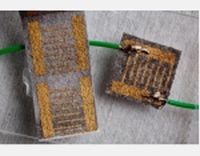
An engineer and an ophthalmologist are developing a portable sensor that can quickly and inexpensively determine whether an eye injury is mild or severe. The device, called OcuCheck, measures levels of vitamin C in the fluids that coat or leak from the eye. The sensor could speed efforts to determine the extent of eye injuries at accident sites, in rural areas lacking ophthalmology specialists or on the battlefield, the researchers said.
"The sensor takes advantage of the fact that the ocular tear film - the viscous fluid that coats the eyeball - contains low levels of ascorbic acid, which is just vitamin C, while the interior of the eye contains much higher levels," said University of Illinois bioengineering professor Dipanjan Pan, who is creating the device in collaboration with Carle ophthalmologist Dr. Leanne Labriola. "So the concept is, if there is severe damage to the eye that penetrates deeply, the ascorbic acid will leak out in high concentration."
Two postdoctoral researchers in Pan's laboratory, Manas Gartia and Santosh Misra, helped develop the new sensor. The researchers report their work in the journal Scientific Reports.
At present, those with eye injuries must find their way to a hospital to have their injuries assessed. The process is often complicated, time-consuming and imprecise, Pan said.
"The new device will change the standard of care for evaluating eye traumas," Labriola said.
No current techniques for assessing eye injuries involve measurements of ascorbic acid, Pan said. "So this is a one-of-a-kind approach."
The new sensor uses graphene platelets that are layered 1 nanometer thick on filter paper. Upper layers include a unique polymer that interacts with the graphene; gold electrodes; and ascorbate oxidase, an enzyme that binds to ascorbic acid.
"The idea is that the moment that the ascorbic acid comes in and binds to the ascorbate oxidase, it will pull the polymer out of its interaction with the graphene," changing the sensor's electrical properties, Pan said.
Page 1 of 2