
















 Dan’s Biz Bookshelf: ‘The Next RenAIssance: AI and the Expansion of Human Potential’
 The Chemical Connection: When the Industry Moves Faster Than the Standards
 Driving Innovation: Selecting the Right Laser Source





DIS: Leaping Into Tech and Automation
October 28, 2024 | Marcy LaRont, PCB007 MagazineEstimated reading time: 2 minutes
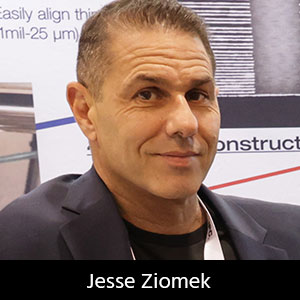
DIS recently opened a new facility in New York state, providing an abundance of opportunity for DIS and its customers. Jesse Ziomek, president of global business development at DIS, discusses the strides made in tech innovation and automation, expanding DIS’s customer portfolio to address the challenges its customers have been grappling with, and entering new markets such as rigid-flex and flexible PCBs.
Marcy LaRont: Jesse, it’s always great to talk with you. Your new facility is twice the size of the original, and a lot of opportunity and planning went into that endeavor. DIS has now expanded its portfolio of solutions for customers, so how has DIS expanded technologically from its core as a registration equipment supplier?
Jesse Ziomek: Marcy, along with the new facility came a lot of new technology and updates. We have completely new product lines and have streamlined manufacturing for mass production. It stems back to the COVID era when we couldn’t travel and had some extra time on our hands. We said to ourselves, “This is an opportunity. What will we do with this time?” Fortunately, we have a lot of young, gung-ho employees on our engineering team who are always willing to take on a challenge in developing new technology for the PCB industry. We decided to put all that talent and time to good use.
At the time, we had 250 installations across 23 countries. Known as the leader for pinless alignment bonding systems primarily for multilayer rigid PCBs, we had not changed our system significantly over the past 10 years. So, we went back to our customer base and said, “Tell us what you like and don't like about the current system, what improvements you want to see, and what features you want added.” We went back to the drawing board and updated all our equipment with new technologies: software, controllers, drivers, vision systems, electrical, and mechanical systems. We went through everything and brought the new systems to life. I am happy to say that it has been a tremendous success. Since that COVID period, starting in 2021, we've sold 50 units globally and don't see that trend slowing down. We improved and advanced the technology, providing a lot of automation, which significantly minimized the operators’ handling and touching of the machine. Everything is run from a digital touch screen on the computer and is very user-friendly.
LaRont: Let’s chat about a few specific DIS offerings that are newer, like software, SAM (shop assistant machine robot), and going beyond rigid PCBs.
Ziomek: The first thing we’d like people to know is that we have expanded beyond multilayer rigid printed circuit boards into the flex and rigid-flex builds. Of course, we still have traditional post-etch punches and continue to help those customers who are not yet ready to leap into pinless or pin-welding technologies, which is an intermediate solution between conventional tooling and pinless technology. Pin welding is a familiar technology throughout the world, and many shops in Europe and Southeast Asia still use this technology, though it is typically used on four- to eight-layer jobs as a registration stabilizer. Then, we have our pinless alignment bonding product that has expanded outside the rigid PCB arena into the rigid-flex and flex industries.
To read the rest of this interview, which appeared in the October 2024 issue of PCB007 Magazine, click here.
Share on:


Testimonial
"The I-Connect007 team is outstanding—kind, responsive, and a true marketing partner. Their design team created fresh, eye-catching ads, and their editorial support polished our content to let our brand shine. Thank you all! "
Sweeney Ng - CEE PCBSuggested Items
Webinar Review: The Challenges of UL Certification for Flex and Flex-Rigid PCBs
03/25/2026 | Marcy LaRont, I-Connect007 MagazineUL certification is one of an engineer’s least favorite topics, yet it is critically important. The process is complicated but relatively straightforward for standard rigid PCBs, but as Jan Pedersen makes clear in NCAB Group’s recent webinar, “UL Approval for Flex and Flex-Rigid PCBs,” it is a very different story.
AdvancedPCB Expands HDI Inspection Capabilities at Orange County Facility
01/30/2026 | AdvancedPCBAdvancedPCB, a leading U.S. printed circuit board manufacturer, installed a new Galaxy 25µ CIMS automated optical inspection (AOI) system at its Orange County facility, strengthening inspection performance for HDI and advanced multilayer PCB production and providing customers with greater confidence as designs move through manufacturing.
I-Connect007 Editor’s Choice: Five Must-Reads for the Week
11/21/2025 | Michelle Te, I-Connect007Were you one of the lucky ones who made it to Europe’s largest electronics trade show this week? By all accounts, this massive event was buzzing with new technologies, packed booths, and plenty of tired feet by the end of each day. So, if you’re heading home from productronica (or, like me, just enjoying the end of a busy week), now’s the perfect time to unwind a bit. Settle into that airplane seat (or office chair), grab a snack, and catch up on some great reads from I-Connect007.
Beyond the Board: Why More Defense Primes Are Moving Toward Rigid-flex for Lighter, More Reliable Systems
11/18/2025 | Jesse Vaughan -- Column: Beyond the BoardOver the past decade, the conversation around PCB innovation in aerospace and defense has often centered on high-density interconnects, advanced materials, and tighter design-to-fabrication collaboration. But the move toward rigid-flex is a quieter shift that has been gaining momentum, and it’s changing how primes and system integrators approach the physical architecture of mission-critical electronics.
Driving Innovation: Mechanical and Optical Processes During Rigid-flex Production
10/28/2025 | Kurt Palmer -- Column: Driving InnovationRigid-flex printed circuit boards are a highly effective solution for placing complex circuitry in tight, three-dimensional spaces. They are now indispensable across a range of industries, from medical devices and aerospace to advanced consumer electronics, helping designers make the most efficient use of available space. However, their unique construction—combining rigid and flexible materials—presents a fundamental challenge for PCB manufacturers.