
















 Marcy’s Musings: Operating Without a Rulebook
 It’s Only Common Sense: Hire for Hunger, Train for Skill
 Dan’s Biz Bookshelf: ‘The 'NVIDIA Way: Jensen Huang and the Making of a Tech Giant’





The Evolution of Picosecond Laser Drilling
June 19, 2025 | Marcy LaRont, PCB007 MagazineEstimated reading time: 2 minutes
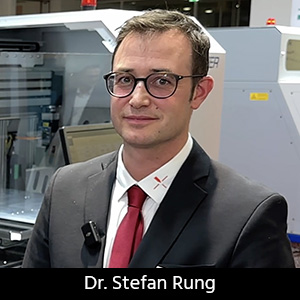
Is it hard to imagine a single laser pulse reduced not only from nanoseconds (0.000000001 s) to picoseconds (0.000000000001 s) in its pulse duration, but even to femtoseconds (0.000000000000001 s)? Well, buckle up because it seems we are there. In this interview, Dr. Stefan Rung, technical director of laser machines at Schmoll Maschinen GmbH, traces the technology trajectory of the laser drill from the CO2 laser to cutting-edge picosecond and hybrid laser drilling systems, highlighting the benefits and limitations of each method, and demonstrating how laser innovations are shaping the future of PCB fabrication.
Marcy LaRont: Stefan, we are here to explore the evolution of laser drilling in PCB fabrication, and what’s new and possible today. Take me through that history and what today’s technology offers the printed circuit board and substrate manufacturer.
Stefan Rung: The laser itself is quite a new tool, relatively speaking. Since its invention in 1960 by Theodore Mayman, there has been a demand for high-throughput tools and lasers. CO2 lasers, with a wavelength in the infrared region at 9.4 µm, were adapted for high-throughput drilling. This was possible because those lasers had the high energy output needed to remove material in a short time.
Additionally, the CO2 laser benefited the PCB industry because it could stop at the copper plane. CO2 lasers have high copper reflectivity, absorption of just a few percentage points. The target copper plane reflects all the light from drilling the organic material, so you have a natural process stop making the CO2 laser process inherently controllable. In mechanical drilling, the longer you drill, the deeper the hole. There is no precise automatic stop that would compensate variations in the layer thickness. For multilayer buildups, using a CO2 laser allowed for lower copper weights on the inner layers. You now had a reliable tool to stop on the copper and create the microvia. This contributed to the broader adoption of the CO2 laser in PCB shops.
As laser technology developed, UV nanosecond lasers emerged. Instead of microsecond-long pulses, they now had hundreds of thousands of nanosecond-long pulses in a typical wavelength of 355 nanometers. These UV lasers showed good absorption of the organic material and copper, allowing us to drill through the copper surface and the organic material.
However, that created a challenge to stop on thin target copper plane. With the more precise laser sources in development over the past decades, it has been easier for process engineers to develop processes to stop when they need to stop. There were also some advantages with specially designed prepreg structures that helped make this process more reliable.
Both rising laser technologies have had their benefits and drawbacks. Now, with hybrid drilling technology, the UV nanosecond laser can penetrate the top copper layer, and then use the microsecond-long pulse CO2 laser to penetrate or to remove the dielectric, which then stops at the next copper plane.
To continue reading this interview, which originally appeared in the June 2025 issue of PCB007 Magazine, click here.
Share on:


Testimonial
"We’re proud to call I-Connect007 a trusted partner. Their innovative approach and industry insight made our podcast collaboration a success by connecting us with the right audience and delivering real results."
Julia McCaffrey - NCAB GroupSuggested Items
Future-proof Laser Depaneling for PCBs with Photonics
04/10/2026 | Real Time with... APEX EXPOBill Solari of Photonics Systems USA outlines the advantages of laser depaneling for circuit board manufacturing. We learn that this advanced technology addresses rising material costs by increasing panel yield and improving edge quality. This process provides precision, suitability for medical applications, and cost-saving benefits, including the elimination of cleaning steps. There have been significant advancements in laser depaneling, offering a competitive and efficient solution for modern electronics production.
Bold Laser Automation Introduces Precision Laser Cleaning System for Advanced Manufacturing
03/27/2026 | PRNewswireBold Laser Automation, Inc. has introduced the LPCl1820UV Laser Precision Cleaning System, a Class 1, industrial laser platform engineered for high-precision surface cleaning and thin-film removal in demanding manufacturing environments.
CEA-Leti, NcodiN Partner to Industrialize 300 mm Silicon Photonics
03/11/2026 | NcodiNCEA-Leti and NcodiN, a French deep-tech startup pioneering nanolaser-enabled photonic interconnects, announced a strategic collaboration to industrialize NcodiN’s optical interposer technology on a 300 mm integrated photonics process.
Altus Supports Ei Electronics with LPKF Laser Depaneling Technology
03/09/2026 | Altus GroupAltus Group, a leading distributor of capital equipment for the electronics manufacturing industry, has supported Ei Electronics, Ireland’s largest manufacturer of home life-safety devices, with the installation of an LPKF CuttingMaster 2240 laser depaneling system to enhance PCB singulation and support growing production volumes.
Semtech Expands Data Center Portfolio with Acquisition of HieFo Corporation
03/05/2026 | SemtechSemtech Corporation, a leading provider of high-performance semiconductor, Internet of Things (IoT) systems and cloud connectivity service solutions, announced the acquisition of HieFo Corporation (HieFo), a California-based private manufacturer of high-efficiency Indium Phosphide (InP) optoelectronic devices for optical transceivers used across data center interconnects (DCI) and intra-data center interconnects.