
















 Global Sourcing Spotlight: Finding Your Greatest Sourcing Asset in Partnerships
 Knocking Down the Bone Pile: Hot Air vs. Infrared PCB Rework
 Nolan’s Notes: Why Mexico’s Time Has Come





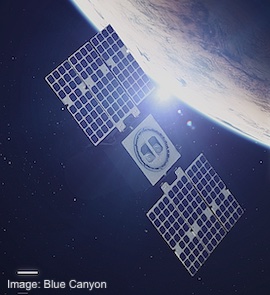
Leading small satellite manufacturer and mission services provider Blue Canyon Technologies, LLC. has announced it is providing the microsatellites for NASA’s Pioneers Aspera and Pandora missions – small-scale astrophysics missions.
“We are providing high-performance microsats capable of supporting astrophysics missions at a price point never before possible,” said George Stafford, CEO of Blue Canyon. “The missions will demonstrate our ability to be a mission-enabler in the areas of exoplanet characterization and the intergalactic medium.”
BCT will build a Mercury-class microsat to support the Aspera mission from the University of Arizona, which will examine hot gas in the space between galaxies, otherwise known as the intergalactic medium. While the intergalactic medium is a major component of the universe, it remains poorly measured, which Aspera aims to address.
BCT also provided a Venus-class Microsat – part of the X-SAT product line to support Pandora, a mission from Lawrence Livermore National Laboratory and the Goddard Space Flight Center. This small satellite will study 20 stars and their 39 exoplanets in visible and infrared light, with the mission to disentangle the signals from stars and planetary atmospheres. Understanding how starlight changes can affect measurements of exoplanets is an outstanding problem in the search for habitable planets beyond the solar system.


