











 Global Sourcing Spotlight: Beyond China Plus One—Building a Truly Global Supply Network
 Bridging the Pacific: What American and Asian PCB Companies Can Learn From Each Other
 Learning With Leo: The Study of Listening





Latest Articles
From Substrates to Systems: A Preview of the October Advanced Electronics Packaging Digest

The October issue of Advanced Electronics Packaging Digest examines the technologies, investments, and strategic decisions shaping the future of advanced electronics manufacturing. From the evolution of semiconductor scaling and the integration challenges of high-frequency systems to the expansion of semiconductor capabilities in the United States and India, this issue explores how materials, packaging architectures, and manufacturing infrastructure are becoming interconnected.
From Legacy to Next-Generation PCBAs: Zero-Defect Testing in Aerospace and Defense Electronics

In the aerospace and defense industry, a PCB assembly is never just a collection of components soldered onto a substrate. It is a working part of a much larger mission system responsible for flight control, navigation, communication, power distribution, surveillance, or targeting. Whether it sits inside a civil aircraft, an autonomous drone, a compact satellite, an advanced radar unit, or a military ground vehicle, that assembly is expected to perform without fail throughout its service life, often measured in decades.
From Resilience to AI Infrastructure: Key Insights from 2026 Electronics Day EMS Europe

On Sept. 17, the 2026 Electronics Day EMS Europe brought together executives, manufacturers, policymakers, and industry experts for a full day of discussion on the challenges and opportunities facing Europe’s electronics ecosystem. Across four sessions, the conversation spanned the electronics value chain. It began with European resilience and competitiveness, moved into the latest EMS market outlook, examined the infrastructure behind the rapid expansion of AI, and concluded with the growing pressures affecting PCB materials and manufacturing capacity.
I-Connect007 Welcomes Newest Columnist, Echo Yang of Archer Circuits

I-Connect007 is excited to welcome Echo Yang, founder and president of Archer Circuits, as its newest columnist. As a female owner of a large Asian PCB company, Echo brings her candid, energetic, and practical view of the global PCB business to her column, The Fearless Connector. She will address the differences between Chinese and North American manufacturing, her own struggles to start a business, and some details about DFM, engineering, Gerber files, and the risks of treating RF, rigid-flex, and other demanding products like ordinary FR-4 work. She approaches it all with her own youthful, entrepreneurial spirit.
What Climate Week NYC Conversations Mean for the Electronics Industry

Climate Week NYC brought together plenty of big ideas, but the conversations that stayed with us were grounded in everyday business realities. Companies are thinking about sustainability in terms of what it means for their ability to manage risk, keep costs in check, secure materials and energy, and remain competitive. That is particularly relevant for electronics. Our industry relies on global supply chains, specialized materials, dependable infrastructure, and skilled people. As demand for AI, computing capacity, and new technologies grows, so does the pressure on all those systems.
I-Connect007 Editor’s Choice: Five Must-Reads for the Week

Have you ridden in a robotaxi yet? Increasingly, there are sightings in some of the major cities here in the western U.S, particularly San Francisco. This past week, we published a news item from Berg Research projecting that robotaxis will grow from 6,500 deployments today to more than 1.5 million over the next 10 years. The technology for fully autonomous vehicles continues to look like an emerging tech driver for the EV sector.
Stan Rak’s Road to Reliability Continues

Dr. Stanton Rak spent the better part of this past year taking readers inside the electronic systems that enable electrification through his “Road to Reliability” series, to find out what it takes to make them reliable. Now that the series has concluded, he explains his motives for writing it, his holistic approach to covering EV reliability, and how it can become an important technology driver for high reliability electronics more broadly.
I-Connect007 Editor’s Choice: Five Must-Reads for the Week
This week, I was fortunate to attend PCB West in Santa Clara, California, and was reminded of the idyllic weather of that part of California in the early fall. Attendance was high at the weeklong conference and one-day expo, allowing the show to maintain its place as one of the best events for PCB and PCB design. As always, it was great to see old friends and familiar faces. Stay tuned for more PCB West coverage.
October SMT007 Magazine Examines Automotive Soldering Reliability

The October 2026 issue of SMT007 Magazine is now available. As automakers add more electronics while maintaining high production volumes, the stakes for reliable electronics assembly continue to rise. Every added board, sensor, and control system must perform consistently under demanding conditions.
I-Connect007 Expands Technical Library With New Companion Guide to The Printed Circuit Assembler’s Guide to… Factory Analytics

I-Connect007 is pleased to announce the release of Factory Analytics on the Floor: How Connected Data Drives Better Decisions, a new companion guide to The Printed Circuit Assembler’s Guide to… Factory Analytics: Unlocking Efficiency Through Data Insights, by Cogiscan. Designed to bring factory analytics into a practical, real-world setting, the guide follows a day on the factory floor as operators and engineers go beyond basic KPIs to connect machine data, inspection results, process conditions, and human expertise. Together, these insights provide a clearer picture of what’s happening in production and where improvements can have the greatest impact.
The Human Side of Latin American Electronics

Latin America’s electronics manufacturing ecosystem is at a pivotal moment. As global supply chains are reconfigured, the region has an extraordinary opportunity to capture more value, but only if manufacturers can meet increasingly stringent operational and quality demands. We contacted Blackfox General Manager Joel Sainz to discuss the human side of these demands. Skills training, as offered by Blackfox, is a critical part of meeting these increasingly complex demands.
Dymax Adds New Location, Prepares for SMTA Guadalajara

Dymax is among the companies looking to strengthen its presence in Mexico. Raul Garcia speaks with Nolan Johnson about an expanded presence through a new warehouse in Querétaro, which provides technical and lab support, and the products that Dymax will have on display at SMTA Guadalajara Expo & Tech Forum, Oct. 7–8. These products are designed to speed up production rates and be more energy efficient.
I-Connect007 Welcomes Newest Columnist, Dr. Adam Klett, KYZEN

I-Connect007 is excited to announce its newest columnist, Dr. Adam Klett, director of science at KYZEN. His new column, The Clean Truth, will appear monthly in SMT007 Magazine, bringing a science-based perspective to cleaning, contamination control, and reliability in electronics manufacturing. Klett is a chemical engineer and scientist whose expertise includes chemical phase behavior, material characterization and selection, process development, and failure analysis. Through The Clean Truth, he will separate cleaning facts from industry myths while examining the practical realities manufacturers face when making decisions about cleaning processes and contamination control.
I-Connect007 Editor’s Choice: Five Must-Reads for the Week
I recently discovered that the original “Star Trek” debuted in the same month I was born. You can look that up if you want to, but did you know that the series only ran for three years? During that time, however, they produced nearly 30 episodes per season, so there were more than 80 episodes to run through the many years of syndication, as was often the case for me after school: “Brady Bunch” at 4 p.m., “Gilligan’s Island” at 4:30, and then “Star Trek” at 5 p.m. I really tried to be interested in “Star Trek,” but it just felt too corny for me, although I’m not sure how much more “Gilligan’s Island” was rooted in reality.
Follow the Story: Building the Hardware Behind AI

When TTM opened its new UHDI facility in New York earlier this year, it wasn't simply adding another PCB factory. As the largest circuit board builder in the United States, TTM was investing in technologies that bring PCB fabrication closer to the complex world of semiconductor packaging. The advent of AI helps explain why that matters. The enormous compute power required by AI is pushing chip performance to new levels, but those chips don't operate in isolation.
Rehm Thermal Systems Readies for SMTA Guadalajara

In this interview, Nolan Johnson speaks with Rehm Mexico General Manager Luis Garcia about the growing electronics manufacturing market in Mexico, renewed investment in production equipment, and increasing demand driven by AI, automotive, electromobility, and medical applications. Garcia also discusses Rehm’s expanding technology portfolio and what the company will showcase at SMTA Guadalajara.
3 Key Takeaways from The Printed Circuit Assembler's Guide to... Via Structures: Reflow Process Survivability, Reliability, and Robustness
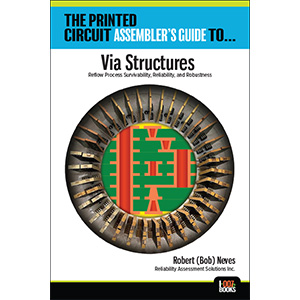
As PCB technology has evolved, the structures being evaluated become more complex. But have the methods used to determine their reliability evolved at the same pace? In The Printed Circuit Assembler's Guide to... Via Structures: Reflow Process Survivability, Reliability, and Robustness, Bob Neves challenges some long-held assumptions about how the electronics industry evaluates PCB via structures. He draws on decades of reliability experience, and examines not only how we test, but what those tests actually tell us.
The Skills Match Is Becoming the New Hiring Challenge

The U.S. labor market may be settling into a more moderate hiring environment, but manufacturing hiring (including electronics manufacturing) has remained robust. Recent data from Indeed Hiring Lab show that overall U.S. job postings have hovered close to their pre-pandemic baseline, standing just 1.8% above February 2020 levels as of mid-August. Production and manufacturing, however, have gained momentum. Job postings in the sector increased approximately 8% over the past year. The latest federal job openings data tell a similar story.
I-Connect007 Editor’s Choice: Five Must-Reads for the Week
The middle months of 2026 have been defined by, shall we say, “projects” throughout the industry, and as we approach the end of the third quarter, many of those projects are coming to light. That’s the theme I’m getting from this week’s news, and I tried to capture it with my selections. My must-reads include a market update on the leading fabless semiconductor houses, a call to action from SEMI directed at the policymakers in the European Union, a rollup of workforce and educational programs announced just this week, a role change at Indium, and the relaunch of the Global Electronics Association Sustainability teams’ DMA Toolkit.
Mexico’s Answer to Bypassing the Panama Canal

In 2019, Mexico made a huge step toward economic development by creating the CIIT as a public body to integrate the ports of Coatzacoalcos and Salina Cruz with railway transport and regional development. The decree explicitly describes the project as a logistics platform linking those ports by rail and promoting economic development in the Isthmus. After several significant construction projects, the 308.5 km rail line, the Interoceanic Corridor of the Isthmus of Tehuantepec, began operating in December 2023. For electronics manufacturing, the value is not just the “new railway.”
Mexico’s Manufacturing: A Story Bigger Than Nearshoring

Mexico’s electronics manufacturing story is often reduced simply to nearshoring. But companies operating within the country’s manufacturing ecosystem describe a market moving beyond its reputation for cost-competitive assembly. They see deeper capabilities in engineering, automation, technical services, supplier integration, digitalization, and advanced manufacturing under development. And they want the world to know. For SMT007 Magazine, we asked six organizations at different positions along the manufacturing value chain to share their vision. We asked them to describe their companies, the value they bring to customers, where they see growth, and how Mexico’s place in global manufacturing is changing.
Mexico Solders On With Indium Corporation

It makes sense to go where the customers are, which is why Indium Corporation recently opened a new solder paste manufacturing facility in Guadalajara, Mexico. Chris Bastecki, vice president of the Americas Sales and Service Group at Indium Corporation, as well as vice president of PCB Assembly Materials, discusses the reasons behind the new facility, the growing market segments, and the challenges of matching solder to specific applications.
Advanced Packaging at the Limits: What’s Ahead in the Next Issue of Advanced Electronics Packaging Digest
The upcoming issue of Advanced Electronics Packaging Digest looks at what happens as advanced packaging pushes further into the limits of scale, power, thermal performance, and manufacturing capability. These features examine the measurement technologies, materials decisions, manufacturing investments, and system-level challenges shaping the next generation of advanced electronics.
An Open Invitation to Standards Development in Paris

The Global Electronics Association is doing something a little different around standards this year. IPC Builds, Sept. 19–24, in Paris, is a series of standards development meetings open to both Association members and nonmembers, offered at no charge, with lunch provided. Sponsoring an event like this at no charge caught my attention. Removing any registration cost clearly removes a barrier to participation at a time when global input into standards development is needed more than ever. An open forum naturally makes it easier for someone who is curious about standards work or has wanted to get involved but hasn’t yet taken the first step to experience the process firsthand, with no risk or expectation.
I-Connect007 Editor’s Choice: Five Must-Reads for the Week
I feel compelled to start off by recognizing that today marks the 25th anniversary of the tragic activities that took place on 9/11/2001. Like so many of us, I will never forget exactly where I was and what I was doing when I heard that United flights 11 and 175 had struck the World Trade Center in NYC. That day, the world was forever changed, and the effects still reverberate. Today, I am taking a moment to remember the lives lost and the heroism and coming together that day brought about.
SMTA Guadalajara: 15 Years of Advancement in Electronics Manufacturing

This year, SMTA Guadalajara Expo & Tech Forum, Oct. 7–8, marks 15 years of supporting and advancing the electronics manufacturing industry in the region. Over the years, the event has grown steadily in both attendance and industry impact, becoming one of the most important events of its kind in Latin America. SMTA Guadalajara brings together OEMs, EMS providers, suppliers, academia, and industry experts. As one of Mexico's largest electronics manufacturing hubs, Guadalajara provides the ideal setting for companies to discover new technologies, strengthen partnerships, and exchange technical knowledge.
Heller and SEHO Investing in Mexico

Heller Industries is the leading provider of thermal systems in the electronics assembly and semiconductor industries, manufacturing a wide range of equipment, primarily for standard reflow applications in electronics assembly. The company has realized significant business growth in Mexico in recent years and is now preparing for SMTA Guadalajara. Paul Lancaster, vice president of sales and marketing, spoke about the Mexican market, growing a local support infrastructure, and partnering with SEHO.
Connecting Quality, Traceability, and Manufacturing Processes

Traceability is easy to describe and difficult to maintain. From the moment a component arrives, its supplier lot, inspection results, certificates, and eventual use in production have to be captured and carried forward into the finished assembly and shipment. Every step creates and requires information. In EMS and PCB assembly, products involve thousands of components, multiple levels of subassemblies, customer-specific requirements, revision changes, and supplier documents arriving in any number of formats. This becomes infinitely more difficult when quality, inventory, production, and document management live in separate systems.
Follow the Story: AI Reshapes the Electronics Supply Chain

The AI infrastructure boom is creating enormous opportunities for electronics manufacturers, but its effects are spreading well beyond companies building AI servers and data centers. High performance laminates, glass fabric, copper, memory, MLCCs, foundry capacity, and other critical resources are being pulled toward fast-growing AI applications, tightening supplies and pushing up costs elsewhere in the electronics industry. I-Connect007 has been following these developments from several directions. What initially looked like separate stories about laminate availability, memory prices, component demand, PCB capacity, and data-center growth are demonstrating how AI is changing how the electronics supply chain allocates materials, capacity, and investment.
I-Connect007 Observes Labor Day Holiday With Office Closure

In the U.S, the Labor Day holiday arrives as the unofficial end to summer, but its roots run much deeper (and a little darker, if you’re a student of U.S. history) The first observance was held in New York City on Sept. 5, 1882, when thousands of workers marched in a parade organized by the Central Labor Union. Numerous states recognized Labor Day prior to Congress establishing it as a federal holiday in 1894. At its heart, the contemporary Labor Day holiday recognizes the workers whose skill, persistence, and ingenuity have built the nation’s prosperity.
I-Connect007 Editor’s Choice: Five Must-Reads for the Week
As a longtime journalist, I always find myself pulled in so many directions of curiosity. I’ve often felt like the saying, “A jack of all trades, master of none.” It seems to be the price I’ve paid as a writer and editor, delving into so many different corners of industry, community, and the human condition. But that’s also why I love this week’s collection of must-reads. From novel flexible circuits to modernizing IPC standards, a trade show in the burgeoning China Plus One region, Mexico’s manufacturing moment, and opportunities for workforce development, we’ve gone around the world and back again. We touch on so many aspects of the industry, and especially the opportunities and challenges of keeping up with change.
Real Time with... THECA 2026: Global Electronics Association on PCB Growth, Standards, and Emerging Technology

David Bergman, VP of International Relations at the Global Electronics Association, talks with Marcy LaRont about his privilege in being involved in THPCA from early on and the strategic opportunity for the Association to make a difference in Thailand's growing electronics industry through standards and education. Also as an active member of the Electronic Circuit World Council (ECWC) (which occurs every three years) Mr. Bergman discusses plans for ECWC17 which will take place next year with THECA 2027, highlighting Thailand's role in electronics manufacturing.
Real Time with... THECA 2026: Polar Instruments Expands Testing and CAM Capabilities
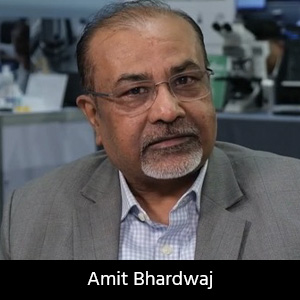
Amit Bhardwaj, managing director of Polar Instruments (Asia Pacific), discusses the company's evolution from a long-standing UK subsidiary into an independent regional business, with expanded CAM offerings and IST technology that can substantially reduce test time. Mr. Bhardwaj explains how these capabilities support critical applications and the continued growth of electronics manufacturing across the Asia Pacific.
Workforce Partnerships Mean New Apprenticeships and Funding Opportunities

Workforce development is most effective when employers have access to both a proven training model and the financial resources needed to implement it. At the Global Electronics Association, our workforce partnerships team is expanding those connections by helping electronics employers recruit, train, retain, and advance their workers through Registered Apprenticeship and industry-focused funding opportunities. We are excited to be in the final stages of preparing and submitting our newest Registered Apprenticeship occupation: wire harness assembler.
Real Time with... THECA 2026: Reliability Assessment Solutions Inc. on Smarter Electronics Testing
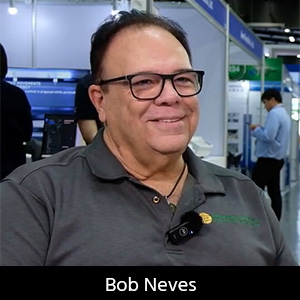
Bob Neves, CEO of Reliability Assessment Solutions Inc., examines how electronics companies can approach product reliability more realistically. Drawing on concepts from his book, The Printed Circuit Assembler’s Guide to...Via Structures: Reflow Process Survivability, Reliability, and Robustness, he describes the three Rs of via testing and reliability and stresses the importance of truly understanding the type of testing required in each specific use case. He warns that poorly aligned accelerated testing can lead to inaccurate life predictions, unnecessary over-engineering, and higher costs.
IPC-1751 Builds Supply Chain Infrastructure for the Future
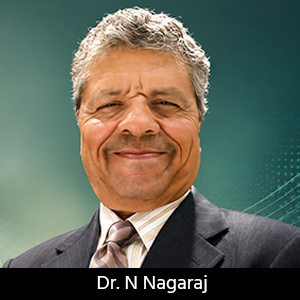
IPC-1751 Committee Chairs Nikki Johnson, VP of operations and regulatory at Source Intelligence, with over 20 years of experience in compliance standards, and Dr. N Nagaraj, a chemical engineer and former NASA contractor who helped develop early IPC compliance solutions, discuss IPC-1751, the newly adopted JSON-based standard that replaces the older XML format. In this roundtable-format conversation, Johnson and Nagaraj explain how IPC-1751 serves as a modular "envelope" that connects related standards (IPC 1752–1757, IPC-1782) for material composition, lab reports, and conflict minerals.
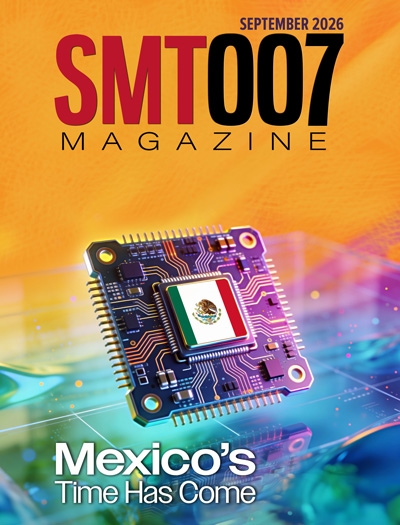
September SMT007 Magazine Examines Mexico’s Manufacturing Growth

Mexico is playing an increasingly important role in North American electronics manufacturing as companies invest in new capacity, reconsider sourcing strategies, and implement nearshoring plans. The September 2026 issue of SMT007 Magazine examines what’s behind this investment and what it means for the broader electronics supply chain. Through perspectives from companies operating and investing in Mexico, we explore trade considerations, manufacturing capabilities, and the opportunities and challenges of building a stronger regional supply chain.
THECA 2026 Review: Innovating PCBs and Advanced Electronics
The Thailand Printed Circuit Association hosted its third annual trade show in the bustling city of Bangkok this past week, under the theme “Innovating PCB and Advanced Electronics with Next-Gen Packaging.” Building on its success as a leading PCB industry exhibition, THECA has brought together the entire PCB value chain, creating a comprehensive platform for advanced electronics.
I-Connect007 Editor’s Choice: Five Must-Reads for the Week

This week, the Global Electronics Association published its monthly report on PCB fabrication and EMS bookings and shipments, and the numbers are extremely positive. In EMS, the three-month book-to-bill ratio stands at 1.29 for July. Year-to-date EMS bookings are at 11% over 2025. The picture is similar in PCB fabrication as well. Year-to-date bookings are up 33% over last year, and book-to-bill stands at 1.46.
Road to Reliability: Failures, Monitoring, and Standards on the Path to EV Reliability
Throughout this series, we have examined the technologies, materials, architectures, and environmental challenges that influence the reliability of EV electronics. Yet reliability is ultimately judged in only one place: the field. Customers do not experience qualification reports, design reviews, or accelerated test results. They experience vehicles that either perform as expected or do not. As EV adoption expands globally, the industry has accumulated a growing body of field experience. These lessons reveal both the strengths of current designs and the areas where improvement remains necessary.
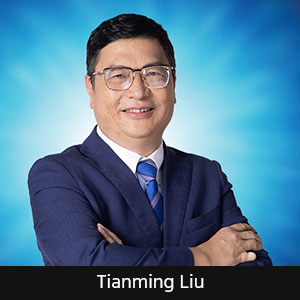
I-Connect007 Welcomes Newest Columnist, Tianming Liu, FSQuality
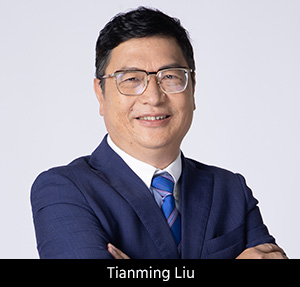
I-Connect007 is excited to announce its newest columnist, Tianming Liu, founder of First Quality Circuit Co. Ltd. (FSQuality) and Fuji PCB. His new column, Bridging the Pacific, will draw on more than three decades of experience in PCB manufacturing to explore the different manufacturing cultures, practices, and perspectives found across the global electronics industry.
Where Will the Next Generation of Great Engineers Come From?

Most young engineers do not grow up dreaming about careers in ceramic substrates or plating processes. It’s not because these careers are uninteresting. In many cases, young people simply do not know they exist. They are excited about AI, robotics, aerospace, autonomous vehicles, space exploration, renewable energy, electric vehicles, medical technology, and advanced computing. What many students do not yet understand is that virtually every one of those technologies depends upon an incredibly sophisticated electronics manufacturing infrastructure.
Decoding the CMMC Suspension
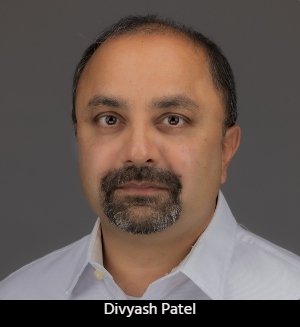
The recent CMMC suspension put all of us in something of a state of shock and confusion, and I have been closely following the discussion in the Defense Industrial Base (DIB) community, including vendors, customers, and cybersecurity specialists. In a memo to my clients, I shared some details for the decision. A common theme among those reasons is cost and capacity. We’ve learned that CMMC has prohibitive compliance costs, with individual bills approaching $600,000; SBA estimates above $7 billion annually across the base, that there is a severe assessor shortage; roughly 100,000+ firms need assessments from only about 100 approved organizations and that the DoD stood up a 60-day CMMC Reform Task Force to recommend a lower-barrier replacement framework.
3 Key Takeaways From a New White Paper on Component Salvage
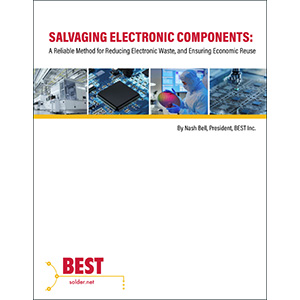
Electronic waste is typically discussed in terms of recycling, but recycling is only one way to recover value from discarded electronics. In the white paper “Salvaging Electronic Components: A Reliable Method for Reducing Electronic Waste, and Ensuring Economic Reuse,” Nash Bell, president of BEST Inc., examines a different approach: harvesting high-value components from obsolete or superseded PCBs, reconditioning them, and putting them back into service.
I-Connect007 Editor’s Choice: Five Must-Reads for the Week
Some situations came up for me this week (delayed flights and malfunctioning work software) that highlighted how much we rely on tools every day. When they’re working, we barely think about them. When they’re not, we’re suddenly reminded of everything else that has to be in place for the work to get done: good processes, knowledgeable people, communication, teamwork, and sometimes ingenuity. I’ve observed that engineers aren’t any different in their work.
How San Francisco Circuits Achieved CMMC Certification

When the U.S. Department of Defense began signaling that cybersecurity self-attestation would eventually give way to mandatory third-party certification, San Francisco Circuits decided to get ahead of it. That decision, made in 2019, shaped everything that followed: the systems we implemented, the partners we engaged, and the audit we ultimately passed. This is the story of that process, including what worked, what added complexity, and what we'd tell other EMS companies and defense suppliers that are now facing the same path.
Follow the Story: The Business of Engineering

Building great products requires great engineering, but building a successful engineering company requires something more. Leaders must make decisions about investments, acquisitions, workforce development, automation, sourcing, strategy, and innovation, all while navigating changing markets and emerging technologies. This collection of articles and columns explores the business side of technical leadership, by gathering perspectives from executives, engineers, entrepreneurs, and industry experts who understand that long-term success depends on more than technical excellence.
The Strategic Importance of Hiring Efficiency

While discussions surrounding workforce shortages often focus on the number of available workers, many manufacturers face a different challenge: securing highly qualified candidates before competing employers do. We’re in a market where experienced PCB designers, process engineers, quality specialists, manufacturing engineers, and reliability professionals are in high demand, so even modest delays in the hiring process can have measurable business consequences.
3 Key Takeaways: Factory Analytics Turns Data Into Action

Every electronics manufacturer generates data. The challenge is knowing what to do with it. In The Printed Circuit Assembler's Guide to... Factory Analytics, Julie Cliche-Dubois of Cogiscan explains how manufacturers can transform disconnected machine data into meaningful insights that improve productivity, quality, and profitability. Rather than focusing on analytics as an IT initiative, the book demonstrates how factory-wide visibility empowers everyone, from line operators to quality managers, to make smarter decisions.
IPC Standards Released for Q2 2026
Each quarter, the Global Electronics Association releases a list of standards that are new or have been updated. To view a complete list of newly published standards and standards revisions, translations, proposed standards for ballot, final drafts for industry review, working drafts, and project approvals, visit electronics.org/ipc-standards. These are the latest releases for Q2 2026.
I-Connect007 Editor’s Choice: Five Must-Reads for the Week
Another week has flown by, and it’s time for the must-read articles and news highlights. This week, I’m putting a spotlight on FUJI PCB and FS Quality, through an interview by Dan Beaulieu with President Tianming Liu, and “the rest of the story” from the EIPC Summer Conference technical sessions. I’m also focusing on a new marketing book by Brittany Martin, and there’s rarely a week when we don’t talk about AI, so I also chose Sean Patterson’s most recent practical advice for PCB fabricators. Though the U.S. has placed a “stay” on CMMC Level 2 certification, it’s still coming for you and your business. If you work in the Mil/Aero space in the U.S., check out what Omega EMS has done to accelerate its compliance. Their wisdom may be worth your time.
The True Cost of Rework: Integrating RMAs and Rework into Core Business Processes
Returns and rework are a reality for every manufacturer. Most companies can authorize an RMA. Fewer have the process or vehicles for carrying it through receiving, quality, production, shipping, and accounting. RMAs and rework can have a significant impact on the top and bottom line. Credits and refunds reduce revenue. Repair adds cost to a product already built and takes capacity away from new, revenue-producing work. Poor execution also puts customer relationships at risk, which is everything in contract manufacturing.
Omega EMS Advances Toward CMMC Level 2 Certification
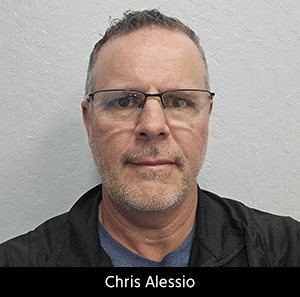
In June, Omega EMS announced its intention to achieve CMMC Level 2 before the U.S. Department of Defense’s mandatory November 2026 implementation timeline for organizations handling Controlled Unclassified Information (CUI). We caught up with Omega EMS CEO Chris Alessio to discuss the company’s certification journey, the investment required, and what CMMC means for Omega’s military and aerospace business. Note: The DoD has suspended its November requirement pending a 60-day review.
EIPC Summer Conference 2026: Technical Presentations Tell the Rest of the Story
In early June, the EIPC Summer Conference in Vilnius, Lithuania, featured an impressive group of speakers ranging from PCB suppliers and technical experts to startups and robotics OEMs, the latter of which added a “cool factor” to the meeting’s ambiance with a fully operational, interactive humanoid. After some early coverage of the event, I’m now following up with key takeaways from many of the technical presentations. I regret that I could not cover all speakers in detail, but this will give you a good taste of what you missed in Lithuania in June.
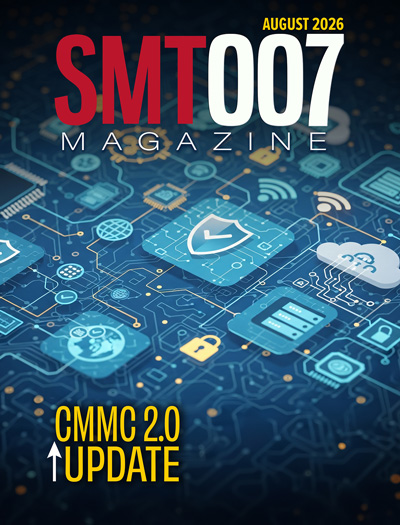
CMMC 2.0: The Defense Supply Chain’s Next Qualification Requirement
The U.S. Department of Defense’s Cybersecurity Maturity Model Certification (CMMC) program has finally moved from concept to contract language. Cybersecurity compliance for companies hoping to participate in the defense supply chain is now a prerequisite for doing business, right alongside AS9100, ITAR, Nadcap, and IPC standards. For years, many organizations have self-attested to cybersecurity compliance. Unfortunately, a series of high-profile cyber incidents demonstrated that self-attestation didn’t always translate into effective implementation. Sensitive information would leak through vulnerabilities in the Defense Industrial Base (DIB), often via suppliers and subcontractors.
Advanced Packaging, Materials Characterization, and System Integration: What’s Ahead in the Advanced Electronics Packaging Digest

The August issue of Advanced Electronics Packaging Digest explores how advanced packaging is reshaping semiconductor innovation through better materials characterization, heterogeneous integration (HI), workforce education, and system-level design. Together, these features examine the technologies and engineering decisions driving the next generation of electronic systems.
I-Connect007 Editor’s Choice: Five Must-Reads for the Week
Are you familiar with the “locus of control," which describes how much we believe our actions can change the outcome of our lives? Internal locus of control, for example, is the belief that our actions greatly shape our outcomes; external locus of control holds that external forces have a greater influence than our actions on how our lives play out. How we view our own locus of control can strongly influence how we respond to the world, perhaps even creating a self-fulfilling prophecy situation. The news has taken a more languid pace this week. Not so, however, for our intrepid band of I-Connect007 columnists, who thoughtfully tackle some chunky locus of control topics.
3 Key Takeaways: Design for Test Starts Long Before the First Test

Design for test has traditionally been viewed as the last checkpoint before a product enters production. Bert Horner's The Printed Circuit Assembler's Guide to... Design for Test challenges that thinking. In his book, he argues that testability should influence every stage of PCB and CCA development, from the first schematic through layout, manufacturing, inspection, and long-term product support. The result is a practical guide that connects engineering decisions with measurable manufacturing outcomes.
USMCA Rules of Origin for Electronics: What Could Change in 2026

In my first article on the USMCA, I explained why the USMCA six-year review matters to the electronics industry and where the negotiations currently stand. Now I want to get under the hood, because the most consequential changes for electronics manufacturers are in the rules of origin, the technical framework that determines whether your product gets duty-free treatment under USMCA. Free trade agreements don't just lower tariffs; they also determine what counts as an “originating” product.
SMTA Bright Manufacturing Challenge Enters Its Second Year With 30 Teams

SMTA’s second annual Bright Manufacturing Challenge kicked off July 1 and will end at SMTAI in October as college students from 30 teams (nearly double from the first year) compete to build a robot from the design to fabrication to assembly. Finalists will watch as the robots they built race for the first-place award. SMTA’s Tara Dunn talks about the program and this year’s challenge, what they’ve learned, and how excited the students are to be involved.
- 1
- 2
- 3
- 4
- 5
- 6
- 7
- 8
- 9
- 10
- 11
- 12
- 13
- 14
- 15
- 16
- 17
- 18
- 19
- 20
- 21
- 22
- 23
- 24
- 25
- 26
- 27
- 28
- 29
- 30
- 31
- 32
- 33
- 34
- 35
- 36
- 37
- 38
- 39
- 40
- 41
- 42
- 43
- 44
- 45
- 46
- 47
- 48
- 49
- 50
- 51
- 52
- 53
- 54
- 55
- 56
- 57
- 58
- 59
- 60
- 61
- 62
- 63
- 64
- 65
- 66
- 67
- 68
- 69
- 70
- 71
- 72
- 73
- 74
- 75
- 76
- 77
- 78
- 79
- 80
- 81
- 82
- 83
- 84
- 85
- 86
- 87
- 88
- 89
- 90
- 91
- 92
- 93
- 94
- 95
- 96
- 97
- 98
- 99
- 100
- 101
- 102
- 103
- 104
- 105
- 106
- 107
- 108
- 109
- 110
- 111
- 112
- 113
- 114
- 115
- 116
- 117
- 118
- 119
- 120
- 121
- 122
- 123
- 124
- 125
- 126
- 127
- 128
- 129
- 130
- 131
- 132
- 133
- 134
- 135
- 136
- 137
- 138
- 139
- 140
- 141
- 142
- 143
- 144
- 145
- 146
- 147
- 148
- 149
- 150
- 151
- 152
- 153
- 154
- 155
- 156
- 157
- 158
- 159
- 160
- 161
- 162
- 163
- 164
- 165
- 166
- 167
- 168
- 169
- 170
- 171
- 172
- 173
- 174
- 175
- 176
- 177
- 178
- 179
- 180
- 181
- 182
- 183
- 184
- 185
- 186
- 187
- 188
- 189
- 190
- 191
- 192
- 193
- 194
- 195
- 196
- 197
- 198
- 199
- 200
Copyright © I-Connect007 | IPC Publishing Group Inc. All rights reserved.
Log in