













 The Marketing Minute: Marketing Is a Team Sport
 The Right Approach: Old Philosophies, New Tools
 Trouble in Your Tank: HDI and UHDI—Building the Foundation of Advanced Packaging





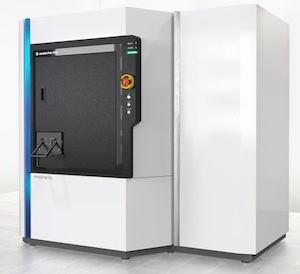
ULVAC-PHI Incorporated has launched the PHI GENESIS, an automated and multi-function scanning X-ray photoelectron spectrometer (XPS: X-ray Photoelectron Spectroscopy or ESCA: Electron Spectroscopy for Chemical Analysis). The PHI GENESIS is the united model of PHI's multi-functional scanning XPS instruments and was designed for automation and simplified operation.
Background
Advanced materials such as all-solid-state batteries, advanced semiconductors, and artificial photosynthesis are complex combinations of materials, and their research and development require speed in optimizing the performance of each material as well as the combination of materials. There is a growing need for high-performance and highly functional surface and interface analysis that can dramatically accelerate such research and development. ULVAC-PHI begins offering a new surface analysis system that not only offers extremely high basic performance but also a high degree of automation to meet the various individual requirements of worldwide customers. The solution is the new "PHI GENESIS" scanning X-ray photoelectron spectrometer (XPS) from ULVAC-PHI.
Summary
The "PHI GENESIS" XPS is a new product that combines the core "GENESIS" of the PHI surface analysis instruments, which has a 50-year tradition of advanced automation and reduced analysis time, with expandability, and offers overwhelming basic performance in a compact housing.
The "PHI GENESIS" XPS provides high-speed, high-sensitivity, and overwhelming micro XPS analysis performance with automated multi-sample analysis with automatic sample exchange. A high-sensitivity analyzer with an improved counting rate also contributes to high performance. To date, ULVAC-PHI and Physical Electronics USA, a subsidiary of ULVAC-PHI, have developed various world-first XPS analysis technologies including scanning micro XPS and HAXPES (hard x-ray photoelectron spectroscopy), fully automated robotics XPS analysis, full-automatic insulator neutralization analysis, depth profiling of organic materials using cluster etching ion gun. All of these technologies are incorporated into a single instrument, making it possible to provide state-of-the-art XPS analysis technology for all kinds of materials, including metals, semiconductors, ceramics, and organic materials.
Another novel feature of PHI GENESIS is a new software package designed for ease of use and designed for all levels of users, from surface analysis beginners to well-trained scientists, from manufacturing to cutting-edge research and development. We have also prepared several options that allow customers to perform advanced analyses that previously required sophisticated analytical equipment such as a large synchrotron in a typical laboratory environment.
PHI GENESIS is fully compatible with the analysis of today's most advanced composite solid materials and composite solid devices and aims to dominate the global market as an indispensable analytical instrument for speeding up research and development.


