














 It’s Only Common Sense: Customers Need Confidence More Than Low Prices
 Dan’s Biz Bookshelf: Revisiting 'The Popcorn Report'





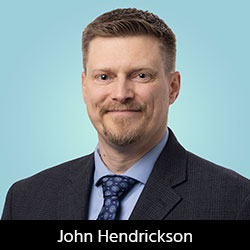
A Q&A with John Hendrickson, engineering director at Schweitzer Engineering Laboratories.
SEL is going green at its new 162,000-square-foot, environmentally friendly PCB manufacturing facility in Moscow, Idaho. As John Hendrickson explains, being a zero liquid discharge (ZLD) facility—a trend you are likely to hear more of in our industry—is not just a smart business decision, it’s driven by SEL’s core values.
Barry Matties: As far as waste treatment goes, this is a zero liquid discharge (ZDL) facility, correct?
John Hendrickson: Yes, it's zero discharge. We have zero drains in our manufacturing floor and zero drains in our water recycling room. The only drains we have are in our bathrooms and sinks; even the sinks in our lab are all pumped to our water recycling. There's no opportunity for somebody to dump something down the wrong sink.
We designed the factory with a chemical-resistant membrane underneath the facility. We designed the floor so that it slopes a little bit to the center. If we ever had a major spill on this floor, it would all go to the center of the floor and it would all be contained within the building. In the water recycling room, we dropped the floor six inches.
The way this system works is that we have two primary inputs in the system for our rinse waters, which we manage separately from our concentrate side. On the concentrate side, we take the material and drop the metals out and then change the pH. Then we take that through our filter press. So that's where our metals are, and that goes out for recycling.
Everything else will move over to what we call a pH batch tank. We adjust that to a pH of 7 and then we run that through our evaporators. After the concentrate goes to the evaporators, then we take it to a dryer, and we're still putting it under pressure and heat evaporating and then it goes back to the rinse inside. On the rinse side, we'll take it through ozone, then we'll destruct the ozone with UV. We run that through a GAC (granular activated carbon) column, through ion exchange columns, and then eventually run it through reverse osmosis. That’s how we generate our DI water.
Matties: Is this kind of thinking why the city got behind this factory?
Hendrickson: Yes. The fume scrubber and everything else definitely helped us with our EPA requirements. Visiting officials have all been very impressed by how clean the factory is and how we've managed some of these things. In fact, some of the things that we’re doing with this equipment have never seen an application in the state before.
Matties: Thank you, John.
This conversation appeared in the August 2023 issue of PCB007 Magazine.


