













 Beyond the Board: Early Engagement Means Faster Prototyping for Defense Programs
 Defense Speak Interpreted: The Autonomous Plane Battle—Skyborg Vs. Loyal Wingman
 American Made Advocacy: Congress Back from Break With Work To Do





Cadence Unveils Palladium Z3 and Protium X3 Systems
April 18, 2024 | Cadence Design SystemsEstimated reading time: 3 minutes
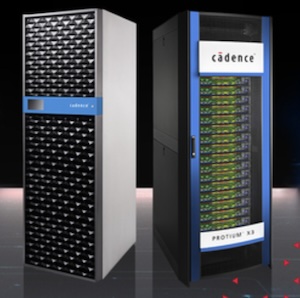
Cadence Design Systems, Inc. announced the new Cadence® Palladium® Z3 Emulation and Protium™ X3 FPGA Prototyping systems, a revolutionary digital twin platform that builds on the success of the industry-leading Palladium Z2 and Protium X2 systems to tackle escalating system and semiconductor design complexity, and to accelerate the development timeline for the most advanced SoCs. Palladium and Protium systems have long been trusted by market-shaping AI, automotive, hyperscale, networking and mobile chip companies to deliver the highest throughput pre-silicon hardware debug and pre-silicon software validation. Targeted at the industry’s largest multi-billion-gate designs, the new Palladium Z3 and Protium X3 systems set a new standard of excellence, providing customers with more than a 2X increase in capacity and a 1.5X performance increase compared to previous-generation systems, enabling faster design bring-up and shortening overall time to market.
“As generational drivers accelerate the need for system and semiconductor innovation, our customers are facing increasing challenges to power the most advanced applications,” said Paul Cunningham, senior vice president and general manager of the System Verification Group at Cadence. “The third generation Palladium and Protium dynamic duo systems are core components of the Cadence Verification Suite and seamlessly interface with the Verisium AI-driven Verification Platform. The Cadence verification full flow offers our customers the highest verification throughput needed to deliver their hardware innovations to market faster and to support the rapid development of new technologies, such as generative AI.”
The Palladium Z3 and Protium X3 systems offer increased capacity, and scale from job sizes of 16 million gates up to 48 billion gates, so the largest SoCs can be tested as a whole rather than just partial models, ensuring proper functionality and performance. The systems are powered by the NVIDIA BlueField DPU and NVIDIA Quantum InfiniBand networking platforms and maintain congruency when transitioning between the two systems and transitioning from virtual to physical interfaces and vice versa. The Palladium Z3 system accelerates hardware verification, and through functional and interface congruency, models can be quickly brought up onto the Protium X3 system for accelerated software validation.
“The supercharged Palladium Z3 and Protium X3 are built to deliver fast pre-silicon verification and validation of the largest and most complex devices,” said Dhiraj Goswami, corporate vice president, Hardware System Verification R&D at Cadence. “Our innovative custom silicon and system architecture, combined with revolutionary modular compile and debug capabilities enabling multiple turns per day, continues to push the envelope to meet our customers’ needs, allowing them to solve the world’s toughest challenges and enable their next generation of innovations to become a reality.”
“Building efficient, high-performance AI platforms requires sophisticated infrastructure and integration across a full stack of optimized systems and software,” said Scot Schultz, senior director, Networking at NVIDIA. “Accelerated by NVIDIA networking, the next-generation Cadence Palladium and Protium systems push the boundaries of capacity and performance to help enable a new era of generative AI computing.”
With the Palladium Z3 system’s new domain-specific apps, users have access to the most complete offering for managing increasing system and semiconductor design complexity, improving system-level accuracy, and accelerating low-power verification. The domain-specific apps include the industry’s first 4-State Emulation App, the Real Number Modeling App, and the Dynamic Power Analysis App.
“As SoCs become more complex, scalable validation and verification tools that enable massive software testing before tapeout are more critical than ever,” said Tran Nguyen, senior director of design services, Arm. “The latest hardware verification platforms and tools from Cadence are sparking innovation in Arm IP design for AI, automotive, and data center applications, and we look forward to how this will benefit our mutual customers.”
“Delivering on leadership computing products requires AMD to bring together a multitude of pre-silicon solutions and techniques to meet the scale of the verification challenge,” said Alex Starr, Corporate Fellow, AMD. “Cadence Palladium Z3 and Protium X3 systems add to our capabilities between emulation and enterprise prototyping to improve design productivity and meet time-to-market goals. Our collaboration with Cadence also incorporates the AMD Versal™ Premium VP1902 adaptive SoC within the Protium X3 system as well as AMD EPYC™ processor-based host servers qualified for both the Palladium Z3 and Protium X3 systems to enable high capacity with next-level performance and scalability.”
The Palladium Z3 and Protium X3 systems are part of the broader Cadence Verification Suite and support the company’s Intelligent System Design™ strategy, enabling SoC design excellence. The systems have been deployed at select customers, with general availability expected in Q3 2024.
Share on:


Testimonial
"In a year when every marketing dollar mattered, I chose to keep I-Connect007 in our 2025 plan. Their commitment to high-quality, insightful content aligns with Koh Young’s values and helps readers navigate a changing industry. "
Brent Fischthal - Koh YoungSuggested Items
Technica USA Partners with Creative Electron
10/22/2025 | Technica USATechnica USA is proud to announce the partnership with Creative Electron Inc. located in San Marcos, CA.
MES Software Tools Need Thoughtful Integration
10/21/2025 | Nolan Johnson, SMT007 MagazineThe Global Electronics Association recently published a survey report on the state of EMS production software. This project, led by Thiago Guimaraes, director of industry intelligence, connects the dots across the global electronics value chain to uncover practical insights that individual companies might not have seen on their own. In this interview, Thiago discusses the whys and hows of this report.
Light-curable Solutions for Reliable Electronics in Space Applications
10/15/2025 | Virginia Hogan, DymaxDesigning electronics for space environments, particularly those in low Earth orbit (LEO), requires careful consideration of materials that can withstand extreme conditions while supporting long-term reliability. Engineers designing satellite systems, aerospace instrumentation, and high-altitude platforms face a familiar set of challenges: contamination control, mechanical stress, thermal cycling, and manufacturability.
Elementary, Mr. Watson: High Power: When Physics Becomes Real
10/15/2025 | John Watson -- Column: Elementary, Mr. WatsonHave you ever noticed how high-speed design and signal integrity classes are always packed to standing room only, but just down the hall, the session on power electronics has plenty of empty chairs? It's not just a coincidence; it's a trend I've observed over the years as both an attendee and instructor.
Beyond Thermal Conductivity: Exploring Polymer-based TIM Strategies for High-power-density Electronics
10/13/2025 | Padmanabha Shakthivelu and Nico Bruijnis, MacDermid Alpha Electronics SolutionsAs power density and thermal loads continue to increase, effective thermal management becomes increasingly important. Rapid and efficient heat transfer from power semiconductor chip packages is essential for achieving optimal performance and ensuring long-term reliability of temperature-sensitive components. This is particularly crucial in power systems that support advanced applications such as green energy generation, electric vehicles, aerospace, and defense, along with high-speed computing for data centers and artificial intelligence (AI).