















 Defense Speak Interpreted: The Impact of Venture Capital-backed Defense Contractor Firms
 American Made Advocacy: Don’t Build Our AI Economy on Foreign-sourced Components
  The Right Approach: The End of an Era—DoD Proposes MIL-PRF-31032 Cancellation





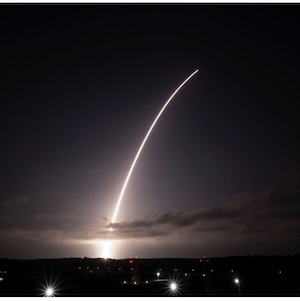
The third satellite in the Copernicus Sentinel 2 mission, Sentinel-2C will generate valuable images and data to help respond to natural disasters, monitor pollution and inform action on climate change.
The Sentinels are a fleet of satellites that look down on the planet and gather vast quantities of data (over 34 million gigabytes so far) that feeds into Copernicus, Europe’s Earth observation programme.
The UK participates fully in Copernicus, through both its membership of the European Space Agency and EUMETSAT, and a participation agreement with the EU. This gives UK companies the opportunity to contribute to the development of the Sentinel satellites and deliver the services derived from Copernicus data. It also ensures data remains freely available to government bodies, businesses and the science community.
UK industry and expertise contributed to the work to build the Sentinel 2 satellites. This included Teledyne e2V, based in Chelmsford, which provided a metal oxide sensor (CMOS), part of the satellite’s multispectral instrument which detects visible and near-infrared light, jointly with Airbus. Whilst ABSL, based in Culham, provided batteries to power the satellite during its 7.5 year lifespan. UK scientists also provide expert advice on the development and implementation of the mission.
Secretary of State for Science, Innovation and Technology, Peter Kyle, said: “As the world’s most comprehensive satellite Earth observation system, we are working to ensure that Copernicus benefits UK businesses and citizens, supports our space industry, and grows our economy. The Sentinel satellites, kitted out with UK-built equipment, will deliver immensely valuable data — from helping emergency services respond to major disasters to flagging gas leaks that endanger our planet.”
Now the UK is once again a full participant in Copernicus, there are numerous future opportunities for UK companies and scientists to be part of the industrial teams building the next generation of Sentinels, which will launch through the 2030s.
Dr Paul Bate, Chief Executive of the UK Space Agency said: “Satellites improve life on Earth and protect our planet. The UK played a key role in the development of the Copernicus programme to date, and we’re confident that our ongoing participation will generate even more industrial contracts and world-leading climate science. As we also prepare to take on the role of Chair of the Committee on Earth Observing Satellites next month, the UK is fully committed driving forward the greater use of satellite data to benefit our citizens, as well as communities all over the world.”
The launch of Sentinel-2C will ensure continuity of data by taking the place of Sentinel-2A, which was launched in 2015 and is nearing the end of its service, whilst in the coming years, Sentinel-2D will replace Sentinel-2B which was launched in 2017. This continuity of service into the future is important, as companies and public sector bodies are building the use of Copernicus data into everyday business decisions.
The satellites capture high-resolution images of land and coastal areas, which have a range of uses from monitoring the spread of wildfires to support emergency services, to detecting methane leaks from pipelines and power plants.
Sentinel-2C will add to these capabilities and offer new biophysical data such as leaf area index, leaf chlorophyll content and leaf water content, for use in monitoring the growth and health of crops and plants.
The Copernicus global monitoring programme (originally called Global Monitoring for Environment and Security) was established a decade ago in 2014 to offer services for a broad range of applications. This represented a step change in providing accurate and reliable data from space that can help inform action to manage the environment, understand and tackle the effects of climate change, and support daily life.
Alongside the government and academic uses, UK businesses have access to a wide array of up-to-date and accurate satellite data and imagery for free. This free and open data policy has driven an increased uptake in the use of space-generated data.
The UK Space Agency supports the UK’s world leading capabilities in Earth Observation and climate change through national and international programmes, including the European Space Agency (ESA). In 2022, the UK Space Agency committed £315 million of investment in Earth Observation for ESA programmes.


