














 It’s Only Common Sense: When the Cheapest Board Becomes the Most Expensive
 The Chemical Connection: Employee and Operator Empowerment in the Age of AI
 The Big Picture: Not One, But Three Grey Rhinos





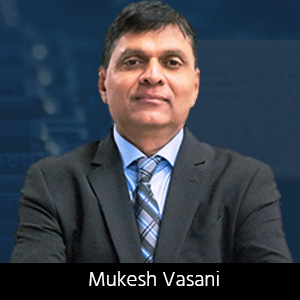
Mukesh Vasani immigrated from a very small farming village in India to the U.S. in 1995 as a civil engineer. After shifting into electronics, Mukesh built his Chicago-based company, Aimtron, into a successful enterprise by combining quality with competitive pricing. He leveraged his roots in India to expand manufacturing without compromising on quality.
Nolan Johnson: Mukesh, how did you get involved in circuit boards?
Mukesh Vasani: After graduating from college, I started a construction business in India, growing from small to large projects and winning awards within five years. In 1994, I had the opportunity to visit the U.S. and decided to move with my family in 1995. I started working with the Department of Transportation in Illinois.
Due to the weather and other factors, I realized construction in Chicago wasn’t the right fit for me. I wanted to leave, but my family wanted to stay. So, I pivoted and studied electronics. In 1998, I partnered in a PCB manufacturing company called Creative. The company grew quickly—we reached around $35 million to $37 million in revenue within seven to eight years.
In 2007, I left that venture and joined a publicly held company in a similar business. Being part of a public company taught me about public governance and operations. Thereafter, I started Aimtron with my family. That year, we generated $72,000 in revenue. A decade later, we were at $72 million. During this journey, we also upheld our social responsibilities through forming the Aimtron Foundation as part of our desire to give back to society.
As my son joined the business, I asked him to take charge of U.S. operations. In 2022, post-COVID, I spent several months in India, and the experience was incredible. Seeing the potential, we decided to go public in India, and now Aimtron is publicly listed there.
Johnson: Growing to $72 million in revenue in 10 years is remarkable. Does that speak to your ability to find and capitalize on a niche?
Vasani: Absolutely—and we did it without outside funding. Our niche is high-reliability, complex electronics manufacturing. Every five to seven years, we upgrade our SMT capabilities to stay current with market demands. We’re fully capable of handling technologies like flip chip wire bonding.
We serve customers in government defense, aerospace, medical, industrial, and instrumentation sectors—particularly low- to medium-volume, high-precision work. Instrumentation, especially, requires engineering collaboration and traceability. Now that we’ve gone public in India, we’ve secured a large military order. It may affect short-term profitability, but we’re prepared with the second and third shifts to deliver. That’s the strength of our niche.
Johnson: It sounds like a key part of finding your niche was focusing on domestic customers.
Vasani: Correct. There’s strong momentum around products made in the USA. We see it as a major advantage.
Johnson: Is your niche different in India?
Vasani: Initially, India served as an extended warehouse. A longtime customer once asked if we could source from China or India. I couldn’t do it at my previous company, but by 2011, we began manufacturing in India to offer cost-effective solutions.
Johnson: So, India helped maintain competitiveness for your customers?
Vasani: Exactly. They needed around a 10 to 20% discount, and we could meet that with Indian production while maintaining profitability.
Johnson: How does understanding your niche influence sales, marketing, and strategic planning?
Vasani: It keeps the entire organization aligned. In sales, it means staying focused on the right customers—we have only 50 to 70, and we maintain strong relationships with them.
In marketing, it means maintaining brand integrity. Early on, we created a brand book—color guidelines, messaging tone, slogan: “Tomorrow, today.” We don’t promote ourselves as just another manufacturer; we highlight our value as an EMS partner.
Strategic planning ensures that we invest wisely in certifications, tools, infrastructure, and most importantly, people. Our philosophy is: the right tools in the hands of the right engineers. For instance, we started with Epicor and ISO from day one, whereas many EMS firms wait until they reach $5–10 million in revenue to adopt such systems.
Additionally, at Aimtron, Marketing has never been just about visibility. It has been our strategic growth enabler. Marketing has played a pivotal role in shaping how the world sees us. It helps us tell our story – not just of precision and quality, but of innovation, speed and customer focus.
Johnson: Do you see your niche evolving?
Vasani: It’s a continuous journey. We revisit it every month during KPI reviews: Where are we winning, and why? We evaluate and adjust. If we encounter a challenge, we reassess. It’s about staying agile while remaining focused.
Johnson: How has your niche evolved in India?
Vasani: Conservatively, the Indian electronics market is expected to reach $500 billion by 2030. Very few companies bring U.S.-grade quality to India.
We combine Indian talent and resources with American systems, discipline, and quality benchmarks. India has a good talent pool and that’s our edge, and it’s why we’re seeing success in India.
Johnson: What advice would you offer EMS companies looking to find their niche?
Vasani: Focus on quality, relationships, and your strengths. If the market doesn’t value what you offer, shift direction. Your niche lies at the intersection of what you’re best at and what the market needs—profitably. And it’s never static. You must be bold enough to say no to the opportunity that does not fit these criteria.
Johnson: Excellent. Thank you.
To read about other EMS supplier companies that are finding success in their niche, visit the July 2025 issue of SMT007 Magazine.


