Getting Our ‘Fil’ of Design Constraint Techniques
August 7, 2025 | Andy Shaughnessy, Design007 MagazineEstimated reading time: 1 minute
Setting design constraints is one of the most critical parts of the PCB design process. The PCB designer must balance performance, manufacturability, and cost while addressing issues such as component function, signal integrity, thermal management, and EDA tool idiosyncrasies.
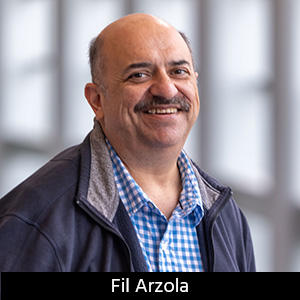
Filbert Arzola is a principal electrical engineer at Raytheon SAS and an instructor who teaches one of the few classes (that I know of) that focuses on setting design constraints. I asked Fil to share his thoughts on design constraints: the factors involved, the various trade-offs, and his best practices for optimizing constraints for your particular design. As Fil says, “Everything about a PCB is a constraint.”
What sort of pre-layout analysis should be performed before you begin setting constraints?
Filbert Arzola: When starting a new PCB board design, one must set up initial routing and clearance constraint settings to enable a good start to engineer your board design. However, one must first review and settle on the initial mechanical model that will house your board design. I highly advise every PCB board engineer to fully understand and confirm the mechanical aspects of the housing, including the outline, the amount and size of the mounting hole clearances, the type and size of the bolt and washer hardware, and most of all, if there are any 3D interferences. A nice DXF file that details all this information completes the electronic model to pre-analyze the mechanical aspect of the board design. One must understand why we constrain our designs and what doing so will give us in return. Having a solid, well-designed, and engineered mechanical model is a must to constrain a successful PCB model database.
To continue reading this interview, which originally appeared in the July 2025 issue of Design007 Magazine, click here.
Testimonial
"The I-Connect007 team is outstanding—kind, responsive, and a true marketing partner. Their design team created fresh, eye-catching ads, and their editorial support polished our content to let our brand shine. Thank you all! "
Sweeney Ng - CEE PCBSuggested Items
ACCM Unveils Negative and Near-zero CTE Materials for Large-Format AI Chips
04/21/2026 | Advanced Chip and Circuit MaterialsAdvanced Chip and Circuit Materials, Inc. (ACCM) has launched two new materials: Celeritas HM50, with a negative coefficient of thermal expansion (CTE) of -8 ppm/°C to offset the positive CTE and expansion of copper with temperature on circuit boards, and Celeritas HM001, with near-zero CTE and the low-loss performance needed for high-speed signal layers to 224 Gb/s and faster in artificial intelligence (AI) circuits.
FlashPCB Names Matthew Belknap Production Manager as Operations Continue to Ramp
04/21/2026 | FlashPCBFlashPCB, a leading provider of quick-turn PCB assembly, has promoted Matthew Belknap to Production Manager, following his recent start with the company earlier this year.
FlashPCB Welcomes Adam Broeckert, EIT as Manufacturing Engineer
04/20/2026 | FlashPCBFlashPCB, a leading provider of quick-turn PCB assembly, is pleased to announce the addition of Adam Broeckert, EIT, as Manufacturing Engineer.
Single Pair Ethernet (SPE): A Valuable Option for Modern Designs
04/20/2026 | Marcy LaRont, I-Connect007When it comes to designing PCBs and full systems for increasingly complex electronics hardware, who doesn’t want to reduce complexity and cost? Single-Pair Ethernet (SPE) has emerged as a solution and is gaining rapid attention across industrial electronics and PCB design because it enables Ethernet communication over a single twisted pair, replacing the traditional two- or four-pair cabling used in standard Ethernet networks. This seemingly simple shift has significant implications for designers: smaller connectors, reduced cable weight, longer reach, and the ability to carry both data and power over a single pair.
DARPA Launches HARQ Program to Integrate Diverse Qubits for Scalable Quantum Computing
04/20/2026 | DARPADARPA has launched the Heterogeneous Architectures for Quantum (HARQ) program, an effort aimed at overcoming one of the most persistent barriers in quantum computing: how to move beyond single-technology systems to achieve and scale practical, high-impact applications.