














 American Made Advocacy: American PCBs in Big Demand and Short Supply
 Defense Speak Interpreted: Will Defense Become a Totally New Supplier for Drone Electronics?
 The Right Approach: The End of an Era—DoD Proposes MIL-PRF-31032 Cancellation





What happens when a cutting-edge quantum computer is placed in the middle of a public cafeteria?
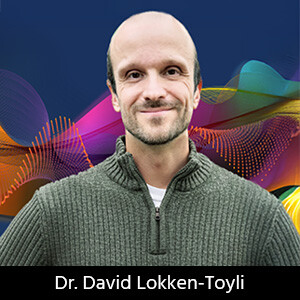
For David Lokken-Toyli, principal research scientist at IBM Quantum, that image, now a reality at Cleveland Clinic, captures a turning point: Quantum computing is moving out of the lab and into the real world, and getting there will depend not just on physicists, but on an electronics supply chain ready to support entirely new system requirements.
Opening the Global Electronics Association’s first technical conference dedicated to advanced electronic packaging, Lokken-Toyli framed quantum computing as a collaborative, supply-chain-driven mission. From cryogenic infrastructure to next-generation packaging, the path forward will require the industry to move faster and think differently.
In this interview, he breaks down the science, outlines IBM’s roadmap, and explains why the time has come for the industry to “leap.”
Marcy LaRont: David, I really enjoyed your keynote presentation and how you immediately engaged the audience by discussing ways we could help IBM as supply chain partners.
David Lokken-Toyli: Yes, it was a privilege to speak to this audience. To build large-scale quantum computers, we need support from a broader quantum supply chain, and the APEX EXPO audience could play a key role in areas such as superconducting packaging.
LaRont: Not surprisingly, I find quantum difficult to fully grasp, but in your presentation, you stated that this is actually the second quantum revolution. Would you explain?
Lokken-Toyli: People are interested in quantum computing because it's a new computing paradigm that accesses principles of quantum physics that are distinct from classical physics in order to do computation. This is referred to as the second quantum revolution, with the first quantum revolution being underpinned by the observation that nature is discrete.
LaRont: Is it much more powerful and faster than traditional computing?
Lokken-Toyli: Quantum computers aren't universally more powerful than classical computers, but we think they can solve different sets of problems that would otherwise be intractable to classical computers alone. One often-cited example is factorization.
Quantum computers will be particularly well-suited to problems that involve quantum data, for example, simulating interactions between electrons in a molecule. A quantum computer is a natural platform for simulating that, and we're really excited about potential applications across chemistry and materials.
LaRont: Do you see quantum computing being something that's advantageous for the computational load that AI will eventually require, or are those completely separate domains?
Lokken-Toyli: For now, they're separate domains, but there is active exploration to bring the two together. Quantum computers are being explored for use cases in optimization as I briefly mentioned in my talk. There’s potential for algorithmic advances that could reduce the resources required for optimization, such that useful problems in this domain could be addressed by future systems such as IBM Blue Jay (planned in 2033+). It’s an exciting time with progress on many fronts.
LaRont: The idea of superposition, of something existing in multiple states and only arriving at a single solution once it's measured, is tough for my brain to grasp. Can you explain superposition, interference, and entanglement?
Lokken-Toyli: I gave a whirlwind tour at the outset of my talk, and I appreciate the audience bearing with me. One of the advantages of an interview like this is that I can reference that there are a lot of great educational materials online, including those provided by IBM Quantum:
LaRont: IBM has the largest quantum footprint in the world, and those large quantum computers are doing intense, complicated things. What kind of problems are they working on?
Lokken-Toyli: In my presentation, I emphasized chemistry simulations as an exciting area of exploration. Additionally, I mentioned ongoing explorations of use cases in optimization, machine learning, and differential equations. An exciting thing about the platform we've built is that people don't have to wait to try these things and see how well they work, what they can learn, and how they can advance the state-of-the-art.
LaRont: Again, IBM has a very prominent position in quantum computing. When did IBM commit to Quantum?
Lokken-Toyli: IBM has a long history in condensed-matter physics and Josephson-junction-based electronics. You can go back to the 1970s and see a lot of pioneering work being done on Josephson junctions, SQUIDs (Superconducting QUantum Interference Device), and their applications.
As quantum computing began to emerge, superconducting circuits incorporating Josephson junctions were identified as a promising platform for quantum computing and the technical expertise in this area already existed within IBM.
LaRont: IBM has a Quantum Advantage Tracker1 available to the public on your website. Can you outline a few of those advantages?
Lokken-Toyli: There are variational problems, relating to the chemistry simulations I described in my presentation. Additionally, there are observable estimations and classically verifiable problems. All three problems are discussed in a recent white paper by IBM Quantum and Pasqal2 that provides a rigorous framework for quantum advantage. A couple of distinct problem cases are referenced in a recent news article written up in Nature Magazine.3 I loved their tagline: “Key Performance Indicators for Quantum,” because most modern technology companies use key performance indicators for measurement. We’re trying to broadly look at the industry as a whole and ask, “Can we create a transparent framework to chart progress?”
LaRont: David, in your conclusion, you shared an image of an IBM Quantum computer placed at the center of the cafeteria at Cleveland Clinic’s headquarters. Why did that image make such an impression on you?
Lokken-Toyli: I've been in Quantum for almost 20 years, and it's very easy to get focused on the things that are hard today, the things that are not working in the moment. It's also very easy to focus solely on your own domain. But despite those things being true, I've always been impressed by how much people want to engage with this technology and how early they are willing to adopt it.
It is incredibly inspiring that an institution like Cleveland Clinic would want to be an early adopter of the technology to the point having their own quantum computer dedicated to their life sciences research. This includes all the risks that come along with being an early adopter. Since they installed an IBM Quantum System One, they have conducted pioneering work in quantum chemistry. Most recently they demonstrated protein simulations on a quantum computer.4
It is a really good reminder for those of us working on this technology that organizations are interested in it and willing to explore complex problems with today's quantum computers. That is a good ethos for the industry as a whole, particularly when you're thinking about things like packaging, that if you dive in, comparable opportunities will rise up.
LaRont: When you say, “mainstreaming quantum computing for the masses,” what ultimately is that vision in 20 or 50 years?
Lokken-Toyli: The roadmap5 we have created at IBM is ambitious. We have a very clear statement that we will build large-scale fault-tolerant systems in 2029 (the IBM Starling system) and in 2033 (IBM Blue Jay).
Twenty to 50 years is further ahead than we’re projecting. If we build out Starling and Blue Jay at a comparable scale to the worldwide footprint we have with our existing fleet of quantum computers, and our partners run useful, fault-tolerant quantum computations on Starling and Blue Jay, then we will be well-positioned to think about what the next decades will bring.
LaRont: David, thank you. I look forward to hearing more about quantum as IBM Quantum continues on this journey.
References
- Quantum Advantage Tracker: the race to advantage," by Jay Gambetta and Robert Davis, IMB blog, Feb. 23, 2026.
- "The dawn of quantum advantage," by Ryan Mandelbaum, Jay Gambetta, Borja Peropadre, and Olivia Lanes, IBM blog, July 21, 2025.
- "Quantum computing 'KPIs' could distinguish true breakthroughs from spurious claims," by Elizabeth Gibney, Nature Magazine, Dec. 11, 2025.
- "Cleveland Clinic and IBM debut new quantum workflow for simulating proteins," by Rafi Letzter, IBM blog, March 23, 2026.
- "The IBM Quantum roadmap," IBM.com.


