















 American Made Advocacy: The Shared Responsibility of Rebuilding Our Industrial Base
 The Government Circuit: USMCA Review—A Crucial Opportunity to Fortify North American Electronics





NASA Awards Contract to Deliver Science, Tech to Moon Ahead of Human Missions
April 10, 2020 | NASAEstimated reading time: 5 minutes
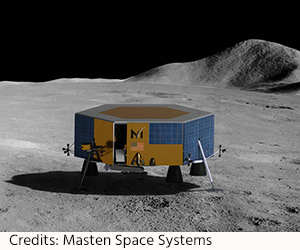
NASA has selected Masten Space Systems of Mojave, California, to deliver and operate eight payloads—with nine science and technology instruments—to the Moon’s South Pole in 2022, to help lay the foundation for human expeditions to the lunar surface beginning in 2024.
The payloads, which include instruments to assess the composition of the lunar surface, test precision landing technologies, and evaluate the radiation on the Moon, are being delivered under NASA’s Commercial Lunar Payload Services (CLPS) initiative as part of the agency’s Artemis program.
As the country and the world face the challenges of the COVID-19 pandemic, NASA is leveraging virtual presence and communications tools to safely make progress on these important lunar exploration activities, and to award this lunar surface delivery as it was scheduled prior to the pandemic.
“Under our Artemis program, we are going to the Moon with all of America,” said NASA Administrator Jim Bridenstine. “Commercial industry is critical to making our vision for lunar exploration a reality. The science and technology we are sending to the lunar surface ahead of our crewed missions will help us understand the lunar environment better than we ever have before. These CLPS deliveries are on the cutting edge of our work to do great science and support human exploration of the Moon. I’m happy to welcome another of our innovative companies to the group that is ready to start taking our payloads to the Moon as soon as possible.”
The $75.9 million award includes end-to-end services for delivery of the instruments, including payload integration, launch from Earth, landing on the Moon’s surface, and operation for at least 12 days. Masten Space Systems will land these payloads on the Moon with its XL-1 lander.
“The Moon provides great scientific value, and these payloads will advance what we know and help define and improve the science astronauts can do,” said Thomas Zurbuchen, associate administrator of NASA’s Science Mission Directorate (SMD). “Our commercial Moon delivery efforts are seeking to demonstrate how frequent and affordable access to the lunar surface benefits both science and exploration.”
The payloads that will be delivered have been developed predominantly from the two recent NASA Provided Lunar Payloads (NPLP) and Lunar Surface Instrument and Technology Payloads (LSITP) solicitations.
The nine instruments to be delivered are:
- Lunar Compact Infrared Imaging System (L-CIRiS) will deploy a radiometer—a device that measures infrared wavelengths of light—to explore the Moon's surface composition, map its surface temperature distribution, and demonstrate the instrument's feasibility for future lunar resource utilization activities.
- Linear Energy Transfer Spectrometer (LETS) is a sensor that will measure the radiation environment on the Moon’s surface. The payload also is being flown on a CLPS flight to the Moon in 2021.
- Heimdall is a flexible camera system for conducting lunar science on commercial vehicles. This innovation includes a single digital video recorder and four cameras: a wide-angle descent imager, a narrow-angle regolith imager, and two wide-angle panoramic imagers. This camera system is intended to model the properties of the Moon's regolith—the soil and other material that make up the top layer of the lunar surface—and characterize and map geologic features. Other goals for this instrument include characterizing potential landing or trafficability hazards.
- MoonRanger is a small robotic rover that weighs less than 30 pounds and will demonstrate communications and mapping technologies. It will demonstrate the ability to move quickly across long distances on the lunar surface with autonomous navigation and without the ability to communicate with Earth in real time. It is a technology that could enable exploration of destinations that are far from lunar landing sites. The MoonRanger will carry the Neutron Spectrometer System, which will measure the concentration of hydrogen in the Moon’s regolith—a possible indication of the existence of buried water.
- Mass Spectrometer Observing Lunar Operations (MSolo) is a device to measure potentially accessible resources on the Moon’s surface. It will identify gases coming off a lander during touchdown on the lunar surface to help scientists understand what elements are coming from the lunar surface and which ones are introduced by a lander itself.
- Near-Infrared Volatile Spectrometer System (NIRVSS) is a tool to measure surface composition and temperature. The instrument will characterize the variability of the lunar soils and detect volatiles such as methane, carbon dioxide, ammonia and water.
- Laser Retroreflector Array (LRA) is a series of eight small mirrors to measure distance and support landing accuracy. It requires no power or communications from the lander and can be detected by future spacecraft orbiting or landing on the Moon.
- Sample Acquisition, Morphology Filtering, and Probing of Lunar Regolith (SAMPLR) is a robotic arm that will collect samples of lunar regolith and demonstrate the use of a robotic scoop that can filter and isolate particles of different sizes. The sampling technology makes use of a flight spare from the Mars Exploration Rover project.
NASA has contracted with 14 American companies to deliver science and technology to the lunar surface through competed task orders. The agency plans to issue at least two such task orders per year through which the companies can propose to take payloads to the Moon. Under the Artemis program, early commercial deliveries of payloads to the lunar surface missions enable NASA to perform science experiments, test technologies and demonstrate capabilities to further explore the Moon and prepare for human missions.
“I am very pleased to award our next delivery service task order to Masten Space Systems,” said Steven Clarke, deputy associate administrator for exploration in SMD. “With the first delivery in 2022, we are continuing to execute our strategy of providing two delivery opportunities per year of science investigations and technology demonstration payloads to the lunar surface.”
In May 2019, NASA selected two CLPS providers, Astrobotic and Intuitive Machines, who are each making progress toward sending payloads to the Moon next year. In February, NASA asked the 14 companies to provide proposals to fly the Volatiles Investigating Polar Exploration Rover (VIPER), which will be the first rover on the Moon that will look for and map the distribution of water and other important volatiles at one of the lunar poles. In addition to these deliveries and the delivery to be made by Masten Space Systems, payloads for a fifth lunar delivery are in development, and NASA will soon be initiating a new series of payload acquisitions for targeted science investigations for years to come.
Share on:


Testimonial
"Advertising in PCB007 Magazine has been a great way to showcase our bare board testers to the right audience. The I-Connect007 team makes the process smooth and professional. We’re proud to be featured in such a trusted publication."
Klaus Koziol - atgSuggested Items
I-Connect007 Editor's Choice: Five Most-Read Articles for 2025
01/02/2026 | Michelle Te, I-Connect007Happy New Year! As we begin 2026, I would like to pause and reflect on our most-read articles from 2025. They give us insight into what you’re focused on, and what you’re trying to understand, prepare for, and improve. Each piece earned its place through relevance, depth, and sustained reader engagement.
Foxconn, Pace CCS Launch Taipei Carbon Capture Lab
12/31/2025 | FoxconnFoxconn Technology Group and Pace CCS , a leading UK-based company in carbon capture and storage (CCS) design , jointly announced the opening of a laboratory in Taiwan to develop chemical injection technology to effectively prevent corrosion of internal CCS pipelines.
Trackonomy, CTT Partner on Ultra-Miniature Tracking
12/31/2025 | PRNewswireTrackonomy, a global leader in miniaturization of complex sensing and automation technologies, announced a strategic partnership with Cellular Tracking Technologies (CTT) to accelerate the development and deployment of next-generation miniature tracking solutions.
Denny Fritz: A Hall-of-Fame Career in PCBs
12/30/2025 | Marcy LaRont, PCB007 MagazineFrom DuPont to the Navy’s top electronics programs, Defense Speak Interpreted columnist Dennis “Denny” Fritz has devoted his career to advancing defense technology and collaboration. In this interview, Denny reflects on decades of leadership, service, and innovation, offering timeless advice on staying technically active and leading with purpose.
Cutting Through the Noise in Component Sourcing
12/29/2025 | Brittany Martin, I-Connect007Every engineer knows the pain of searching for parts—it’s often slow, frustrating, and outdated, more like flipping through a phone book than using modern technology. Despite decades of progress in electronics, component sourcing remains one of the industry’s most tedious and time-consuming tasks.