














 Trouble in Your Tank: In Complex Systems, Design Rules Aren’t Optional
 It’s Only Common Sense: The Phone Is Still Your Competitive Advantage
 Dan’s Biz Bookshelf: ‘The Next RenAIssance: AI and the Expansion of Human Potential’





Nanocarbon Materials Are Challenging Silicon – From Transparent Electronics to Bendable 3D Displays
September 7, 2017 | Aalto UniversityEstimated reading time: 3 minutes
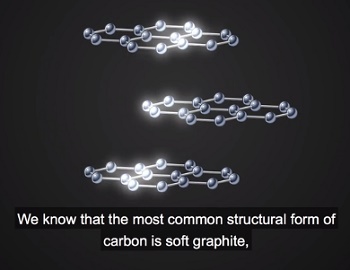
The superior characteristics of nanocarbon make it an extremely promising material for numerous current and future applications.
"Light and flexible nanocarbon materials conduct electricity better than copper and have greater mechanical strength than steel. They are also good thermal conductors and have great potential for use in reinforced composites, nanoelectronics, sensors and nanomechanical devices," says professor Esko I. Kauppinen, the director of Aalto University’s NanoMaterials research group.
Recently, significant advances have been made in the development of nanocarbon materials and their applications. The International Symposium on Nanocarbon Materials gathered the world’s cutting-edge nanocarbon material researchers to Aalto University.
Flexible and transparent electronics
One of the breakthrough applications of carbon nanotubes (CNT) is foreseen in transistor technology. Carbon nanotubes have already been shown to outperform silicon as the semiconducting material for transistors.
"The structure of CNT makes it more chemically stable than silicon. Compared to silicon CMOS technology, carbon nanotube devices are about 5-10 times faster, over 10 times more efficient in power consumption and much smaller in size," says professor Lian-Mao Peng from Peking University.
There are still several technical problems to solve before CNT based chips become commercial products; the main concerns are the material’s thermal and long-term stability. Also, the silicon industry is very mature and it will take major efforts to replace silicon as semiconducting material in electronics.
"I would say in 3-5 years we will see CNTs in some low-end applications that are not dominated by silicon, like flexible and transparent electronics. Maybe in 10-15 years CNT will get to mainstream semiconductor industry with high performance and low power consumption," Peng says.
Carbon nanotube films are also a potential material for the charge selection/conduction layer of perovskite solar cells. Perovskite solar cells challenge the traditional silicon cells with a cheaper, simpler and more energy-efficient manufacturing process.
"The best reported perovskite solar cells have the power conversion efficiency of 22 percent which is compatible to silicon solar cells. And, they can be much cheaper than silicon cells as organic solar cells. Also, flexible and transparent perovskite solar cells could be integrated in windows and other building surfaces. I expect they could become commercial in 3-5 years," says professor Shigeo Maruyama from the University of Tokyo.
Carbon nanostructure such as graphene gets exciting new applications through nanoscale technologies. Photo: Alexander Savin.
Shaping surfaces with curved and 3D formed displays
Besides carbon nanotubes, nanocarbons are found in various structures like spherical fullerens and single atomic layer graphene. In 2006, a new carbon composite nanomaterial was discovered by Aalto University NanoMaterials Group headed by professor Kauppinen. The material was named and patented as NanoBud.
"NanoBuds are formed by binding spheroidal carbon molecules, fullerenes, to the outer sidewalls of single-walled carbon nanotubes. Printed on a thin film of plastic, NanoBuds can be used in touch screens of mobile phones, cameras and wearable devices," Kauppinen says.
The discovery of NanoBud led to the establishment of Canatu Oy to develop and exploit commercial innovations. The Aalto University spin-off company manufactures 3D formable, flexible and transparent carbon NanoBud films and touch sensors for consumer electronics and automotive industry.
The NanoMaterials Group is one of the world's leading gas-phase synthesis laboratories for NanoBuds, nanotubes and nanomaterials. In Aalto University, high-level nanocarbon material research is conducted also in several other research teams in the School of Science, School of Chemical Engineering and School of Electrical Engineering.
"Besides our strong international networks, nanocarbon material research collaboration within Aalto University is most fruitful. By learning from each other we can achieve much better results compared to what we could accomplish ourselves," Kauppinen says.
The future of nanocarbon materials shines bright.
Share on:



Subscribe
Stay ahead of the technologies shaping the future of electronics with our latest newsletter, Advanced Electronics Packaging Digest. Get expert insights on advanced packaging, materials, and system-level innovation, delivered straight to your inbox.
Subscribe now to stay informed, competitive, and connected.
Suggested Items
Driving Innovation: Selecting the Right Laser Source
04/28/2026 | Simon Khesin -- Column: Driving InnovationWhen I first joined Schmoll Maschinen, I brought experience from almost every PCB process, except for laser. As I immersed myself in laser processing, I realized why it can seem so daunting to a newcomer. The complexity arises from three intersecting factors: A vast variety of laser sources: CO2, UV-nano, green-pico, UV-pico, IR-pico, and others; a diverse range of applications: Drilling, cutting, ablation, and more; and an extensive list of materials: These have vastly different absorption rates. Choosing the right machine or laser source is rarely trivial. Even for experienced engineers, answering "Which source is best?" requires examining the business's specific goals.
Institute of Circuit Technology Spring Seminar 2026: A Bright Future in Europe
04/23/2026 | Pete Starkey, I-Connect007Through the leafy lanes and spring flowers of Warwickshire and back to Meridan, the traditional centre of England, and now officially part of the Metropolitan Borough of Solihull in the county of the West Midlands, I attended the Annual General Meeting and Spring Seminar of the Institute of Circuit Technology (ICT) on April 14. Out of the AGM came notable changes in leadership at the top of the Institute: the retirement of Mat Beadel as chair and Emma Hudson as technical director. Effective May 1, Steve Driver is the new chair, and Alun Morgan is the new technical director.
ACCM Unveils Negative and Near-zero CTE Materials for Large-Format AI Chips
04/21/2026 | Advanced Chip and Circuit MaterialsAdvanced Chip and Circuit Materials, Inc. (ACCM) has launched two new materials: Celeritas HM50, with a negative coefficient of thermal expansion (CTE) of -8 ppm/°C to offset the positive CTE and expansion of copper with temperature on circuit boards, and Celeritas HM001, with near-zero CTE and the low-loss performance needed for high-speed signal layers to 224 Gb/s and faster in artificial intelligence (AI) circuits.
Fresh PCB Concepts: Designing PCBs for Harsh Environments—Reliability Is Engineered Upstream
04/23/2026 | Team NCAB -- Column: Fresh PCB ConceptsWhen engineers hear the phrase “harsh environment,” they usually think of the extreme temperature swings, vibration and shock, pressure changes, or radiation in aerospace. However, aerospace is not the only harsh environment where electronic assemblies must survive. Automotive power electronics, downhole oil and gas tools, marine controls, rail systems, defense platforms, and industrial automation equipment all expose PCBs to environments that are equally unforgiving. The stress mechanisms may differ, but the physics does not.
Advanced Packaging for AI: Reliability Starts at the Cu/Cu/Cu Microvia Junction
04/20/2026 | Kuldip Johal, MKS' AtotechThe rapid growth of AI computing, from training clusters to inference at scale, is reshaping demand across the entire electronics supply chain. Advances in technology requirements, such as higher bandwidth, lower latency, and greater compute density, are driving the development of advanced packaging technologies and transforming the PCB industry across design, manufacturing, testing, and even architecture.