














 Dan’s Biz Bookshelf: ‘The Next RenAIssance: AI and the Expansion of Human Potential’
 The Chemical Connection: When the Industry Moves Faster Than the Standards
 Driving Innovation: Selecting the Right Laser Source





New Materials for Sustainable, Low-cost Batteries
May 4, 2018 | ETH ZurichEstimated reading time: 2 minutes
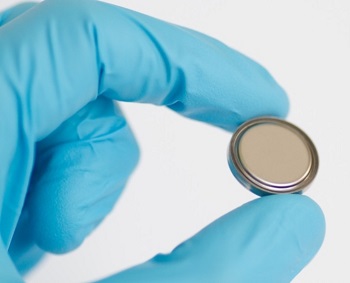
The energy transition depends on technologies that allow the inexpensive temporary storage of electricity from renewable sources. A promising new candidate is aluminium batteries, which are made from cheap and abundant raw materials.
Scientists from Maksym Kovalenko’s research group, which is based at both ETH Zurich and in Empa’s Laboratory for Thin Films and Photovoltaics, are researching and developing batteries made from abundant raw materials. The researchers have now identified two new materials that could bring about key advances in the development of aluminium batteries. The first is a corrosion-resistant material for the conductive parts of the battery; the second is a novel material for the battery’s positive pole that can be adapted to a wide range of technical requirements.
Aggressive electrolyte fluid
As the electrolyte fluid in aluminium batteries is extremely aggressive and corrodes stainless steel, and even gold and platinum, scientists are searching for corrosion-resistant materials for the conductive parts of these batteries. Kovalenko and his colleagues at the Laboratory for Thin Films and Photovoltaics at Empa have found what they are looking for in titanium nitride, a ceramic material that exhibits sufficiently high conductivity. «This compound is made up of the highly abundant elements titanium and nitrogen, and it’s easy to manufacture,» explains Stephan Buecheler from Empa.
The scientists have successfully made aluminium batteries with conductive parts made of titanium nitride in the laboratory. The material can easily be produced in the form of thin films, also as a coating over other materials such as polymer foils. Kovalenko believes it would also be possible to manufacture the conductors from a conventional metal and coat them with titanium nitride, or even to print conductive titanium nitride tracks on to plastic. «The potential applications of titanium nitride are not limited to aluminium batteries. The material could also be used in other types of batteries; for example, in those based on magnesium or sodium, or in high-voltage lithium-ion batteries,» says Kovalenko.
An alternative to graphite
The second new material can be used for the positive electrode (pole) of aluminium batteries. Whereas the negative electrode in these batteries is made of aluminium, the positive electrode is usually made of graphite. Now, Kovalenko and his team have found a new material that rivals graphite in terms of the amount of energy a battery is able to store. The material in question is polypyrene, a hydrocarbon with a chain-like (polymeric) molecular structure. In experiments, samples of the material – particularly those in which the molecular chains congregate in a disorderly manner – proved to be ideal. «A lot of space remains between the molecular chains. This allows the relatively large ions of the electrolyte fluid to penetrate and charge the electrode material easily,» Kovalenko explains.
One of the advantages of electrodes containing polypyrene is that scientists are able to influence their properties, such as the porosity. The material can therefore be adapted perfectly to the specific application. «In contrast, the graphite used at present is a mineral. From a chemical engineering perspective, it cannot be modified,» says Kovalenko.
As both titanium nitride and polypyrene are flexible materials, the researchers believe they are suitable for use in «pouch cells» (batteries enclosed in a flexible film).
Share on:



Subscribe
Stay ahead of the technologies shaping the future of electronics with our latest newsletter, Advanced Electronics Packaging Digest. Get expert insights on advanced packaging, materials, and system-level innovation, delivered straight to your inbox.Subscribe now to stay informed, competitive, and connected.
Suggested Items
I-Connect007 Editor’s Choice: Five Must-Reads for the Week
05/01/2026 | Michelle Te, I-Connect007If it feels like the PCB industry is accelerating faster than ever, you’re not imagining it. From advanced materials driven by AI applications to renewed investment in domestic manufacturing—and the next generation stepping into critical roles—there’s a lot shifting at once. My selections for this week highlight where the pressure points are forming, and where the opportunities are emerging.
Electronics Manufacturing Needs Your Voice: Global Sentiment Survey Now Live
04/30/2026 | Global Electronics AssociationThe latest monthly Global Sentiment Survey from the Global Electronics Association is now open. At a time when demand uncertainty, policy shifts, energy costs, and supply chain recalibration are pulling the industry in multiple directions, the survey captures something macroeconomic data often misses: how manufacturers are actually experiencing conditions on the ground.
From Backbone to Breakthroughs: I-Connect007 Wraps PCB Materials Series with Focus on Innovation
04/30/2026 | I-Connect007I-Connect007 wraps up its six-part podcast series, PCB Materials: The Backbone and Future of Electronics, with Episode 6 and a discussion focusing on innovation. In Episode 6, Marcy LaRont speaks with Isola CTO Kirk Thompson about a critical turning point for the PCB industry as innovation accelerates. As data rates climb and demands from AI infrastructure, power density, flexible electronics, photonics, and chiplet integration intensify, traditional material assumptions are no longer sufficient.
Jiva Soluboard Getting the Attention It Deserves
04/30/2026 | Marcy LaRont, I-Connect007 MagazineJiva is a newer company that bridges the divide between PCB fabrication and product circularity or sustainability. Jiva Soluboard is the first fully recyclable laminate material ever created for PCB fabrication, and it's not going unnoticed. Stephen Driver, CEO of Jiva, gave us an update at APEX EXPO, including an exciting certification achievement in February.
Driving Innovation: Selecting the Right Laser Source
04/28/2026 | Simon Khesin -- Column: Driving InnovationWhen I first joined Schmoll Maschinen, I brought experience from almost every PCB process, except for laser. As I immersed myself in laser processing, I realized why it can seem so daunting to a newcomer. The complexity arises from three intersecting factors: A vast variety of laser sources: CO2, UV-nano, green-pico, UV-pico, IR-pico, and others; a diverse range of applications: Drilling, cutting, ablation, and more; and an extensive list of materials: These have vastly different absorption rates. Choosing the right machine or laser source is rarely trivial. Even for experienced engineers, answering "Which source is best?" requires examining the business's specific goals.