












 It’s Only Common Sense: Be the Vendor They Compare Everyone Else To
 Marcy’s Musings: Additive Processes, Signal Consequences
 The Marketing Minute: If Your Marketing Budget Gets Cut in Half, Then What?





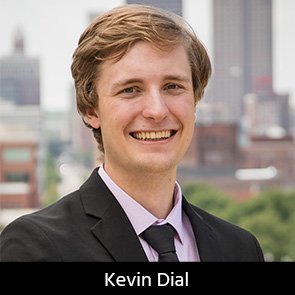
When I heard that my friends at American Standard Circuits had hired a new, fresh-out-of-college process engineer, I was anxious to meet him. Now, you get to read this interview. It’s a rare perspective of a young man new to our industry.
Dan Beaulieu: Kevin, tell me about your journey to America Standard, and what is your position now with ASC?
Kevin Dial: I joined ASC as a wet process engineer in the summer of 2022 after graduating from the University of Iowa. It’s hard to believe two years flew by that quickly, but here we are.
Beaulieu: You’re becoming a veteran by now. What are your daily responsibilities?
Dial: My biggest focus is on circuit formation steps, including imaging, via plating, and etching. Then, I monitor results through AOI and ET. It is a wide-ranging mandate where I can design controls for critical processes and investigate fascinating chemistry. The process engineering team is also putting a lot of effort into refining our registration control scheme from post-etch punch to primary drill tooling. Our exotic material sets often demand that we dig deep into the first principles of a challenge and deploy engineering tools in thoughtful, unique ways. The job generally boils down to constructing flexible, resource-efficient processes that execute our diverse, high-technology product mix.
Beaulieu: What is your background?
Dial: I am a trained chemical engineer with a minor in business administration. The curriculum balanced my interests in industrial process design, undergraduate electrochemical research, and the fundamentals of business organizations. My undergraduate thesis project was a modular gas-to-liquids hydrocarbon synthesis unit that could be transported between decommissioned oil wells to capture methane into useful products. It won a national student team design competition, one of my proudest professional achievements.
Beaulieu: What drew you to ASC?
Dial: As a problem solver, growth only happens outside one’s comfort zone. Three years ago, I couldn’t pick a PCB out of a police lineup, but I was intrigued by all the unfamiliar chemical processes. I figured I could use my background in electroplating as a launch point into the electro-, photo-, and thermal chemistry I didn’t know. I also saw a tight-knit, experienced engineering team that could support my inquiries. The first couple of months were like drinking out a firehose and probably the most educational experience of my life.
Beaulieu: Were you drawn at all by the technology?
Dial: Yes, 100%. Learning PCBs was one thing, but learning our technology set is entirely different. Understanding the unique challenges of running such a diverse set of thermal management solutions, RF/microwave designs, mixed-material builds, embedded passive components, and HDI features is a continuous process that keeps me excited to come to work every day. Every panel is an engineering marvel.
To read this entire conversation, which appeared in the August 2024 issue of PCB007 Magazine, click here.


