












 Dan’s Biz Bookshelf: ‘Abundance: How We Build a Better Future’
 Trouble in Your Tank: In Complex Systems, Design Rules Aren’t Optional
 It’s Only Common Sense: The Phone Is Still Your Competitive Advantage





UPC Creates Solar Cells with Record Energy Performance of 22%
June 4, 2015 | Universitat Politècnica de CatalunyaEstimated reading time: 2 minutes
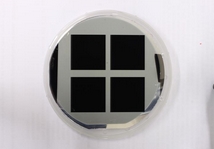
Researchers at the Department of Electronic Engineering of the Universitat Politècnica de Catalunya (UPC) have obtained a record efficiency of 22% by creating silicon solar cells that incorporate a surface treatment called black silicon on the front of the cell. This technique nanostructures the surface with a dry chemical attack that results in small conical tips at the nanometric scale.
Incorporating black silicon reduces the loss of energy caused by the reflectance of solar cells to almost zero. This significantly increases the yield, by almost 4% compared with traditional solar cells. In fact, it is called black silicon because, at first glance, the treated surface is black (and does not reflect light), whereas standard cells are blue. This extra improvement in efficiency would allow a refrigerator, for example, to run for a day in a photovoltaic system composed of a 5 m2 panel.
Solar cells are the main element of solar panels, which are installed to capture sunlight and produce electricity from it. Generally, to ensure that they reflect as little light as possible and thus prevent energy loss, solar cells are textured using an alkaline bath that forms a rough surface on which pyramids are randomly distributed. This technique makes the cells thicker because it consumes a significant amount of silicon in the process. Black silicon, however, allows very thin silicon cells to be used, lowering production costs and saving silicon.
An added advantage achieved by researchers from the UPC and Aalto University in Finland is that, given the ability of black cells to capture solar radiation from lower angles, more electricity can be generated during a longer period throughout the day compared with traditional cells. In Finland this feature is very important, because the sun shines from a low angle for most of the year and it has been demonstrated that cells made with black silicon generate more electricity than traditional cells that have the same degree of efficiency.
According to the UPC researcher Pablo Ortega, "within about three to four years it will be feasible to apply black silicon in the solar panel industry and the market in general."
Share on:



Subscribe
Stay ahead of the technologies shaping the future of electronics with our latest newsletter, Advanced Electronics Packaging Digest. Get expert insights on advanced packaging, materials, and system-level innovation, delivered straight to your inbox.
Subscribe now to stay informed, competitive, and connected.
Suggested Items
Connect the Dots: Designing for the Future of Manufacturing Reality—Surface Finish
05/07/2026 | Matt Stevenson -- Column: Connect the DotsWhen designing the complex boards that many electronic devices require to operate, designers should consider manufacturability at every step. This is my last article focused on designing for the always-evolving manufacturing reality. Choosing the right surface finish has always been important. If you are creating intricate designs with a wide variety of components, like for an ultra-high density interconnect (UHDI) board, surface finish is a critical last step.
Elsyca Acquires Hivelix to Strengthen Simulation Platform for Electrochemical Surface Engineering
04/03/2026 | ElsycaElsyca, a global pioneer in computer-aided engineering (CAE) simulation for electrochemical processes and surface finishing, announces the acquisition of Hivelix, a specialist in advanced surface treatment simulation with strong expertise in multiphysics modelling and AI-assisted process optimisation.
Connect the Dots: Designing for the Future of Manufacturing Reality—Solder Mask and Legend
04/09/2026 | Matt Stevenson -- Column: Connect the DotsPCBs seem to be getting more complex by the day, so it is important for designers to keep educating themselves about the realities of manufacturing increasingly intricate boards. Last month’s column highlighted design considerations for the strip-etch-strip process and how manufacturers approach that phase of production. Now that we have a functioning board, we must protect the PCB from environmental hazards and document the circuit components. This article will detail the solder mask and legend process and offer best practices for designers to ensure a high-quality result.
Take the Mic: Photo Chemical Systems: 50 Years Strong
04/03/2026 | Real Time with... APEX EXPOPhoto Chemical Systems is celebrating 50 years in the bare board PCB market. David Graves and Jason Averette discuss how they've expanded into assembly, leveraging strong relationships and a customer-centric approach to navigate supply chain challenges. With innovative solutions and future growth strategies, including AI integration and new market ventures, Photo Chemical Systems continues enduring success.
Bold Laser Automation Introduces Precision Laser Cleaning System for Advanced Manufacturing
03/27/2026 | PRNewswireBold Laser Automation, Inc. has introduced the LPCl1820UV Laser Precision Cleaning System, a Class 1, industrial laser platform engineered for high-precision surface cleaning and thin-film removal in demanding manufacturing environments.