












 Marcy’s Musings: A Frighteningly Good October Issue
 It’s Only Common Sense: Win the Sale Before the RFQ Arrives
 The Marketing Minute: Marketing Is a Team Sport






Gaudion: Exactly, yes. We've put into our tools now a virtual cross-section, so we can do a virtual micro-section, so we can look at the stack-up on the PC screen, put a ruler on it and see what the dielectric separation is, what the height of the individual layer is, and that's really useful for people to visualize what's going on on the board itself. I'd also add that the relationship with the material suppliers is cemented through our membership of EIPC, because the EIPC is a really useful umbrella organization in Europe that joins together both the OEMs and the fabricators, and they're beginning to see some of the EMS people in there as well. That's very good.
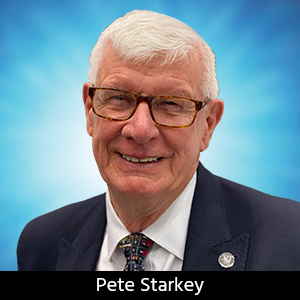
Starkey: Also, the designers are beginning to join this as well. As you say, it's integrating the whole of the value chain. We've mentioned value chains, supply chains, where does Polar fit into the management of the supply chain?
Gaudion: We fit in very early on. As we said, with the designers and pre-layout PCB technologists working out what materials are used, but our tools then go to procurement people and to brokers. Because if your boards are being prototyped in Europe and they're made in volume in Asia, and that relationship is going through procurement and maybe through a brokerage, it's important the specification document travels through all those particular points in the supply chain. Some of our biggest customers are now PCB brokers, because they're actually using the stack-up tools to specify, and actually they can then say "We use the same tool as the fabricator and the designer" and it saves the link in the supply chain being broken. We've benefited by these stretched-out supply chains, because in the past people would phone up their local PCB shop, they'd get some information back from them, and now that may happen at the prototype stage, but it sure is broken when it gets to volume.
Starkey: That's a very interesting observation. And again, I think it gives the broker, the professional broker, a new level of credibility in that he's sort of participating in the exercise of transmitting properly the engineering and design information through to whatever manufacturer he's chosen to use. Rather than just being a guy that takes an order, gets it made, takes his percentage, passes it back, and hopes that at the end of the day it performs as it was designed to perform.
Gaudion: It lifts them from being just a trader. Some of the value-added brokers are actually helping in the stack-up and participating in that, because they're ex-PCB guys themselves, so they can add that value into the chain by providing stack-up advice.
Starkey: That's another really interesting observation. Is there anything else that we ought to talk about, Martyn?
Gaudion: I think we've covered it all. I think just to sum up, that I can remember, I was speaking before where John Ling said I think in 2008 or 2009 that it was time to close the door on the European industry, but we've seen here a renaissance in what's happening. We're seeing EIPC membership up, we're seeing the number of attendees at the shows up. It's really good to come for a show and actually start at 9:00 a.m. and find at 6:00 p.m. you don't know where the time went. That's been a very refreshing experience.
Starkey: We share that experience. I'll say it's been a hectic week for us. We've seen a wonderful show, and an enormous number of qualified people wandering around.
Gaudion: The days where people came and just collected brochures seem to be long gone away. People would come to find us to say, "I want to manage my layer stack-up" and that would sum up our week. Good to meet old friends as well, which is fantastic.
Starkey: Martyn, thanks very much indeed for your time.
Gaudion: Thank you, Pete.
Page 2 of 2


