














 Dan’s Biz Bookshelf: ‘The Next RenAIssance: AI and the Expansion of Human Potential’
 The Chemical Connection: When the Industry Moves Faster Than the Standards
 Driving Innovation: Selecting the Right Laser Source





In Terms of Experience, a 10,000-foot View of China
January 17, 2018 | Barry Matties, I-Connect007Estimated reading time: 21 minutes
Weiner: But the profits have disappeared from a number of them because of the competition. The people that built motherboards are getting out of the business; the margins have vanished. People like Nan Ya have said they've lost money, and they're transforming their particular customer market and the factory to support the changes. China produces over half of the world's smartphones. The autonomous vehicle will create demand for 5G systems. These are all currently built by mSAP processes. They are now water resistant. Shanghai PhiChem Materials just introduced their new sprayable fluoropolymer conformal coating that provides 30 minutes of underwater protection to electronic parts that new standards require. We were told that it has just been approved by Huawei for its smartphones.
Matties: And if you need more than 30 minutes, you're probably in trouble. You've been in this industry since what year now?
Weiner: I started as a student technician at MIT Lincoln Laboratories in 1956. In fact, my job start was Friday, July 13th.
Matties: So when you look at when you started to where we are today, that's dramatically different. Is it surprising to you how far we've advanced?
Weiner: No, it's not surprising to me. In 1957, I was on public TV with my boss at the MIT lab. I was fortunate enough to have a supervisor who let me do things. I built the first functioning 3D printed wire memory plane for a ferrite core computer using a fully additive process by doing 3D exposure through planar masks and custom-formed lenses. We did a lot of very advanced things, and we learned how to advance things. Like to butt weld a hypodermic needle to number 38 wire and then string the memory cores. We did a lot of additive things. We also built experimental thin film memories then. Many of these things were just coming to fruition when the semiconductor memory came out, and that ended the future of these processes. But we still built a computer for the SAGE System, the first big computer using ferrite cores (composed of iron and yttrium oxides). The memory was in a huge blockhouse, with the temperature controlled to between 68 and 72 degrees. If not, the expansion and contraction of the wires on which the computer’s cores were strung (i.e., x, y, drive, and inhibit wires) would exert pressure on the wire-threaded cores causing a loss of their hysteresis. This would result in a memory failure and then the computer wouldn't function correctly. Those were tough days. Now you have a cellphones that are more powerful than the machine in that huge blockhouse.
I was talking with an engineer from TSMC last night who said they are planning a new memory with four nanometer features. Four nanometers! You can't see it, you can't measure it, all you can do is test the finished item and hope that you're lined up. Right now, they're also planning an 18-inch disk. That company across the way (from this studio on the show floor), TKK, just got the rights to a system for handling and storing 18-inch disks, whose usage is expected to increase rapidly. They said that they have the rights for the China and Taiwan territories. That would be an interesting interview for you.
Matties: At WKK, you were on the board, and you recently retired?
Weiner: I've retired from the board of directors of WKK after 25 years of service. I've known them since their inception in 1975, when as vice president of Dynachem I became their first chemical supplier. Their first principal was Excellon, a leading producer of NC drilling equipment at that time.
Busy WKK booth
Matties: We've seen a lot of change in China since the '70s, even in the last 15 or so years that I've been coming here. It’s like a completely different China.
Weiner: TIC—This is China. It is still changing. The government keeps tight control of things, and they keep trying to eliminate corruption, but I'm afraid the Mandarin still lives. I'm not saying they're “corrupt,” but there have been a lot of under-the-table commissions and related pressures. The government is attempting to clean it up. We have been told that when major foreign companies are approached and told which of their units are not operating with a good ethical standard, they're removing the offending managers. China, I’ve always said, is an interesting country. It's ancient. It's cultural. It’s modern. It's a customer. It’s a competitor. It’s a creditor. It's a friend. It’s a potential enemy, all in one. That represents a great challenge as well as a great opportunity!
Matties: With our new administration in America, Trump and his business sensibility, what do you think the market climate will be? What do you think that impact will have on foreigners trying to do business in China? You've been here for many years.
Weiner: If I was looking to do business in China I’d have to constantly evaluate risk versus reward and long term versus short term. It boils down to just how much risk do you want to take? How do you want to set it up? How would you protect your intellectual property? Note that China is now more and more beginning to comply with international regulations for control and protection of IP. Would you seek out and establish a trusted Chinese partner? If so, how?
Matties: I would go back, though. It's not always been easy to do business there.
Weiner: No. Well, for me it was relatively easy. I started in Hong Kong in the early 70s. Then I was invited to attend meetings in Bejing and Shanghai shortly after the Nixon accords as a consultant to the first INTERNEPCON shows held in those cities. I met Jiang Ziemin and walked through an SMT exhibit with him. Maybe I was lucky.
Matties: Yeah, for you, but a level playing field was an issue.
Weiner: You have to learn the rules of the game to play.
Matties: That's what I mean. Because it's been a tough game for many companies to play, to the point where they came here, their products were copied, and they were squeezed out based on price.
Weiner: Some of this was their own fault. Many Westerners thought they knew best how to build their markets here. They did not listen to advice. They did not learn the underlying culture and customs that affected business. They tried to impose their practices upon China rather than modify them to adapt and succeed. This made it even more difficult to penetrate markets that were not yet operating to global standards of business and law.
You know, it's interesting. Times have changed. Trump said, "China's killing us in the market. They're going to get us here, and they're going to get us there, and they're not playing fair." He met with President Xi here after meeting with him in the States. They shook hands, they looked very comfortable together, and apparently he came back with $45 billion in new orders and a Chinese commitment to invest in factories in the U.S. So I'd say it's working—partially.
Matties: It seems like it. But the thing that strikes me about this show now is how few American companies are here that used to be here.
Weiner: Many of those American companies no longer exist. They're here under other names. For example, under the name of DuPont Dow or Eternal, there was Dynachem, there was Shipley, and they're all part of that now. That’s always been interesting to me. Companies merge, merge, and merge, and get bigger, bigger, bigger, and then they start shutting down their operations or spinning them off. Why did they buy them in the first place? Who had what vision, at what point? Did they not foresee major shifts in markets? In regional supply and demand? And then when some of these guys make a mistake and their Board gets rid of them, they give them a few million dollars and tell them to keep quiet and go away.
Matties: The other thing that strikes me here is the number of Chinese companies that have filled the spaces and have filled the gaps. There's a lot of Chinese companies here.
Weiner: There's another change there. There was a time when Chinese were just reverse engineering and copying. Then there was a time when they were just trying to represent you or get a license. They don't do that anymore. If you have a good technology, say in semiconductor, they come out and just try to buy your company, period. That's different, and that's where our government has recently prevented acquisition in the semiconductor arena to try to keep the technology away from China. If there were a catastrophe, and we had to go it alone with circuits and supplies from the printed circuit industry and semiconductor business for defense, we could be in serious trouble. Additionally, you must bear in mind that today China graduates more than three times as many engineers—electrical, industrial, bio-chemical, semiconductor, mechanical, even power generation—with bachelor's degrees than the U.S. That changes the relative potential for innovation and manufacturing.
Page 2 of 3
Share on:


Testimonial
"The I-Connect007 team is outstanding—kind, responsive, and a true marketing partner. Their design team created fresh, eye-catching ads, and their editorial support polished our content to let our brand shine. Thank you all! "
Sweeney Ng - CEE PCBSuggested Items
Driving Innovation: Selecting the Right Laser Source
04/28/2026 | Simon Khesin -- Column: Driving InnovationWhen I first joined Schmoll Maschinen, I brought experience from almost every PCB process, except for laser. As I immersed myself in laser processing, I realized why it can seem so daunting to a newcomer. The complexity arises from three intersecting factors: A vast variety of laser sources: CO2, UV-nano, green-pico, UV-pico, IR-pico, and others; a diverse range of applications: Drilling, cutting, ablation, and more; and an extensive list of materials: These have vastly different absorption rates. Choosing the right machine or laser source is rarely trivial. Even for experienced engineers, answering "Which source is best?" requires examining the business's specific goals.
Institute of Circuit Technology Spring Seminar 2026: A Bright Future in Europe
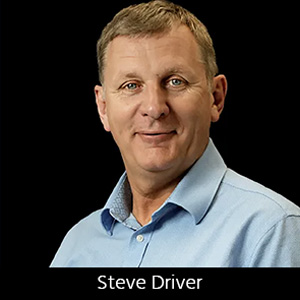
04/23/2026 | Pete Starkey, I-Connect007Through the leafy lanes and spring flowers of Warwickshire and back to Meridan, the traditional centre of England, and now officially part of the Metropolitan Borough of Solihull in the county of the West Midlands, I attended the Annual General Meeting and Spring Seminar of the Institute of Circuit Technology (ICT) on April 14. Out of the AGM came notable changes in leadership at the top of the Institute: the retirement of Mat Beadel as chair and Emma Hudson as technical director. Effective May 1, Steve Driver is the new chair, and Alun Morgan is the new technical director.
ACCM Unveils Negative and Near-zero CTE Materials for Large-Format AI Chips
04/21/2026 | Advanced Chip and Circuit MaterialsAdvanced Chip and Circuit Materials, Inc. (ACCM) has launched two new materials: Celeritas HM50, with a negative coefficient of thermal expansion (CTE) of -8 ppm/°C to offset the positive CTE and expansion of copper with temperature on circuit boards, and Celeritas HM001, with near-zero CTE and the low-loss performance needed for high-speed signal layers to 224 Gb/s and faster in artificial intelligence (AI) circuits.
Fresh PCB Concepts: Designing PCBs for Harsh Environments—Reliability Is Engineered Upstream
04/23/2026 | Team NCAB -- Column: Fresh PCB ConceptsWhen engineers hear the phrase “harsh environment,” they usually think of the extreme temperature swings, vibration and shock, pressure changes, or radiation in aerospace. However, aerospace is not the only harsh environment where electronic assemblies must survive. Automotive power electronics, downhole oil and gas tools, marine controls, rail systems, defense platforms, and industrial automation equipment all expose PCBs to environments that are equally unforgiving. The stress mechanisms may differ, but the physics does not.
Advanced Packaging for AI: Reliability Starts at the Cu/Cu/Cu Microvia Junction
04/20/2026 | Kuldip Johal, MKS' AtotechThe rapid growth of AI computing, from training clusters to inference at scale, is reshaping demand across the entire electronics supply chain. Advances in technology requirements, such as higher bandwidth, lower latency, and greater compute density, are driving the development of advanced packaging technologies and transforming the PCB industry across design, manufacturing, testing, and even architecture.