














 The Fearless Connector: Why I Chose the Hard Road
 The Clean Truth: The Clean Truth About No-Clean Flux
 Global Sourcing Spotlight: Beyond China Plus One—Building a Truly Global Supply Network





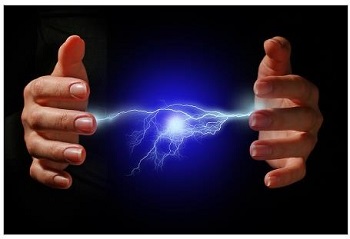
Unhappy with the life of your smartphone battery?
Thought so.
Help could be on the way from one of the most common, yet poorly understood, forms of power generation: static electricity.
“Nearly everyone has zapped their finger on a doorknob or seen child’s hair stick to a balloon. To incorporate this energy into our electronics, we must better understand the driving forces behind it,” says James Chen, PhD, assistant professor in the Department of Mechanical and Aerospace Engineering in the School of Engineering and Applied Sciences at the University at Buffalo.
Chen is a co-author of a study in the December issue of the Journal of Electrostatics that suggests the cause of this hair-raising phenomenon is tiny structural changes that occur at the surface of materials when they come into contact with each other.
The finding could ultimately help technology companies create more sustainable and longer-lasting power sources for small electronic devices.
Image Caption: These images show how the surfaces of magnesia (top block) and barium titanate (bottom block) respond when they come into contact with each other. The resulting lattice deformations in each object contributes to the driving force behind the electric charge transfer during friction. Credit: James Chen, University at Buffalo.
Supported by a $400,000 National Science Foundation grant, Chen and Zayd Leseman, PhD, associate professor of mechanical and nuclear engineering at Kansas State University, are conducting research on the triboelectric effect, a phenomenon wherein one material becomes electrically charged after it contacts a different material through friction.
The triboelectric effect has been known since ancient times, but the tools for understanding and applying it have only become available recently due to the advent of nanotechnology.
“The idea our study presents directly answers this ancient mystery, and it has the potential to unify the existing theory. The numerical results are consistent with the published experimental observations,” says Chen.
The research Chen and Leseman conduct is a mix of disciplines, including contact mechanics, solid mechanics, materials science, electrical engineering and manufacturing. With computer models and physical experiments, they are engineering triboelectric nanogenerators (TENGs), which are capable of controlling and harvesting static electricity.
“The friction between your fingers and your smartphone screen. The friction between your wrist and smartwatch. Even the friction between your shoe and the ground. These are great potential sources of energy that we can to tap into,” Chen says. “Ultimately, this research can increase our economic security and help society by reducing our need for conventional sources of power.”
As part of the grant, Chen has worked with UB undergraduate students, as well as high school students at the Health Sciences Charter School in Buffalo, to promote science, technology, engineering and math (STEM) education.
Funding for the award runs until 2020, and Chen says more findings will be presented at the American Physical Society’s meeting in March in Boston, Massachusetts.


