 It’s Only Common Sense: Win the Sale Before the RFQ Arrives
 The Marketing Minute: Marketing Is a Team Sport





The lives of thousands of people with mobility issues could be transformed thanks to ground-breaking research by scientists at the University of Bristol.
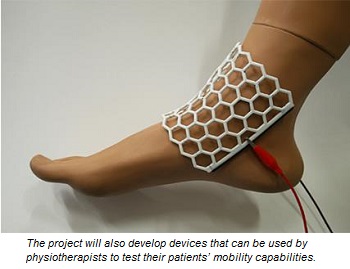
The FREEHAB project will develop soft, wearable rehabilitative devices with a view to helping elderly and disabled people walk and move from sitting to a standing position in comfort and safety.
Led by University of Bristol Professor of Robotics Jonathan Rossiter, FREEHAB builds on discoveries from his previous Right Trousers project, which saw his team develop new soft materials that could be used like artificial muscles.
Professor Rossiter said: “There are over 10.8 million disabled people living in the UK today. Nearly 6.5 million have mobility impairments. These numbers are growing as the median population age increases and age-related mobility issues due to conditions such as arthritis and stroke become more prevalent.”
Rehabilitation is vital for patients, but according to Professor Rossiter, outcomes are hampered by a lack of easy-to-use dynamic tools to help therapists accurately analyse mobility performance and devise effective programmes; and as rehabilitation increasingly takes place in patients’ homes in the absence of a therapist, better ways to support in-home mobility and training are needed.
The materials from which the artificial muscles are made include 3D-printable electroactive gel materials, and soft but strong pneumatic chains that change shape when inflated and can exert considerable force.
Professor Rossiter said: “Together with integrated sensing technology, we will make devices that physiotherapists can use to accurately pinpoint limitations in their patients’ movements, thus enabling them to plan personalised training programmes.
“We will also make simpler devices that the patient can use to enhance their mobility activities and exercise with confidence when a therapist is not with them.”
To develop the project, the researchers will work with physiotherapists in the NHS and private practice, and with people who have undergone physiotherapy for their mobility problems.
Following research and development, the aim is to conduct clinical trials and then bring the devices into the supply chain once the project is over.
Philippa Hemmings, head of Healthcare Technologies at EPSRC: said: The work supported within the FREEHAB project will increase the ability of physiotherapists to support people with mobility impairments. It shows the power of engineers and physical scientists working in collaboration with partners, something our Healthcare Impact Partnership awards were set up to support.