














-
- News
- Books
Featured Books
- I-Connect007 Magazine
Latest Issues
Current Issue
Beyond the Rulebook
What happens when the rule book is no longer useful, or worse, was never written in the first place? In today’s fast-moving electronics landscape, we’re increasingly asked to design and build what has no precedent, no proven path, and no tidy checklist to follow. This is where “Design for Invention” begins.
March Madness
From the growing role of AI in design tools to the challenge of managing cumulative tolerances, these articles in this issue examine the technical details, design choices, and manufacturing considerations that determine whether a board works as intended.
Looking Forward to APEX EXPO 2026
I-Connect007 Magazine previews APEX EXPO 2026, covering everything from the show floor to the technical conference. For PCB designers, we move past the dreaded auto-router and spotlight AI design tools that actually matter.
- Articles
- Columns
- Links
- Media kit
||| MENU - I-Connect007 Magazine
Trackwise Implements Further Upgrading of FPC Manufacturing Operations
September 8, 2020 | TrackwiseEstimated reading time: 2 minutes
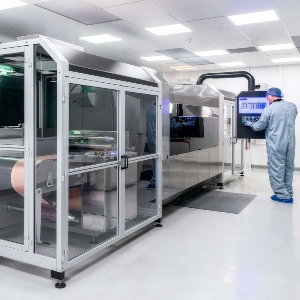
Trackwise, a recognised innovator of flexible printed circuit (FPC) technology, continues to strengthen its production capability and capacity by investing in new equipment. The company has installed a highly advanced roll-to-roll direct imaging system and has also invested in a roll-to-roll flexible circuit laser drilling system.
Situated in the manufacturer’s recently commissioned Class 7 cleanroom facility, the new direct imaging system is able to deal with features down to dimensions of just 25µm as well as providing significantly increased throughput. Given that the system is also suitable for use on a much wider range of photo-imageable materials, the investment provides a significant increase in capability and capacity to Trackwise’ length-unlimited FPC manufacturing.
The recently purchased high-power diode-pumped UV laser is capable of processing extremely thin and sensitive FPCs at high throughput, maintaining processing accuracies of ± 20µm over the entire panel area. An advanced web handler compensates for the continual acceleration and deceleration during production avoiding wrinkling and other stretching issues. The drill’s power and precision boosts cycle times, further improving process quality and yield.
This investment, as well as the acquisition of Stevenage Circuits Ltd (SCL) earlier this year, will enable Trackwise to significantly boost its operational throughput and address constantly growing customer interest in FPCs based on its proprietary Improved Harness Technology™ (IHT).
IHT enables the fabrication of ultra-thin FPCs with very fine traces that can meet any potential length requirement. Competing solutions are generally restricted to just a couple of metres. Consequently, Trackwise FPCs represent an attractive alternative to conventional cable harnesses, with substantial weight and space savings being realised, as well as better heat dissipation and heightened reliability.
“The ongoing capital investment we are making into state-of-the-art equipment and cleanroom resources underlines our clear commitment to gaining greater traction for our IHT and high-precision printed antenna solutions,” Philip Johnston, CEO of Trackwise explains. “Through these activities, we are now much better positioned to serve future market opportunities as they arise – supporting greater volume demands, as well as providing enhanced levels of quality.”
Testimonial
"The I-Connect007 team is outstanding—kind, responsive, and a true marketing partner. Their design team created fresh, eye-catching ads, and their editorial support polished our content to let our brand shine. Thank you all! "
Sweeney Ng - CEE PCBSuggested Items
System Architecture Beyond the Die With Advanced Packaging as the Scaling Factor
05/14/2026 | hetan Arvind Patil, Marvell TechnologyIn conventional monolithic semiconductor design, system integration was achieved within a single die and constrained by reticle limits. Compute cores, cache, memory controllers, and input output (I/O) interfaces were all co-optimized on a single process node, with performance closely tied to transistor density and on-die interconnect efficiency. This monolithic system-on-chip (SoC) approach enabled low-latency communication and relatively straightforward power delivery. However, as design for compute-intensive SoCs approaches reticle limits and advanced-node costs increase, the ability to continue scaling within a single die begins to diminish.
Rethinking Reinforcement Materials for Advanced Packaging
05/14/2026 | Ivana Ivanovic-Hesselink, Flexiramics B.V.Materials that once quietly supported the industry are now becoming limiting factors. The electronics industry is experiencing unprecedented pressure as RF systems push into mmWave frequencies, high-speed digital architectures advance into their next performance generation, and power densities climb across automotive, telecom, aerospace, and computing. Reinforcement materials, long treated as a background detail in laminate design, are suddenly at the centre of performance, reliability, and supply‑chain discussions.
Road to Reliability: Engineering High Uptime EV Charging Infrastructure
05/13/2026 | Stanton Rak, SF Rak CompanyThe transition to EVs is no longer constrained solely by vehicle capability. Instead, it is increasingly defined by a simpler, but more unforgiving question: Will the charger work when I arrive? This high uptime does not happen by accident. As EV technology has matured, limitations in battery range, power electronics, and thermal management are no longer the primary barriers to adoption.
Protecting Advanced Trucking Electronics in Harsh Environments
05/13/2026 | Beth Massey, MacDermid Alpha Electronics SolutionsFor decades, trucking was defined by horsepower, payload, and driver endurance. Today, the competitive edge lies in electronics, as advanced sensing, communications, and data processing systems reshape how commercial vehicles operate. The industry is rapidly digitizing, with electronic systems now critical to safety, uptime, and fleet efficiency. Technologies like ADAS, radar, lidar, and telematics enable real-time decision-making, while distributed sensors monitor key vehicle functions. Because these systems operate in harsh conditions, environmental protection using potting, coatings, and encapsulation is now a core design priority.
I-Connect007 Announces Upcoming Issue of Advanced Electronics Packaging Digest
05/13/2026 | I-Connect007The next issue of Advanced Electronics Packaging Digest examines the materials, architectures, and integration strategies shaping the next phase of electronics innovation, from reinforcement materials under thermal and frequency pressure to heterogeneous integration and advanced packaging as a system-level scaling factor.