














 Dan’s Biz Bookshelf: Revisiting 'The Popcorn Report'
 It’s Only Common Sense: The Golden Age of Electronics Manufacturing Has Already Begun
 The Marketing Minute: Why I Wrote 'Marketing in 17 Minutes'






Who doesn’t believe in recycling? “Re-use, repurpose, recycle” has been a drumbeat for more than two decades. Our children learn about it in primary school. Full university departments devoted to environmental science and sustainability in universities forward their discipline for the world's benefit. In theory, we all get behind the concept of recycling, even if the nuances of execution may fall short.
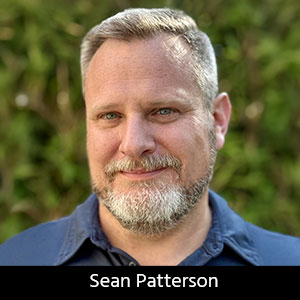
When I first heard of recyclable PCBs, I was skeptical. There are so many distinct elements of a printed circuit board: fiberglass, solder, metal finishes, and all manner of components. I have been far more apt to picture them being repurposed (unfortunate art deco PCB earrings come to mind) than recycled. But Jan Pedersen begs to differ with my lack of vision. As director of technology at NCAB, Jan is a true champion and visionary of the concept and is working to prove out the practice.
Marcy LaRont: Jan, can you explain the concept of circularity as it relates to recyclability? Honestly, I had not heard the term before your IPC Community article.
Jan Pedersen: Circularity, in the purest sense, is to reuse the scrapped PCB to produce a new PCB or another product. We use circularity to explain the lifecycle of materials, from nature and back to nature, or cradle to cradle, if you like. That can mean reusing the material in a new product or simply returning it back to nature.
Now, we all know that a PCB and its constituents are not good for nature, so we have to look at how we can circle the material back into a new product.
LaRont: That’s fascinating to me. I know that PCB particulates, like the fiberglass laminate, can sometimes be ground up and used in things like concrete. But it feels like true circularity with a printed circuit board would be impossible.
Pedersen: It is not easy to find a true solution. Having that said, promising projects are going on in China and the Western world.
To continue reading the entire conversation, which appeared in the March 2024 issue of PCB007 Magazine, click here.


