












 Marcy’s Musings: A Frighteningly Good October Issue
 It’s Only Common Sense: Win the Sale Before the RFQ Arrives
 The Marketing Minute: Marketing Is a Team Sport





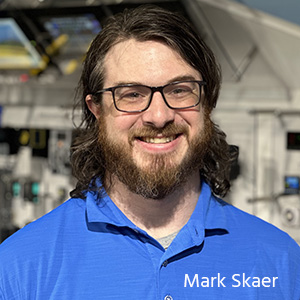
Mark Skaer specializes in automation at Omron. In this interview, he sheds light on the challenges and solutions integrating sophisticated automation technologies in various manufacturing settings by emphasizing the importance of understanding customer needs to tailor effective solutions. With a rich background in electrical engineering, Mark plays a pivotal role in showcasing Omron’s state-of-the-art automation capabilities through trade shows and technical demonstrations.
Barry Matties: Mark, tell me about yourself and your role at Omron.
Mark Skaer: I am in the Automation Technical Center on the commercial side of our business. My group is responsible for trade show demos, and we provide next-level technical support for our field engineers. If a customer has technical questions, they come to Omron to get answers. When they can’t do that, my group interfaces with the factory to ensure they get the answers they need.
Matties: Were you always interested in the automation side of electronics? What did you study?
Skaer: I studied electrical engineering, and have always enjoyed coding and programming, so I’ve always leaned toward automation. I started out in motion and drives.
Matties: Sensors are another area of interest for brownfield sites. A manufacturer has a piece of equipment that is supposed to operate to a particular specification. Still, it can be challenging to incorporate sensors into their systems so they can get necessary data and better manage their process.
Skaer: That is correct. Sensors are available, so the question is how to build them into an existing infrastructure and bring that level of data management and process control into place. Those can be very difficult challenges.
Matties: Are companies coming to you to retrofit older equipment? Some fabricators are using 25-year-old equipment—an etcher, for example—but it generally does the job for them. How does a customer come in and understand what is possible?
Skaer: Yes. We have an engineering team who supports those customers with their unique needs. It’s one of the primary struggles and a primary reason we make the proof of concept center available for customers. It allows us to showcase the technologies we offer. It's really a matter of understanding the customer’s application to offer them a solution. It’s not only that we try to understand the current challenges that customers are having but we’re also trying to prevent other potential issues to sustain the future success of their business.
To read this entire conversation, which appeared in the August 2024 issue of Design007 Magazine, click here.


