







The Future of Electronics Manufacturing in APAC
January 30, 2025 | Daniel Schmidt, MKS' ATOTECHEstimated reading time: 1 minute
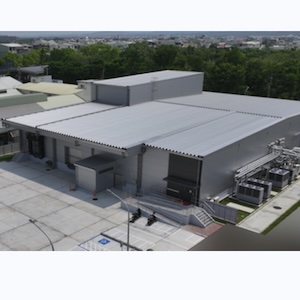
The Asia-Pacific (APAC) region is solidifying its leadership in electronics manufacturing, fueled by significant new investments from global industry leaders. This growth is driven by surging demand for high-performance components in key sectors like AI, autonomous vehicles, and sustainable energy, making strategic innovation in semiconductors and advanced electronics essential. APAC's strong supply chains further enhance its appeal to investors.
Transforming Electronics Manufacturing
The electronics industry's shift to 3D heterogeneous integration—assembling chips on organic substrates—is driving demand for new materials, processes, and technologies. This innovation, combined with the industry's increasing presence in APAC, leverages the region's robust manufacturing capabilities and investment opportunities, positioning it for substantial growth.
Meeting the Challenges of Advanced Technologies
The rise of AI, renewable energy systems, and autonomous vehicles has created a demand for components that are faster, smaller, and capable of handling immense data loads. Essential for miniaturization and high-speed applications, next-generation technologies using electrochemical deposition for advanced semiconductor packaging, semi-additive processing (SAP) for package substrates, or modified SAP (mSAP) at the printed circuit board level enable the much finer feature sizes required for increased density and fast signaling. In addition, advanced materials such as glass substrates are contributing to this trend, enabling finer feature sizes with improved signal integrity, which is critical for high-performance systems.
Read the rest of this article in the January 2025 issue of PCB007 Magazine.
Testimonial
"We’re proud to call I-Connect007 a trusted partner. Their innovative approach and industry insight made our podcast collaboration a success by connecting us with the right audience and delivering real results."
Julia McCaffrey - NCAB GroupSuggested Items
Applications, Challenges, and the Future of Flex–Packaging Integration, Part 2
04/16/2026 | Anaya Vardya, American Standard CircuitsIn the second of this two-part series, Anaya Vardya of American Standard Circuits examines applications, challenges, manufacturing considerations, and future trends emerging from the convergence of flexible printed circuit boards and advanced semiconductor packaging. Applications driving the convergence include consumer electronics, automotive systems, medical, wearables, aerospace and more.
From AI to AEP, an Impressive Array of Keynotes at APEX EXPO 2026
04/17/2026 | Marcy LaRont and Nolan Johnson, I-Connect007Each year at APEX EXPO, the Global Electronics Association provides an impressive lineup of keynote speakers to kick off the largest electronics manufacturing event in North America. This year included four keynote speeches, on topics ranging from the promise and peril of AI to the power of electronics, quantum computing, and the importance of heterogeneous integration in advanced electronics packaging.
AI, Connectivity, and Systems-Level Thinking: New Frontiers in Advanced Packaging
04/16/2026 | I-Connect007 Editorial TeamThe upcoming issue of Advanced Electronics Packaging Digest examines key developments shaping the next phase of electronics innovation, from the reliability challenges of AI-driven packaging to emerging connectivity standards and the broader systems-level implications of artificial intelligence.
Indium Showcases Solder Alloy Reliability Research for Heterogeneous Integration at ICEP-HBS
04/15/2026 | Indium CorporationIndium Corporation Senior Global Product Manager, Semiconductor and Advanced Materials, Sze Pei Lim will present a collaborative International Electronics Manufacturing Initiative (INEMI) project comparing SnBi and SAC305 solder alloys for first-level interconnects in complex heterogeneous packages.
Podcast Hits the Mark in a Materials Market
04/15/2026 | Marcy LaRont, I-Connect007The base material of a printed circuit board is its literal and functional foundation. Isola, founded in 1912 in Düren, Germany, is one of the longest-standing manufacturers of glass-reinforced laminates in the electronics industry. Originally focused on insulation and fiberglass materials, the company played an early role in supplying the foundational substrates that enabled the growth of PCB technology. As electronics advanced, Isola evolved alongside the industry, expanding from basic glass-epoxy laminates into high-performance copper-clad materials and engineered prepregs.