









 Dan’s Biz Bookshelf: Four Important Books You Need to Read (Not Just Say You Have)
 Marcy’s Musings: Advancing the Advanced Materials Discussion
 The Marketing Minute: Cracking the Code of Technical Marketing





Dr. Jennie Hwang to Deliver Two PDCs at IPC APEX EXPO
February 4, 2025 | Dr. Jennie HwangEstimated reading time: 5 minutes
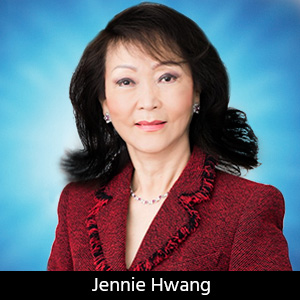
Dr. Jennie Hwang, Chair of the AI Committee of National Academies/DoD AI study, Chair of National AI Institute of NSF, and Committee of Strategic Thinking for Engineering Research in the Era of Artificial Intelligence of NSF, brings broad-based information and insights through an integrated perspective to the AI course. A pioneer and long-standing leader in SMT manufacturing and lead-free implementation brings deep knowledge and broad experiences to the high-reliability electronics course through both hands-on and advisory capacities in commercial as well as military applications. Her comprehensive and discerning knowledge has solved the toughest reliability and production issues for Class 3 and mission-critical and safety-centric electronics. Both courses provide working knowledge and pragmatic perspectives to all concerned about product reliability under harsh environments or interested in acquiring holistic perspectives of the present and future of AI.
Sunday, March 16, 1:30–4:30 p.m.
PD14: “Artificial Intelligence Era-Opportunities, Challenges, Possibilities”
As moving into the Artificial Intelligence (AI) era, the new AI tools and platforms are remaking our daily lives and every aspect of the workplace including design, research, engineering, manufacturing and management across all industries - from semiconductor and printed circuit board design to life sciences and new material design. Even not being an AI technologist, staying in the core knowledge zone is a viable strategy to remain proficient and competitive in the workplace. This course will bring an up-to-date and panoramic overview of AI to spur innovative ideas and inspire new vistas to timely capitalize the sound benefits of AI to maximize on-job efficiency and effectiveness as well as business profitability and productivity. The recent emergence of ChatGPT and Generative AI makes use cases and “possible” future more crucial to the on-job performance. The ability to balance between the AI’s omnipotent power and its downsides is key to leveraging AI as a virtuous tool. Businesses will distinguish themselves by how well they use the tools and how reliable and safe the designed tools can deliver. This course maps out AI landscape including the current and future of AI development/deployment, demystifies prevalent notions, and outlines the prerequisite to win the “AI game.” The key components behind AI technology include machine learning (ML), deep learning (DL), Neural Networks (NN), Internet of Things (IoT), digital twins, Large Language Model (LLM), AI prompt engineering, AI with justified confidence/trust, industry use-cases will be highlighted along with tips and recommendations.
Topics:
- Backdrop & diverse perspectives
- Current state of AI – global race, AI chips
- AI – justified confidence/trust
- AI hierarchy – ML, DL, NN, digital twin, IoT & use cases
- Generative AI, ChatGPT-4 (+) – nuggets, tips
- Prompt engineering – techniques, tips, and recommendations
- Enterprise opportunities – examples
- AI on jobs – impact, tips
- Data – quality, management
- Edge AI, private AI
- Global leaders & competitiveness – examples, risk-mitigation
- AGI - Artificial General Intelligence
- Brain, mind à “intelligence”
- Future of AI – near, far
- Concluding remarks
Sunday, March 16, 9 a.m.–12 p.m.
PD7: “High Reliability Electronics for Harsh Environments”
The electronics/microelectronics industry increasingly requires high-reliability products that are capable of consistently delivering reliable performance under harsh environments. This course dissects what it takes to perform in harsh environments and the rationale behind it including the most critical and discerning factors, and offers ten (10) imperatives to ensure product reliability under harsh environments. Key players in PCB assemblies including components, PCB, solder joint, and manufacturing process will be outlined. The causes and prevention of likely product failure categories and failures induced by time, voltage, and external environments, such as intermetallic compounds, electro-migration, creep corrosion, tin whiskers will be highlighted. The backward compatibility of Pb-free BGA solder-ball and solder paste, the heightened impact of solder joint voids, and the relative ranking among new solder alloys including “low-temperature solder” will be summarized. To design and produce reliable products under harsh environments, the course is created to provide a holistic approach to eschew knowns and unknowns of likely failure modes by fusing test data, real-world performance, and scientific, engineering, and manufacturing principles.
Topics
1. Reliability - philosophy, principle, practice, business factors
2. Reliability vs. quality vs. manufacturability
3. PCB assembly reliability – role of solder joint, component, PCB, manufacturing process
4. Reliability strategy – preventing likely failure phenomena and mechanisms
5. Prevent likely failure categories – knowns, unknowns
6. Integrity of PCB – factors, prevention of vulnerable areas, role of surface finish
7. Solder joint reliability – factors, relative fatigue-creep performance ranking of solder alloys
8. Backward compatibility – BGA solder ball and solder paste (lead- and lead-free)
9. Effects of solder mask
10. Effects of manufacturing processes
11. Intermetallic compounds (IMCs)– factors, prevention of “unwanted” IMCs
12. Tin whisker – factors, relative effectiveness of mitigating measures
13. Electro-migration, creep corrosion, dendritic growth – causes, prevention
14. Solder joint voids – effects, criteria, mitigation
15. Cleanliness – how clean is “clean?”
16. Other considerations
17. Reliability tests – methodologies, testing parameters vs. data vs. conclusions
18. System life-prediction modeling requirements – parameters, artificial intelligence-enabled
19. Ten (10) imperatives to ensure reliability
20. Concluding remarks
IPC is broadening its training offerings beyond traditional PCB design to engage a wider audience by covering nontraditional topics. Secure your spot in IPC’s SMT Manufacturing Productivity & Yield - Mitigating Production Defects with Dr. Hwang. For more details and to enroll, visit our course page.
About Dr. Jennie S. Hwang
International Hall of Famer of Women in Technology, Dr. Jennie S. Hwang brings deep knowledge and comprehensive experiences to this course through both hands-on and advisory capacities. She has provided solutions to reportedly the most challenging issues in production yield and high-reliability products, covering commercial and military applications. The author and co-author of ten (10) internationally-used textbooks and 750+ publications; a speaker at innumerable international and national events; on the Board of NYSE Fortune 500 companies and on various civic, government, and university boards and committees (e.g., DoD - Globalization Committee, DoD - Forecasting Future Disruptive Technologies Committee, National Materials & Manufacturing Board, Board of Army Science and Technology, and Technical Assessment Board of NIST). She has served as Chair of the Artificial Intelligence Committee of National Academies; Chair of the National Artificial Intelligence Institute of NSF; Committee of Strategic Thinking for Engineering Research in the Era of Artificial Intelligence of NS; Chair of the National Laboratory Assessment Board; Chair of Assessment Board of Army Research Laboratory; Chair of Assessment Board of Army Engineering Centers. Having received numerous honors and awards including International Hall of Fame of Women in Technology, National Academy of Engineering inductee, and named R&D-Stars-to-Watch, her formal education includes Harvard Business School Executive Program and four academic degrees in Metallurgical Engineering and Materials Science, Physical Chemistry, Organic Chemistry & Liquid Crystal Science (Ph.D. M.S., M.S., B.S.). She has held various senior executive positions with Lockheed Martin Corp., among others, and CEO of International Electronic Materials Corp. She is also an invited distinguished adj. professor of engineering School of Case Western Reserve University and serves on the University’s Board of Trustees.
Share on:


Testimonial
"The I-Connect007 team is outstanding—kind, responsive, and a true marketing partner. Their design team created fresh, eye-catching ads, and their editorial support polished our content to let our brand shine. Thank you all! "
Sweeney Ng - CEE PCBSuggested Items
MacDermid Alpha Showcases Advanced Interconnect Solutions at PCIM Asia 2025
09/18/2025 | MacDermid Alpha Electronics SolutionsMacDermid Alpha Electronic Solutions, a global leader in materials for power electronics and semiconductor assembly, will showcase its latest interconnect innovations in electronic interconnect materials at PCIM Asia 2025, held from September 24 to 26 at the Shanghai New International Expo Centre, Booth N5-E30
Knocking Down the Bone Pile: Best Practices for Electronic Component Salvaging
09/17/2025 | Nash Bell -- Column: Knocking Down the Bone PileElectronic component salvaging is the practice of recovering high-value devices from PCBs taken from obsolete or superseded electronic products. These components can be reused in new assemblies, reducing dependence on newly purchased parts that may be costly or subject to long lead times.
The Road to Reliability: Why EV Electronics Matter More Than Ever
09/16/2025 | Stanton Rak, SF Rak CompanyThe global transition to e-Mobility is redefining the design and reliability expectations of automotive electronics. Unlike their internal combustion engine (ICE) counterparts, EVs operate under "always-on" conditions and are subject to higher voltages, higher currents, and elevated thermal loads. These systems also incorporate exponentially more sensors, control units, and advanced power electronics, often tightly packed in thermally constrained spaces.
Koh Young, Fuji, and Kurtz ERSA Drive Smart Manufacturing Solutions for EV and Automotive Electronics at Kunshan, China Technical Seminar
09/11/2025 | Koh YoungKoh Young Technology, the global leader in True 3D measurement-based inspection solutions, partnered with Fuji Corporation and Kurtz ERSA to host an exclusive technical seminar for leading automotive manufacturers in East China. Held on September 4 at Fuji’s factory in Kunshan, the event gathered participants representing over 35 companies.
Indium Corporation to Highlight High-Reliability Solder Solutions at SMTA Guadalajara Expo
09/04/2025 | Indium CorporationIndium Corporation, a leading materials refiner, smelter, manufacturer, and supplier to the global electronics, semiconductor, thin-film, and thermal management markets, will feature a range of innovative, high-reliability solder products for printed circuit board assembly (PCBA) at the SMTA Guadalajara Expo and Tech Forum, to be held September 17-18 in Guadalajara, Mexico.