














 The Marketing Minute: When Everyone Is a Thought Leader, No One Is
 The Chemical Connection: More Solutions to Common PCB Etching Questions
 It’s Only Common Sense: How to Demonstrate Grace Under Pressure During Tough Times





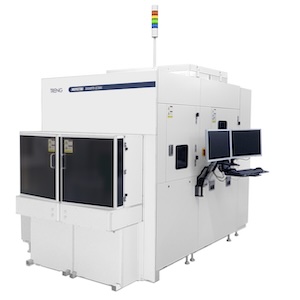
TASMIT Inc. has launched a new inspection system for glass substrates as part of its INSPECTRA® series of semiconductor wafer visual inspection systems, which has gained attention for its high efficiency in advanced semiconductor manufacturing.
The system detects not only pattern defects and foreign particles but also cracks and other defects specific to glass substrates, and is compatible with glass core interposers and rewiring glass carriers, which are used in panel level packaging (PLP) and other applications.
Semiconductor manufacturers have previously introduced inspection systems for detecting surface defects on glass substrates, but this is the industry's first system capable of inspecting both the front and back surfaces as well as the internal structure to date.
TASMIT aims to supply the large glass substrate inspection system to manufacturers of advanced semiconductors, such as PLP, targeting 1 billion yen in orders in FY2025 and 2 billion yen in FY2030.
Currently, in 2.5D packaging, a next-generation semiconductor manufacturing technology, the increasing performance of semiconductors has led to larger semiconductor chips and a higher number of chips per package due to greater integration. As a result, interposers, which serve as intermediate components that electrically connect the chips to the substrate, are also being scaled up.
Traditionally, silicon interposers made from 12-inch silicon wafers have been used, but since wafers are circular, the number of chips that can be produced from a single wafer is limited, making it difficult to meet growing demand. As an alternative, glass substrates are gaining attention as they can be manufactured in large substrate sizes and are suitable for high-density packaging, this new system is compatible with industry-standard 650mm square glass substrates.
However, as glass is prone to microscopic cracks, semiconductors produced using glass substrates may experience operational stability issues, requiring their removal during processing. Traditionally, surface inspection has relied on optical technology, but due to the design of the inspection equipment, only surface defects could be detected, and no equipment could identify backside or internal defects.
Building on the core specifications of the conventional INSPECTRA® series, a new developed glass substrate defect detection and analysis algorithm and an optical inspection mechanism utilizing polarized light have been installed, enabling the industry's first-ever double-sided and internal defect inspection. It also retains the high inspection speed, 40 seconds per panel, of the INSPECTRA® series, which enables 100% inspection and helps prevent defective products from reaching the market.


