











Copper Price Surge Raises Alarms for Electronics
July 15, 2025 | Global Electronics Association Advocacy and Government Relations TeamEstimated reading time: 2 minutes
The copper market is experiencing major turbulence in the wake of U.S. President Donald Trump’s announcement of a 50% tariff on imported copper effective Aug. 1. Recent news reports, including from the New York Times, sent U.S. copper futures soaring to record highs, climbing nearly 13% in a single day as manufacturers braced for supply shocks and surging costs.
With limited domestic smelting and refining capacity, other news outlets warn that the short-term impact of the tariff would be higher costs for critical industries, including electronics, which depend on copper for circuit boards, wiring, power systems, and thermal management.
Copper is a foundational material in electronics manufacturing, and nowhere is this more evident than in the production of PCBs. Copper is used at nearly every stage of the board-building process:
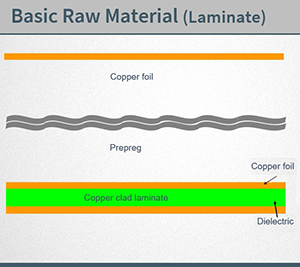
- Copper-clad laminates (CCL): Base materials for PCBs consist of dielectric substrates bonded with sheets of copper, which form the conductive layers. A multi-layer PCB may contain several ounces of copper per square foot, a figure that grows in high-density or power-intensive designs.
- Etching and trace formation: The copper layers are chemically etched to form the signal traces that connect components.
- Plated through-holes and vias: Copper is deposited via electroplating to create vertical connections across layers, an especially copper-intensive step.
- Power distribution and ground planes: Copper planes handle power distribution and act as return paths for high-frequency signals, essential for system performance.
- Thermal dissipation: In power electronics and RF devices, copper helps pull heat away from hot components, contributing to system reliability.
The problem is that electronics-grade copper, often in the form of rolled or electrodeposited foil, high-purity cathodes, and specialized plating solutions, is not easily substitutable and has few domestic sources. Nearly all U.S. PCB fabricators and assemblers import copper materials or precursors, frequently from Asia, including countries now affected by the tariff. The electronics industry, particularly advanced manufacturing segments like automotive, aerospace, telecommunications, and defense, could see ripple effects from tariff-driven copper inflation.
The Global Electronics Association is monitoring the situation closely and urging the administration to exempt electronics-grade copper and associated materials from the tariff list. Meanwhile, manufacturers should assess potential cost impacts and explore supply diversification, recycling strategies, and material substitutions.
The Global Electronics Association would like your help gauging how proposed copper tariffs could impact U.S. electronics manufacturing. Take the survey now.
To learn more, contact Richard Cappetto, richardcappetto@electronics.org.
Testimonial
"The I-Connect007 team is outstanding—kind, responsive, and a true marketing partner. Their design team created fresh, eye-catching ads, and their editorial support polished our content to let our brand shine. Thank you all! "
Sweeney Ng - CEE PCBSuggested Items
I-Connect007 Releases The Printed Circuit Designer’s Guide to… Direct Metallization: A Guide to Complex PCB Fabrication
05/12/2026 | I-Connect007As PCB complexity continues to accelerate, fabricators and OEMs are reevaluating long-standing manufacturing processes to meet the demands of AI, HDI, advanced packaging, and next-generation electronics. To address these evolving challenges, I-Connect007 is proud to announce the release of The Printed Circuit Designer’s Guide to… Direct Metallization: A Guide to Complex PCB Fabrication, authored by MacDermid Alpha Solution’s Carmichael Gugliotti.
Driving Innovation: Selecting the Right Laser Source
04/28/2026 | Simon Khesin -- Column: Driving InnovationWhen I first joined Schmoll Maschinen, I brought experience from almost every PCB process, except for laser. As I immersed myself in laser processing, I realized why it can seem so daunting to a newcomer. The complexity arises from three intersecting factors: A vast variety of laser sources: CO2, UV-nano, green-pico, UV-pico, IR-pico, and others; a diverse range of applications: Drilling, cutting, ablation, and more; and an extensive list of materials: These have vastly different absorption rates. Choosing the right machine or laser source is rarely trivial. Even for experienced engineers, answering "Which source is best?" requires examining the business's specific goals.
Institute of Circuit Technology Spring Seminar 2026: A Bright Future in Europe
04/23/2026 | Pete Starkey, I-Connect007Through the leafy lanes and spring flowers of Warwickshire and back to Meridan, the traditional centre of England, and now officially part of the Metropolitan Borough of Solihull in the county of the West Midlands, I attended the Annual General Meeting and Spring Seminar of the Institute of Circuit Technology (ICT) on April 14. Out of the AGM came notable changes in leadership at the top of the Institute: the retirement of Mat Beadel as chair and Emma Hudson as technical director. Effective May 1, Steve Driver is the new chair, and Alun Morgan is the new technical director.
ACCM Unveils Negative and Near-zero CTE Materials for Large-Format AI Chips
04/21/2026 | Advanced Chip and Circuit MaterialsAdvanced Chip and Circuit Materials, Inc. (ACCM) has launched two new materials: Celeritas HM50, with a negative coefficient of thermal expansion (CTE) of -8 ppm/°C to offset the positive CTE and expansion of copper with temperature on circuit boards, and Celeritas HM001, with near-zero CTE and the low-loss performance needed for high-speed signal layers to 224 Gb/s and faster in artificial intelligence (AI) circuits.
Fresh PCB Concepts: Designing PCBs for Harsh Environments—Reliability Is Engineered Upstream
04/23/2026 | Team NCAB -- Column: Fresh PCB ConceptsWhen engineers hear the phrase “harsh environment,” they usually think of the extreme temperature swings, vibration and shock, pressure changes, or radiation in aerospace. However, aerospace is not the only harsh environment where electronic assemblies must survive. Automotive power electronics, downhole oil and gas tools, marine controls, rail systems, defense platforms, and industrial automation equipment all expose PCBs to environments that are equally unforgiving. The stress mechanisms may differ, but the physics does not.