













 Dan’s Biz Bookshelf: ‘Abundance: How We Build a Better Future’
 Trouble in Your Tank: In Complex Systems, Design Rules Aren’t Optional
 It’s Only Common Sense: The Phone Is Still Your Competitive Advantage





Simon Khesin: A PCB Journey of Familiar and Unfamiliar Paths
November 24, 2025 | Marcy LaRont, PCB007 MagazineEstimated reading time: 1 minute
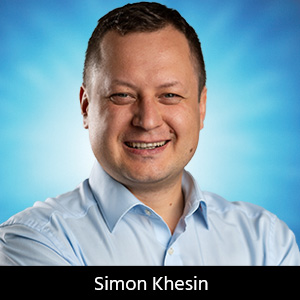
In Driving Innovation, Simon Khesin shares his extraordinary path from Moscow engineer to global account manager at Schmoll Maschinen. His story spans risk, reinvention, and resilience—from designing drilling machines to starting over in Germany—and celebrates the freedom to create and the power of staying adaptable in a changing world.
Simon is one of our newest PCB007 columnists. In this interview, we learn there's more to Simon than a technical degree.
It is great to have your perspective and expertise. Where were you born and raised, and where did you go to school?
I was born in Moscow, Russia, in 1989 and raised there, through my time at university. I studied at Bauman Moscow State Technical University, where my major was Machine Building in Electronic Technologies. My focus was on becoming a designer of machinery for both PCB production and the semiconductor industry. For my diploma work, I designed a two-spindle drilling machine intended for creating base holes in inner layers, which were to be used for inner layer alignment before lamination.
That is an impressive senior project. How did you end up in this industry specifically?
I asked my university tutor if he could recommend where I should start working in the industry. He introduced me to the CEO of a company that served as a dealer for many European, Asian, U.S., and Israeli OEMs in Russia. This company supplied complete PCB shops, along with all the necessary materials and chemistry.
To continue reading this interview, which originally appeared in the November 2025 edition of PCB007 Magazine, click here.
Share on:



Subscribe
Stay ahead of the technologies shaping the future of electronics with our latest newsletter, Advanced Electronics Packaging Digest. Get expert insights on advanced packaging, materials, and system-level innovation, delivered straight to your inbox.
Subscribe now to stay informed, competitive, and connected.
Suggested Items
Swinburne University, Siemens Launch Australia’s First Quantum Timing Study for Smarter Power Grids
04/30/2026 | SiemensSwinburne University of Technology and Siemens are undertaking first-of-its-kind research in Australia, into how quantum-enhanced timing can help future-proof the energy grid and increase grid stability.
Zhen Ding, Tsinghua University Launch Phase II R&D and Digital Transformation Program
04/30/2026 | Zhen DingZhen Ding Technology Holding Limited, a global leader in the PCB industry, held the launch ceremony for the Phase II (2026-2030) Industry-Academia Collaboration Program of the Zhen Ding-Tsinghua Joint Research Center at the Zhen Ding Technology Lecture Hall on the Tsinghua University campus.
IBM, UIUC Expand Discovery Accelerator for AI and Quantum Computing
04/20/2026 | PRNewswireIBM and the Grainger College of Engineering at the University of Illinois Urbana-Champaign (U. of I.) announced an expansion of the IBM-Illinois Discovery Accelerator Institute.
Honeywell, Boeing and University of Reading to Advance Aircraft-Based Sensing for Contrails
03/23/2026 | HoneywellHoneywell is collaborating with Boeing and the University of Reading on a project funded by the Aerospace Technology Institute (ATI) Programme to develop an aircraft-based prototype sensor designed to improve the understanding and mitigation of climate impacts from aircraft creating contrails.
New Research Group: AT&S Strengthens Microelectronics at TU Graz
02/11/2026 | AT&SAT&S is setting another strategic milestone for the technological future of Europe and is funding the establishment of a new research group at Graz University of Technology (TU Graz) in the field of microelectronics with a focus on IC substrates and advanced packaging technologies.