














 Defense Speak Interpreted: Extreme Financial Disparity in Drones and Missiles
 American Made Advocacy: Five Years of Educating, Advocating, and Influencing Legislation and Policy
 The Right Approach: The End of an Era—DoD Proposes MIL-PRF-31032 Cancellation






In advanced electronics, thermal management has become the silent determinant of performance. As devices shrink and power densities soar, how we handle heat defines not only the reliability of a system but also the pace of innovation itself. High-tech thermal control is no longer a supporting role, but a core enabler of modern technology, encompassing power modules and RF devices, as well as electric vehicles and medical systems.
However, a deeper shift is underway that transcends materials and design. The conversation is turning toward where this technology is built. Increasingly, that answer is here at home. Rather than just a political slogan or a response to global disruptions, onshoring high-tech manufacturing is an economic and technological imperative.
1. Complexity Belongs Close to Collaboration
Thermal control technologies—such as metallized ceramics, DBC and AMB substrates, and integrated packaging—exist at the intersection of precision materials and intricate engineering. These aren’t products you simply order; they’re solutions you co-create.
Innovation in this field thrives when the feedback loop between design and production is short. When engineers can iterate directly with manufacturing teams, test prototypes within days, and make real-time design adjustments, progress accelerates, quality improves, and the learning cycle tightens.
Onshoring reestablishes that proximity. It removes the friction of time zones, long logistics chains, and lost context. It reconnects the innovators with the makers and that’s where real breakthroughs happen.
2. Supply Chain Risk Is Now Strategic Risk
The past decade has shown that the global supply chain, once seen as a model of efficiency, is fragile. A factory shutdown across the ocean, a geopolitical shift, or even a single delayed shipment can halt production and cost millions.
For sectors that depend on thermal performance—including aerospace, defense, power electronics, automotive, medical—those risks are no longer tolerable. When critical components travel halfway around the world before integration, the margin for error shrinks.
Onshoring advanced manufacturing doesn’t just bring production closer; it brings control back. It reduces exposure to geopolitical and logistical instability, ensuring that production schedules are dictated by engineering, not by external disruption. In an era defined by uncertainty, that stability is a competitive advantage.
3. Advanced Manufacturing Has Outgrown the Old Paradigm
For years, the assumption was that high-tech meant offshore. Today, automation, robotics, and data-driven process control have erased many of the cost advantages once tied to geography.
The new frontier isn’t about chasing cheap labor. We must master complex processes with precision, consistency, and accountability. That’s exactly what advanced onshore manufacturing enables. It creates an ecosystem where engineering excellence and manufacturing execution live side by side, fostering faster innovation and more resilient production.
When the product is technically demanding, the factory floor becomes part of the R&D lab, and that’s something only proximity allows.
4. Partnership, Not Procurement
The companies that will thrive in the next decade aren’t those that buy parts efficiently. They build relationships intelligently. High-performance manufacturing depends on partnership: designers, engineers, and production experts working in sync from concept through qualification.
Onshoring fosters that partnership. It collapses the distance between disciplines, allowing for transparency, shared problem-solving, and joint accountability. When innovation cycles tighten, success depends less on transactions and more on trust.
5. Onshoring Is a Commitment to the Future
Bringing high-tech manufacturing home is about more than cost or convenience. It’s a statement of confidence in our capabilities, our workforce, and in the value of owning our innovations from start to finish.
Thermal control is just one lens through which to see this shift, but it’s a telling one. The most advanced systems today demand not just great designs, but also great execution. The closer that execution aligns with the minds that design it, the more sustainable, secure, and innovative the outcome becomes.
When the product is complex, the supply chain can’t be. Onshoring isn’t nostalgia, it’s evolution. The future of high-tech manufacturing belongs to those who bring precision, collaboration, and resilience back home where they can be seen, shaped, and strengthened.
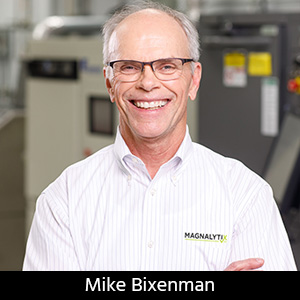
Brian Buyea is president of Remtec.


