










 Dan’s Biz Bookshelf: ‘Abundance: How We Build a Better Future’
 Trouble in Your Tank: In Complex Systems, Design Rules Aren’t Optional
 It’s Only Common Sense: The Phone Is Still Your Competitive Advantage





PCBAIR Upgrades Heavy-Copper PCBs to Solve AI Thermal Bottlenecks
January 20, 2026 | PRNewswireEstimated reading time: 2 minutes
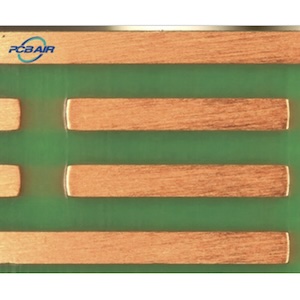
As computational demands for AI models surge, the hardware powering them faces a critical physical limitation: thermal management. Addressing this industry bottleneck, PCBAIR, a specialized PCB manufacturer and assembly provider, today announced significant upgrades to its heavy-copper manufacturing processes. These enhanced capabilities are engineered to manage the extreme power density and heat dissipation requirements of next-generation AI servers and HPC clusters.
With the Thermal Design Power (TDP) of modern AI accelerators and GPUs frequently exceeding 700W per chip, traditional PCB stack-ups are reaching their limits. Standard copper weights are often insufficient for high-current Power Delivery Networks (PDN), leading to excessive I²R losses and thermal buildup.
PCBAIR's upgraded production line now supports precision heavy-copper fabrication of up to 10 oz (approx. 350µm) for both inner and outer layers. This capability allows the PCB to function as a highly efficient heat spreader, significantly reducing reliance on external cooling solutions.
Advanced Fabrication to Overcome Etching Challenges
The upgrade specifically targets common defects in heavy-copper manufacturing, such as "undercutting" (trace narrowing) and "resin starvation" during lamination.
"The PCB has evolved from a passive carrier to an active component of the thermal solution," said Victor Zhang, CTO of PCBAIR. "The real challenge with heavy copper isn't just plating thickness; it is achieving straight sidewalls to ensure electrical performance. Our upgraded process utilizes advanced differential etching compensation and vacuum-assisted resin filling. This ensures we deliver the high-current capacity engineers need, eliminating the micro-voids or delamination risks that often affect thick-copper boards."
Key Technical Enhancements Include:
Embedded Copper Coin Technology: Integration of solid copper "coins" directly into the PCB structure to provide a vertical thermal path from hot components (like Voltage Regulators) to the chassis, overcoming the low thermal conductivity of FR-4 substrates.
Optimized Etching Factor: Proprietary chemical etching protocols that maintain trace width consistency even on 6oz+ layers, crucial for stable impedance in power modules.
High-Reliability Material Qualification: Full compatibility with High-Tg laminates designed to withstand the rigorous thermal cycles of data center environments.
Validated Reliability
To ensure these upgrades meet Tier-1 infrastructure demands, PCBAIR has implemented enhanced reliability testing. Recent internal reports indicate that PCBAIR's heavy-copper prototypes passed 1,000 cycles of thermal shock testing (-40°C to +125°C) with zero continuity failures, validating the robustness of the Plated Through Holes (PTH) and interconnects.
This capability upgrade marks a strategic expansion for PCBAIR, moving beyond standard consumer electronics to support the robust infrastructure required by the global AI and automotive industries. The company is now accepting RFQs for prototyping and low-to-mid volume production of these heavy-copper designs.
Share on:



Subscribe
Stay ahead of the technologies shaping the future of electronics with our latest newsletter, Advanced Electronics Packaging Digest. Get expert insights on advanced packaging, materials, and system-level innovation, delivered straight to your inbox.
Subscribe now to stay informed, competitive, and connected.
Suggested Items
Driving Innovation: Selecting the Right Laser Source
04/28/2026 | Simon Khesin -- Column: Driving InnovationWhen I first joined Schmoll Maschinen, I brought experience from almost every PCB process, except for laser. As I immersed myself in laser processing, I realized why it can seem so daunting to a newcomer. The complexity arises from three intersecting factors: A vast variety of laser sources: CO2, UV-nano, green-pico, UV-pico, IR-pico, and others; a diverse range of applications: Drilling, cutting, ablation, and more; and an extensive list of materials: These have vastly different absorption rates. Choosing the right machine or laser source is rarely trivial. Even for experienced engineers, answering "Which source is best?" requires examining the business's specific goals.
Institute of Circuit Technology Spring Seminar 2026: A Bright Future in Europe
04/23/2026 | Pete Starkey, I-Connect007Through the leafy lanes and spring flowers of Warwickshire and back to Meridan, the traditional centre of England, and now officially part of the Metropolitan Borough of Solihull in the county of the West Midlands, I attended the Annual General Meeting and Spring Seminar of the Institute of Circuit Technology (ICT) on April 14. Out of the AGM came notable changes in leadership at the top of the Institute: the retirement of Mat Beadel as chair and Emma Hudson as technical director. Effective May 1, Steve Driver is the new chair, and Alun Morgan is the new technical director.
ACCM Unveils Negative and Near-zero CTE Materials for Large-Format AI Chips
04/21/2026 | Advanced Chip and Circuit MaterialsAdvanced Chip and Circuit Materials, Inc. (ACCM) has launched two new materials: Celeritas HM50, with a negative coefficient of thermal expansion (CTE) of -8 ppm/°C to offset the positive CTE and expansion of copper with temperature on circuit boards, and Celeritas HM001, with near-zero CTE and the low-loss performance needed for high-speed signal layers to 224 Gb/s and faster in artificial intelligence (AI) circuits.
Fresh PCB Concepts: Designing PCBs for Harsh Environments—Reliability Is Engineered Upstream
04/23/2026 | Team NCAB -- Column: Fresh PCB ConceptsWhen engineers hear the phrase “harsh environment,” they usually think of the extreme temperature swings, vibration and shock, pressure changes, or radiation in aerospace. However, aerospace is not the only harsh environment where electronic assemblies must survive. Automotive power electronics, downhole oil and gas tools, marine controls, rail systems, defense platforms, and industrial automation equipment all expose PCBs to environments that are equally unforgiving. The stress mechanisms may differ, but the physics does not.
Advanced Packaging for AI: Reliability Starts at the Cu/Cu/Cu Microvia Junction
04/20/2026 | Kuldip Johal, MKS' AtotechThe rapid growth of AI computing, from training clusters to inference at scale, is reshaping demand across the entire electronics supply chain. Advances in technology requirements, such as higher bandwidth, lower latency, and greater compute density, are driving the development of advanced packaging technologies and transforming the PCB industry across design, manufacturing, testing, and even architecture.