














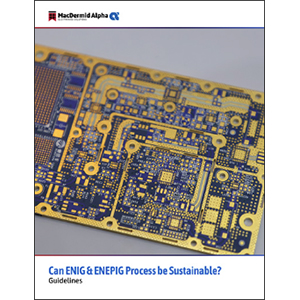
 It’s Only Common Sense: When the Cheapest Board Becomes the Most Expensive
 The Chemical Connection: Employee and Operator Empowerment in the Age of AI
 The Big Picture: Not One, But Three Grey Rhinos






Feature Q&A With Sunny Patel
Editor’s note: We asked several experts in PCB design and fabrication about the pressures shaping PCB fabrication today, including speed, density, geopolitics, and relentless technological complexity. The results were valuable insights about where we are, where we’re headed, and importantly, what it will take to get there.
Sunny Patel, technical sales manager at Candor Industries, sees the intersection of advanced manufacturing, operational realities, and strategic foresight. In this interview, Sunny offers a technically-grounded view of what will define PCB fabrication through 2030.
It’s not about incremental change, he says, but velocity, physics, and the people willing to get their hands dirty to push the limits of what’s possible. From eight-stack microvias and sub-1 mil geometries to the geopolitical “fog” surrounding capital investment, his insights reflect an industry racing to turn yesterday’s “science projects” into today’s production standards, while redefining what it means to remain valuable in a rapidly evolving manufacturing landscape.
What are the most influential changes in PCB fabrication, either as a PCB fabricator or equipment manufacturer/supplier, now through 2030?
Sunny Patel: The influential change is the convergence of extreme complexity with extreme velocity. The race to be the premier North American supplier will be won by whoever can deliver up to eight-stack microvias the fastest, without sacrificing yield or cost.
We are seeing the high-mix, high-reliability sector go into overdrive. It is no longer enough to just be capable of high-layer counts; if you cannot move quickly on the technology curve, you fall behind faster than ever before. It is a sprint to normalize what used to be considered “science projects.”
I am also watching emerging technologies attempt to simplify this process, innovations like 3D printing and Ormet paste for creating simplified stacked vias. Who knows if and when these technologies will fully mature to mass production standards, but it is exciting to see the industry thinking differently to solve these physics problems.
To continue reading this interview, which originally appeared in the January 2026 I-Connect007 Magazine, click here.


