













 Flexible Thinking: Designing Flex Circuits for Dynamic Reliability
 Global PCB Connections: Rigid-flex and Flexible PCBs—The Backbone of Modern Electronics
 Happy’s Tech Talk #29: Bend-to-Install Semi-flex FR-4





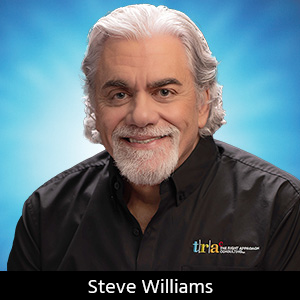
The Right Approach: Reflections on 50 Years in the Business, Part 2
The second installment of this three-part series looking back on my 50 years in the business focuses on my move up the food chain from manufacturing PCBs to managing PCB suppliers and the unique experience gained from working with the best companies in the world.
The EMS Years
In 1998, I had just reunited with my high school sweetheart (now my wife) when my Dad, the vice president of Plexus, told me they were looking for a PCB commodity manager with subject matter expertise. I interviewed for the position and became the global PCB commodity manager for Plexus, which had been my largest customer. They would not have offered me the position without my undergraduate degree.
Plexus was doing about $350 million in revenue with a number of assembly/manufacturing facilities based in Neenah, Wisconsin, including PCB design. The PCB supply base was mostly U.S.-based, and my task was to create a team of PCB commodity specialists and develop a global PCB supply base that could scale with the astronomical growth being projected by Plexus management. What little PCBs procured overseas at the time were facilitated through a third-party logistics (3PL) company that had a portfolio of PCB manufacturing companies in China, Taiwan, and Korea. I began visiting the Asian suppliers with the 3PL owner, but I quickly outgrew this business model as the 3PL controlled the quoting (including a healthy markup) and owned the direct relationships with supplier management.
Most contract manufacturers will tell you that 75% of their revenue comes from purchased parts, with the remaining 25% from all other operations (design, assembly, and manufacturing), so materials is kind of a big deal.
Plexus Materials (later rebranded as Sourcing) was divided into two distinct functions: strategic and tactical. Tactical included the local purchasing experts at each facility who managed day-to-day POs, scheduling, forecasting, and program management. My group was strategic and we had two sections: electronic components and custom components, which my team fell under. Our job was to assess gaps in our supply base, identify potential suppliers, determine the viability of each, qualify them, and negotiate supplier contracts. We were also responsible for post-qualification supplier development, and performance management, including cost reduction strategies, and resolving quality issues. We needed to develop relationships with the presidents and owners of our suppliers, so when we called on an issue, we could get results. I trained my staff to use our bullets wisely.
One day, my boss said he had identified a weakness in our process and that we needed “something like a global sourcing strategy before we get too big to manage things effectively.” He was spot on. With help from my team, I presented him a draft of the Plexus Global Sourcing Strategy a few months later, which I believe is still being used.
It included a variety of tools for assessments of a company’s technology, fit, and scalability, quality system, and long-term financial viability. The cornerstone of our strategy was to have a minimum of three qualified, competitive suppliers for every type of technology we needed to support. It also included the process of supplier performance metrics and established supplier Quarterly Business Reviews (QBRs) similar to the ones our customers held with us. This is what really set Plexus Sourcing apart from all our competitors.
Our suppliers would tell you that we were different because we truly treated them as long-term partners who looked at the lowest total cost instead of unit price. While our competition chose suppliers based on quotes, we chose ours with our GSS, which required onsite assessments, including multiple annual trips to Asia and around the U.S.
Two of my trips were particularly memorable. First, I was in Guangdong Province, China, during the SARS outbreak—a fact I didn’t know until returning home. Second, I was stranded in mainland China on 9/11. I guess these times were just part of the job description.
When it came to the painful process of getting cost reductions, we didn’t want it to come out of our suppliers’ margins; instead, we worked with our suppliers to find ways to reduce their cost by process improvements or design changes (DFM). This is where having subject matter experts as commodity specialists was a differentiator. While our competition would change suppliers for a nickel cost down, we worked with ours for a win-win outcome.
Commodity Migration
About halfway through my 15 years with Plexus, my friend and counterpart who managed all custom parts (except PCBs) decided to move back into his prior commodity specialist role, and recommended I take over his role. While electronic components were the 500-pound gorilla in terms of overall spend (as every PCB required thousands of components), PCBs were the equivalent on the custom side. From simple electronic assemblies and metal or plastic enclosures to plug-in-ready MRI medical devices, they all required PCBs.
So, I inherited all things custom, adding metal fabrication, plastic injection molding, die casting, wire harness, and anything else that was build-to-print. I also inherited my colleague’s talented team of commodity specialists. As Plexus grew, so did my team and supply base, with most of my subject matter expert commodity specialists coming from their respective industries. The crown jewel of our team came when Plexus was rewarded the Coca-Cola Freestyle program. We chose the best suppliers for the program, drove costs down through DFM, and managed every single engineering change order that came down daily among the suppliers, design firms, and Coca-Cola, until this revolutionary product was ready for the incredibly successful launch to market.
Coca-Cola was a high maintenance customer, and I couldn’t have been prouder of my team for their part in this historical accomplishment. These were some of the most talented professionals I have ever had the pleasure of working with. After 15 years as the custom global sourcing manager, my team controlled about $500 million in annual spend and Plexus’ revenue had grown to $2.8 billion annually and was on target to surpass $4 billion in FY 2025.
There were also a number of notable accomplishments at Plexus that set the stage for the next phase of my career as a small business owner, consultant, and author. First, early in my Plexus career I realized a bachelor’s degree would not continue to be a differentiator, so I earned an MBA. After graduating, I became an adjunct professor at one national and two regional universities, teaching at the master’s level for 12 years (while still keeping my day job). This ignited my passion for teaching and public speaking, and led to teaching Professional Development Courses at the annual APEX EXPO, which continues to this day.
IPC/APEX PD Course
My prior reputation in the PCB manufacturing industry was limited to the small circle of PCB shops, customers, and suppliers I had worked for and with. Being the guy who controlled the type of spend my team managed elevated my profile and industry recognition a hundred-fold, as did working intimately with the best PCB and custom manufacturers in the world.
I was always looking for a way to better connect Plexus with our customers and suppliers. The next step I took was to create a quarterly newsletter called “The Boardshop,” with a distribution to our internal employees, customers, and suppliers, along with some industry movers and shakers. Each issue featured a Supplier Spotlight, where I would interview the owner of one of our board shops and give updates on the industry and new technology our suppliers were putting out.
For example, the issue that followed 9/11 detailed my experience of being stranded in China and what was happening back home, how it transformed me into a true American Patriot, and how life was short. That prompted me to get off my butt and propose to my wife.
The editor of Circuitree, the trade magazine for our industry at the time, read the newsletter and asked me to write my own monthly column, through which I have published over 250 articles and white papers over the past 25 years. Fortunately, my column survived a couple of ownership/name change transitions before solidifying with the current I-Connect007 Magazine, part of the go-to industry global electronics resource media family. I always had a passion for writing, but this really kick-started my writing career, and of course, increased my presence in the industry.
Also, early in my Plexus years, I created the Plexus PCB Symposium, an annual offsite event that provided an evening of social networking followed by a full day of technical presentations from the experts of our PCB suppliers. The audience of 300-plus included our top customers, suppliers, and internal employees. The concept of putting customer and supplier competitors in the same room raised more than a few senior management eyebrows, but the event was a smashing success that continued for almost a decade.
I also published my first book, Survival Is Not Mandatory: 10 Things Every CEO Needs to Know About Lean. Being involved in quality and best practices throughout my career, I felt supremely qualified on the topic, which added to my reputation as an expert in quality, Lean/best practices, and PCBs. I-Connect007 published the book, and while gaining critical acclaim in the industry as a “must-read,” the Plexus director of Lean tried to cause quite a ruckus with senior management about a Plexus employee publishing a book about Lean who wasn’t part of the Lean group.
Since I had received prior approval from the corporate communication department and already been inducted into the Plexus Author’s Club, my advice to the Director of Lean was, “If you are worried about it, write your own damn book!”
Time To Pivot
Several things contributed to leaving Plexus. First, we had lost the magic that made our sourcing group special. As the company grew, more senior executives were brought in from our competition, and after several years we started to become “just like them.” I knew it, my team knew it, and our suppliers knew it. Combined with being denied numerous advancement opportunities because I was “too valuable” in my current position, I had lost the excitement of coming into work every day.
I could also sense an unspoken factor developing with the powers-that-be at the highest levels of the organization, one with which they were becoming increasingly uncomfortable with. I was getting more industry attention because of the newsletter, my magazine column, the PCB Symposium than as the custom global sourcing manager at Plexus. So, three months after my stellar 15-year annual review, anniversary party, and gift, my position was eliminated, and commodity management was moved to our Guadalajara operations for North America and our China Sourcing Office for Asia/EMEA. Though the company would never admit it, I also knew that turning 55, and being maxed out at a high compensation level and stock options were contributing factors. So, what next?
Part 3 will finish this series with my reinvention journey and creating my dream job over the past 13 years.
This column originally appeared in the February 2026 issue of I-Connect007 Magazine.


