













 Flexible Thinking: ‘Let There Be Light’–Emitting Diodes!
 Target Condition: Flex and Rigid-flex Solutions in A&D Display Electronics
 Global PCB Connections: Rigid-flex and Flexible PCBs—The Backbone of Modern Electronics





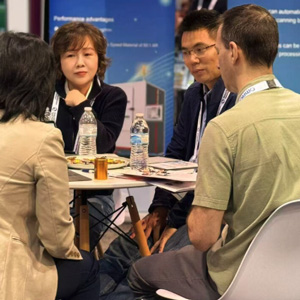
Henger is pushing the boundaries of PCB manufacturing with its dynamic, next-generation plasma technology, purpose-built for the demands of AI-driven electronics. As designs move toward higher density, faster speeds, and advanced materials like M9 laminates, Henger’s innovative plasma systems deliver precise, uniform, and energy-efficient processing. In this interview, company leaders, Zhiquang Li and Ping Tang discuss how their cutting-edge solutions are redefining cleaning, surface activation, and process control—positioning plasma technology as a critical enabler of reliability and performance in the rapidly evolving AI hardware landscape.
Mr. Li, the current surge in AI computing power is driving the PCB industry toward higher speeds, higher density, and greater reliability. What core role do you think plasma equipment plays in this AI-driven industrial upgrade? What specific advantages does Henger's plasma equipment have compared to similar products in the industry?
Mr. Zhiquang Li: First, I'm very grateful for magazine's attention and the industry's recognition of Henger's expertise in plasma equipment. Under the current AI wave, the core changes in the PCB industry are concentrated in two dimensions: "high-speed transmission" and "precision manufacturing," posing significant challenges to traditional PCB manufacturing processes. Plasma equipment is core to solving this pain point, and its necessity is reflected in two key ways.
First is plasma’s advantage in cleaning, using a dry vs. a wet process. AI is driving the evolution of PCBs toward ultra-high layers and high densities, with 78-layer and even 87-layer PCB designs becoming mainstream. The aspect ratio of microvias and blind/buried vias continues to increase. Traditional wet cleaning methods either fail to completely remove adhesive residue and organic contaminants from the via walls or cause mechanical damage to the substrate, leading to signal attenuation, copper voids, and other problems.
Plasma treatment, with its advantages of dry cleaning and deep penetration, can precisely remove drilling debris and surface contaminants from via walls while simultaneously activating the surface. This significantly improves the adhesion of subsequent copper plating and solder mask application, ensuring the integrity of high-speed signal transmission lines. This is a fundamental prerequisite for high-reliability PCBs in the AI era.
Second, Henger has been involved in the R&D of plasma equipment for many years. Specifically, it has optimized its equipment to meet the advanced PCB needs of the AI era. It can achieve precise control of plasma density, ensuring uniform processing across the entire board surface and within high aspect ratio microvias, solving the pain point of uneven processing in high-end PCBs within the industry. Simultaneously, our equipment can flexibly switch between various process gases, including oxygen, argon, and nitrogen-hydrogen mixtures, to meet different process requirements and adapt to the diverse processing scenarios of AI server PCBs. Compared to similar products, our equipment also provides advantages in energy consumption optimization and process window adaptability, ultimately improving PCB yields.
Our newest generation plasma equipment is the core competency we showcased at APEX EXPO 2026.
We understand that M9-grade copper-clad laminate has become a core material for the next generation of AI server PCBs, achieving a qualitative leap in dielectric properties and thermal expansion coefficient. However, this also creates challenges, such as increased processing difficulty and higher product costs. How does Henger plasma equipment specifically address these challenges? Can the equipment adapt to the processing needs of M9 material?
Mr. Li: The widespread adoption of M9 material is an inevitable result of increased AI chip computing power driving innovation in the development of new PCB materials. It's also a core indicator of the current PCB industry's evolution from M8 to higher-level technologies. Henger invested in R&D long before the large-scale application of M9 material, and have deeply studied its material properties and processing challenges.
M9 material uses high-purity quartz fiberglass cloth, which has high hardness. Quartz fragments and adhesive residue left after drilling are extremely difficult to remove, and its low dielectric properties require extremely high surface cleanliness; even slight residue can cause signal transmission problems. Second, its coefficient of thermal expansion (CTE) is about 30% lower than FR-4, requiring strict thermal matching with copper foil. Insufficient surface activation can easily lead to decreased adhesion. Furthermore, M9 has high processing costs and high drill bit consumption. How to reduce losses and improve yield through process optimization is a challenge.
To address this, Henger has conducted customized R&D on its plasma equipment to support intelligent adjustment of process parameters and to automatically match the optimal processing solution to the specific specifications of M9 material (such as resin type and quartz cloth thickness). This helps customers reduce trial-and-error costs, minimize processing losses, and improve production efficiency. This is a core advantage that allows Henger's plasma equipment to be adapted for the large-scale production of M9 material. We firmly believe that plasma equipment is not simply auxiliary processing equipment, but a key support for the industrial application of high-end materials such as M9.
Henger's participation in APEX EXPO 2026 in the United States comes at a crucial time for the global PCB industry's transformation toward AI and high-end technologies. We are also seeing M9 material increasingly used for large-scale applications. What were the company's core objectives for participating in APEX EXPO this year?
Ms. Ping Tang: For Henger, participating in APEX EXPO 2026 had two core objectives: First, to showcase Henger's technological strength in plasma equipment to the global PCB industry, especially its customized solutions for high-speed PCBs and M9 material processing in the AI era. We want more overseas customers to understand the technological breakthroughs of Chinese domestic equipment companies. Next, we wanted to exchange ideas, listen to the core needs of global customers, especially the process pain points in the North American market for AI servers and high-end packaging substrates. We will continually strive to optimize our products to achieve that synergy between technology and the market.
Ms. Tang, in light of current industry trends, how do you see Henger's future technology roadmap with your plasma equipment will be developed to better align with the changing needs of the PCB industry as technology and processes continue to advance?
Ms. Tang: In line with current industry trends, Henger's future strategy will revolve around three core directions: AI adaptation, high-end breakthroughs, and green efficiency. We will continue to deepen our cooperation with upstream and downstream partners in the PCB industry supply chain. We will continue to closely follow the technological iterations of high-end materials such as M9+ and quartz cloth, and will further optimize the process adaptability of our plasma equipment.
We will increase the application of AI technology in our plasma equipment, develop intelligent monitoring and parameter self-optimization systems, and achieve real-time monitoring of equipment operation status and automatic adjustment of process parameters to help customers reduce labor costs and improve production stability.
Finally, in response to the global trend toward greener manufacturing, we will continue to optimize the environmental performance of our equipment, further reduce energy consumption and VOC emissions, comply with the EU RoHS directive and China's VOC emission reduction targets, and provide customers with efficient, energy-saving, and environmentally friendly plasma treatment solutions.
Henger has always adhered to the concept of empowering the PCB industry to upgrade its manufacturing capabilities through technological innovation. Our participation in APEX EXPO 2026 was not only an important step in our expansion into the global market but also a demonstration of our determination to deepen our presence in the high-end plasma equipment field.
Thank you, Mr. Li and Ms. Tang. It was a pleasure talking to you.


