













 It’s Only Common Sense: Build Your Business on Reputation, Not Neglect
 The Marketing Minute: If Your Marketing Budget Gets Cut in Half, Then What?





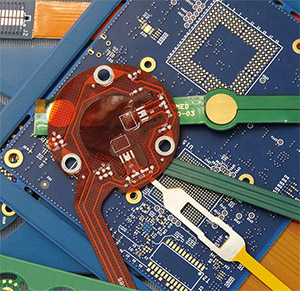
In the second of this two-part series, I will examine applications, challenges, manufacturing considerations, and future trends emerging from the convergence of flexible printed circuit boards and advanced semiconductor packaging.
Applications Driving the Convergence
Consumer Electronics
Smartphones, wearables, and foldable devices are prime examples of flex and advanced packaging working in tandem. System-in-package (SiP) modules integrate multiple dies, while flex PCBs interconnect them across compact and often curved internal geometries.
Flex enables antenna integration, camera and sensor placement flexibility, and ultra-thin device architectures.
Automotive and Mobility Systems
ADAS, EV power electronics, and autonomous platforms require high-performance compute modules in constrained spaces. Advanced packaging supports AI and sensor fusion, while flex PCBs route signals through harsh, vibration-heavy environments. This convergence enables reduced module size, improved reliability, and simplified assembly in complex vehicle geometries.
Medical and Wearable Devices
Implantable and wearable medical systems demand conformability, biocompatibility, and high functionality. Advanced packaging concentrates processing and sensing, while flex circuits conform to the human body.
Applications include neural interfaces, continuous monitoring wearables, and miniaturized diagnostic tools.
To continue reading this article, which appeared in the March 2026 edition of I-Connect007 Magazine, click here.