












 Flex Connections: Material Selection in Nickel vs. Copper Tabs
 Flex Connections: Four Lessons in Engineering Judgment for PCB Designers
 Flexible Thinking: ‘Let There Be Light’–Emitting Diodes!





Target Condition: Signal Integrity Without Borders
I started my PCB design career in 1980, long before “signal integrity” became a formal discipline. Back then, we were trying to “connect the dots” on simple, two-sided PCB layouts using the new $80,000 interactive graphics terminals we called a CAD system. By the time PCB design conferences emerged in the 1990s, signal integrity had begun to formalize into a discipline of its own.
Much of the early, visible thought leadership came from North America and parts of Europe. These were engineers who not only developed the fundamentals but also did the hard work of translating Maxwell’s equations into something the rest of us could apply without losing our minds. But signal integrity has never been geographically constrained.
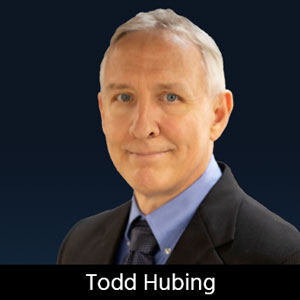 Before going any further, I’m adding another North American master to those to whom our industry owes a considerable debt of gratitude: Dr. Todd Hubing. He is an American electrical engineer, educator, and consultant specializing in EMC. He is professor emeritus of electrical and computer engineering at Clemson University and president of LearnEMC, an organization dedicated to EMC education and electronic-system design support. Hubing is widely respected for advancing both the understanding and teaching of EMC principles in vehicular and electronic systems.
What sets Hubing apart is his ability to translate complex electromagnetic theory into practical engineering methods for PCB layout, grounding, shielding, filtering, return-current control, and EMC troubleshooting. His teaching philosophy emphasizes understanding current paths and field coupling rather than blindly following “design rules,” an approach that consistently shines through in his courses, publications, and industry presentations.
Zooming Out the Map
Last month, my column highlighted a dozen masters of signal integrity, most of whom reside in North America. Yet the global signal integrity community has been advancing high-speed design, power integrity, packaging, electromagnetic modeling, and measurement science for decades, often through conferences, universities, and publications less visible to North American audiences. The result has been a quieter parallel track of innovation that now underpins much of today’s AI hardware, hyperscale computing, and high-speed electronic systems.
Before AI completely takes over the world, I would like to pause that silence and continue acknowledging the many researchers, educators, and practitioners around the globe whose work has shaped our collective understanding of signal integrity. Their contributions—spanning PCB design, interconnect modeling, EMC, packaging, materials, simulation, and measurement—form much of the foundation upon which modern AI infrastructure now depends.
So, please join me in recognizing signal integrity pioneers from Europe, Asia, the Middle East, Australia, and beyond who have advanced our science. Several of them have trained generations of engineers, published seminal research, developed widely used methodologies, and influenced the tools and systems we now take for granted. Their work reminds us that signal integrity has always been an international discipline.
And while AI may soon generate simulations, optimize layouts, suggest stackups, and probably critique our via fields with unsettling confidence, it still depends on the physical principles these masters spent decades researching, explaining, measuring, debating, and teaching the rest of us to respect. Return currents still follow the path of least impedance. Discontinuities still create reflections at the worst possible locations. Power planes still find creative new ways to resonate, and electromagnetic fields still stubbornly obey Maxwell instead of marketing slides.
Japan: Dr. Kenichi Okada of the Tokyo Institute of Technology leads in RF and high-speed IC design, with work at the chip-to-package boundary in 5G and emerging 6G systems. Dr. Masayuki Fujita of the University of Tokyo has advanced EDA and system-level modeling, enabling earlier and more scalable signal-integrity-aware design.
Taiwan: Ruey-Beei Wu is a professor at National Taiwan University in Taipei, recognized for his contributions to SI, PI, and electromagnetic modeling of high-speed interconnects. His work is frequently published and cited in IEEE journals and conferences. He is also known for collaborating with industry and mentoring engineers in advanced SI/PI design methodologies.
Belgium: Dr. Eric Beyne of imec is a leading researcher whose work in 3D integration, chiplets, and advanced interconnects has shaped system-level signal integrity and modern high-speed system architecture through system-technology co-optimization of signal, power, and thermal effects.
Australia: Christophe Fumeaux is a professor at the University of Queensland, who has contributed to electromagnetics, antennas, and high-frequency modeling relevant to SI.He has published extensively in IEEE journals and conferences and is an IEEE Fellow. His research bridges theory and practical design, influencing RF systems, antennas, and high-speed electronic applications.
Barry Olney is an Australian PCB design engineer, educator, and technical columnist best known for his long-running “Beyond Design” column in I-Connect007. He is the managing director of In-Circuit Design Pty Ltd (iCD), a company specializing in high-speed PCB design, signal integrity simulation, stackup planning, and power distribution network (PDN) analysis software.
Within the electronics industry, Olney is frequently regarded as a master of signal integrity because of his decades-long focus on high-speed digital behavior, impedance control, EMI/EMC mitigation, crosstalk, PDN analysis, and electromagnetic field behavior in multilayer PCBs. His writings consistently bridge theory and practical PCB implementation for working engineers.
Italy: Dr. Giovanni Ghione of Politecnico di Torino links device physics to system-level signal behavior in high-frequency systems. In Germany, Dr. Janusz Grzyb of Fraunhofer IAF works at terahertz and millimeter-wave frequencies, where SI becomes a fully electromagnetic problem.
The Human Layers Still Matter
Signal integrity is a story of accumulation, not replacement, moving from intuition to physics to measurement and now to intelligent automation. It is a global discipline shaped by engineers worldwide, many of whom may never headline major conferences but continue to define the behavior of today’s advanced systems. Signals do not care where the engineer is based; they only respond to whether the physics is respected.
Before SI becomes fully abstracted into systems that design faster than humans can follow, it is worth acknowledging the people who made that future possible. Because once the tools no longer need explanation, the industry may also forget who first taught the rest of us why the explanations mattered in the first place.
This column originally appeared in the June 2026 issue of I-Connect007 Magazine.


