











 Marcy’s Musings: A Frighteningly Good October Issue
 It’s Only Common Sense: Win the Sale Before the RFQ Arrives
 The Marketing Minute: Marketing Is a Team Sport





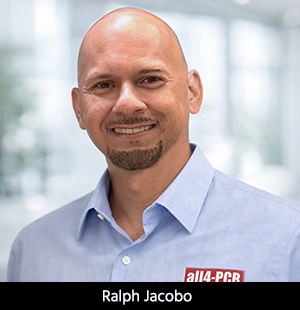
All4-PCB, a technology-focused supplier serving the PCB, IC substrate, chemical milling, and LTCC markets, works with manufacturers across North America to deliver equipment, materials, and process solutions that address the lamination challenges of HDI, advanced packaging, and complex multilayer designs. Under the leadership of Managing Director Ralph Jacobo, the company has continued expanding its support for advanced electronics manufacturing operations.
Among its key partnerships is Lauffer, the Germany-based press manufacturer founded in 1872 and widely recognized for its hydraulic and electric lamination press systems. Lauffer’s technology is increasingly relevant as PCB fabricators confront the demands of higher layer counts, sequential lamination cycles, and every layer interconnect (ELIC) designs. Ralph discusses the role of lamination in advanced PCB fabrication, and how Lauffer’s approach to automation, process control, and material handling is helping manufacturers improve quality, registration, and reliability in some of today’s most demanding builds.
Marcy LaRont: Ralph, when we met in April, all4-PCB had recently announced growth in the U.S. market with Lauffer’s lamination products. Tell me more about that.
Ralph Jacobo: Our partnership with Lauffer in the U.S. goes back several years. Over that time, we have seen growing demand for lamination press technology. Much of that demand is driven by facility expansions, the need for increased production capacity, and the replacement of older press systems that cannot maintain the quality and consistency required for today’s advanced PCB designs and higher-tech products.
LaRont: Lamination is a key process, especially when multiple lamination cycles are involved. What defects arise when the lamination process is not well controlled?
To continue reading this interview, which appeared in the June 2026 edition of I-Connect007 Magazine, click here.


