















 Flex Connections: Material Selection in Nickel vs. Copper Tabs
 Flex Connections: Four Lessons in Engineering Judgment for PCB Designers
 Flexible Thinking: ‘Let There Be Light’–Emitting Diodes!





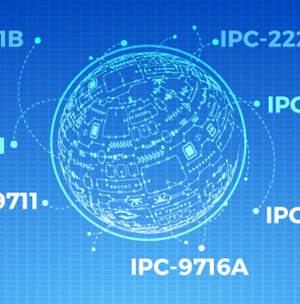
Each quarter, the Global Electronics Association releases a list of standards that are new or have been updated. To view a complete list of newly published standards and standards revisions, translations, proposed standards for ballot, final drafts for industry review, working drafts, and project approvals, visit electronics.org/ipc-standards. These are the latest releases for Q2 2026.
IPC-1401B, Environmental, Social Governance (ESG) Management System Standard
IPC-4101B specifies the requirements and best practice guidelines for an effective environmental, social, and governance (ESG) management system to help an enterprise integrate ESG as a customer requirement into products and value chain activities, as well as to identify and manage ESG risks and opportunities through cooperation with customers and suppliers, so as to enhance the competitive advantages of the enterprise and its supply chain.
IPC-2223F, Sectional Design Standard for Flexible/Rigid-Flexible Printed Boards
IPC-2223F establishes the specific requirements for the design of flexible and rigid-flexible printed board applications and their forms of component mounting and interconnecting structures. The flexible materials used in the structures are comprised of insulating films, reinforced and/or non-reinforced, dielectric in combination with metallic materials. These interconnecting boards may contain single, double, multilayer, or multiple conductive layers and can be wholly flex, or a combination of flex and rigid.
IPC-4202C, Specification for Flexible Base Dielectrics for use in Flexible Printed Boards
The IPC-4202C standard establishes the classification system, qualification, and quality conformance requirements for flexible metal-clad dielectric materials to be used for the fabrication of flexible printed boards. The purpose of IPC-4202C is to classify and characterize base materials for use in flex and rigid-flex boards for electronic applications. It is to be used for procurement and quality assurance activities.
IPC-6921, Requirements and Acceptance for Organic IC Substrates
IPC-6921 establishes and defines the qualification, performance requirements, and acceptance requirements for organic IC substrates, including wire bonding and flip-chip IC substrate products. The purpose of IPC-6921 is to provide requirements for the qualification and performance of rigid organic substrates based on the following constructions and/or technologies. These requirements apply to the finished products unless otherwise specified:
- Double‑sided organic IC substrates with or without plated through-holes (PTHs)
- Multilayer organic IC substrates with or without PTHs or buried/blind vias/microvias
- Passive embedded circuitry on organic IC substrates with capacitive planes or resistive planes
IPC-9711, Generic Requirements for Automated Inspection Process Control
IPC-9711 provides generic requirements for automated inspection systems to define, set up, establish, and apply process controls. Requirements include inspection parameters, calibration, detectability, resolution, threshold limits, and program setups, measurement system analysis (MSA), maintenance, and verification protocols. The standard establishes generic requirements applicable to automated inspection systems and is intended to be used in conjunction with product/process-specific standards of the IPC‑971X series.
IPC-9712, Requirements for Automated Inspection Process Control for IC Substrates
The IPC-9712 standard provides requirements for automated inspection systems—automated optical inspection (AOI), automated visual inspection (AVI), and metrology—to define, set up, establish, and apply process control for manufacturing integrated chip substrates, including general and specific process and equipment conditions. Requirements include those for operating and inspection parameters, vision systems, lighting conditions, calibration, detectability, resolution, threshold limits, process windows, program setups, measurement system analysis (MSA), maintenance, and verification protocols, in addition to the generic requirements of IPC-9711.
IPC-9716A, Requirements for Automated Inspection Process Control for Printed Board Assembly Processes
IPC-9716A provides specific requirements for automated inspection for printed board assembly processes in addition to the generic requirements of IPC-9711. Requirements are based on the use of inspection systems such as solder paste inspection (SPI), automatic optical inspection (AOI), and automatic X-ray inspection (AXI).
The purpose of IPC-9716A is to set industry-defined requirements for inspection systems to reduce false calls, ensuring quality and reliability while improving throughput and shortening cycle times. This standard also supports electronics manufacturers to enable advanced manufacturing, real-time data analytics, and control capabilities.


