













 Defense Speak Interpreted: Will Defense Become a Totally New Supplier for Drone Electronics?
 American Made Advocacy: PCBs in the National Spotlight
 The Right Approach: The End of an Era—DoD Proposes MIL-PRF-31032 Cancellation





Every electronics manufacturer generates data. The challenge is knowing what to do with it.
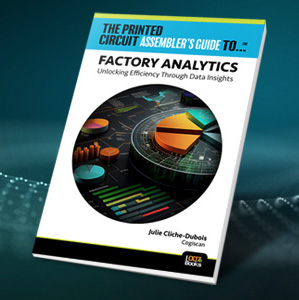
In The Printed Circuit Assembler's Guide to... Factory Analytics, Julie Cliche-Dubois of Cogiscan explains how manufacturers can transform disconnected machine data into meaningful insights that improve productivity, quality, and profitability. Rather than focusing on analytics as an IT initiative, the book demonstrates how factory-wide visibility empowers everyone, from line operators to quality managers, to make smarter decisions.
Here are three key takeaways from the book.
1. Good analytics starts with good data.
Factory analytics is only as valuable as the data behind it. Modern electronics manufacturing lines include equipment from multiple vendors, each producing information in different formats, using different communication protocols, and often requiring separate software licenses.
Before manufacturers can measure performance or identify trends, they must normalize and contextualize this information. Cliche-Dubois explains why creating a common language across machines is the foundation for meaningful analytics, and why skipping this step often leads to misleading conclusions.
2. Every role benefits from factory analytics.
Analytics isn't just for executives reviewing dashboards at the end of the month. Throughout the book, Cliche-Dubois shows how different stakeholders rely on different metrics to improve daily operations.
A line operator may focus on machine utilization and downtime, or a manufacturing engineer will analyze placement accuracy or reflow performance to optimize throughput. Quality managers monitor defect trends, first-pass yield, and inspection results to identify recurring issues before they become customer problems.
By delivering the right information to the right people, factory analytics becomes a practical decision-making tool rather than simply another reporting system.
3. Measuring factory health drives continuous improvement.
It’s important to look beyond individual machines to rate overall factory performance. Metrics such as overall equipment effectiveness (OEE) provide a broader view of operational health by combining availability, performance, and quality into a single measurement.
When combined with normalized shop-floor data and integrated production systems, these analytics reveal bottlenecks, highlight opportunities for improvement, and support continuous optimization throughout the entire manufacturing operation. The result is higher productivity, lower costs, and more consistent product quality.
The Bottom Line
Electronics manufacturing is becoming data-driven, but competitive advantage comes from transforming information into action. Factory Analytics offers a practical roadmap for doing exactly that, helping manufacturers leverage data to improve efficiency, reduce waste, and build more resilient operations.
Download your free copy of The Printed Circuit Assembler's Guide to... Factory Analytics today and learn how smarter analytics can drive smarter manufacturing decisions.


