















 The Marketing Minute: Marketing Is a Team Sport
 The Right Approach: Old Philosophies, New Tools
 Trouble in Your Tank: HDI and UHDI—Building the Foundation of Advanced Packaging





Bridging the Pacific: Why Global Manufacturing Is No Longer Optional
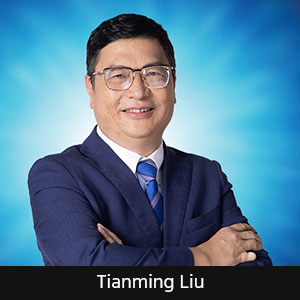
Editor’s note: This is a new column by Tianming Liu, president of First Quality Circuits Co. (FSQuality) and Shui Fuji Electronics Technology (Fuji PCB) that will appear monthly in SMT007 Magazine.
When we started our company in 2009, we made two practical commitments: build PCBs quickly and with consistent quality. Those principles became part of the FS Quality name and shaped how we developed our factories, trained our people, invested in technology, and served customers around the world.
Before founding the company, I spent 13 years working in Japan. That experience taught me the importance of process discipline, preparation, attention to detail, and respect for customer requirements. It also showed me that manufacturing improves when people from different backgrounds share knowledge and combine their strengths.
Today, no serious electronics manufacturer operates in isolation. Even a company producing entirely within its own country depends on materials, equipment, software, components, technical standards, and knowledge likely developed elsewhere. Global manufacturing is present in the machines we operate, the products we build, and the markets we serve.
This column, Bridging the Pacific, will examine that reality from the factory floor and engineering office. I will discuss global manufacturing from the perspective of someone who has spent his career building a company, solving production problems, working with international customers, and learning that trust is required for two companies to become true partners.
The True Meaning of Global Manufacturing
There is an important distinction between buying internationally and manufacturing globally. Buying internationally can be a transaction: A customer sends a drawing, receives a quotation, places an order, and waits for delivery. Global manufacturing requires engineering cooperation, shared quality expectations, clear communication, cultural understanding, technical transparency, and a commitment to solving problems together.
A PCB demonstrates this clearly. The product may be designed in North America, but the laminate may come from Japan, and the fabrication equipment may include technology developed in Europe, the United States, China, and other parts of Asia. The board may be manufactured in Thailand or China and assembled closer to the customer’s final market.
The finished product is not the achievement of one country. It is the result of a connected manufacturing system in which every participant must perform well.
The Importance of Domestic Manufacturing
Global and domestic manufacturing should not be treated as competitors. A resilient electronics industry needs both. North American manufacturers provide proximity, specialized capabilities, quick-turn support, and close customer contact. International partners provide capacity, scalability, complementary technologies, supply-chain alternatives, and access to established manufacturing ecosystems. The strongest strategy combines these advantages according to the needs of each program.
During my career, I have seen international cooperation deliver results that would have been difficult for a single company to achieve alone: An engineer in one country identified a design concern, elsewhere a manufacturing team recommended a change based on their production experience, and a material supplier contributed data that helped everyone understand the issue. The result was a more reliable product because several organizations shared their knowledge.
This is productive globalization. It is not anonymous purchasing from a distant factory, but a coordinated problem-solving among people who may speak different languages but understand the same technical requirements.
Technical Work Creates a Common Language
A microsection, test result, process capability study, or failure analysis does not depend on nationality. The data supports the conclusion, or it does not. Customers must be able to understand how their products are manufactured, how quality is measured, and how problems are corrected.
A supplier should never expect trust simply because it has a modern factory, impressive equipment, or numerous certifications. Those qualifications are important, but they are the beginning of trust, not the end. I’ve learned from experience that trust grows when a supplier communicates honestly, protects the customer’s interests, meets its commitments, and responds responsibly when something goes wrong.
Every manufacturer eventually faces a difficult issue, from changing materials to a design that reaches the edge of process capability. Other issues I’ve seen include rising demand, geopolitical uncertainty, health emergencies, and transportation disruptions. How does a responsible partner react to these situations? They should report situations quickly, explain them clearly, present practical options, and remain involved until the problem is resolved.
Customers do not expect perfection as much as they need honesty, competence, and accountability. They want a manufacturing partner that tells them the truth early enough for the information to be useful.
A resilient supply chain needs qualified alternatives. This does not mean constantly moving orders to obtain a slightly lower price. Rather, it’s knowing which manufacturing partners can support each technology, volume, market, and risk requirement. The time to qualify a second source is not after the first source fails or when the preferred laminate becomes unavailable. Preparation is always less expensive than recovery.
We see our role as more than manufacturing boards based on a drawing. We must understand why the product is being built, where the technical risks exist, and what the customer needs. The correct manufacturing solution depends on the program. Geography is just one factor, not the only one.
Conclusion
My years of experience have taught me that a valuable global partner connects worldwide manufacturing capability with accessible engineering, responsive communication, transparency, and personal accountability.
That is the purpose of this column, and why I chose to talk about “bridges.” A bridge creates a dependable way to cross two sides. In manufacturing, that bridge is built from shared technical standards, trusted relationships, transparent information, and performance proven over time.
Companies should stop viewing their supply chains as lists of vendors and begin designing them as engineered systems. Every critical capability should have a defined purpose, a qualified connection, and a practical alternate path. We would never accept a circuit board where the entire function depended on one fragile connection. We should not accept a supply chain designed that way either.
Ths column originally appeared in the September 2026 issue of SMT007 Magazine.


