















 Punching Out: What is a Net Working Capital Adjustment?
 It’s Only Common Sense: Starting a New Series on Building a Company They Never Want to Leave
 Dan’s Biz Bookshelf: ‘The Attributes: 25 Hidden Drivers of Optimal Performance’







Marcy’s Musings: A Turkey to Remember
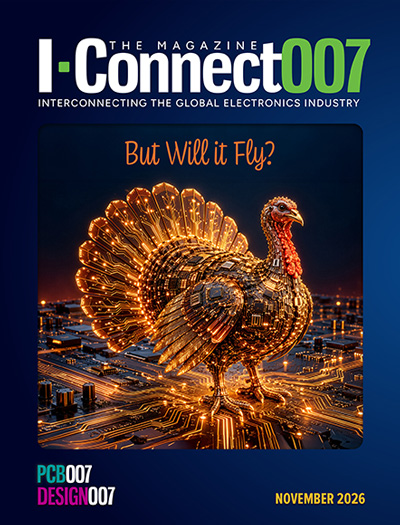
It’s November, and that means it’s turkey time for many of us. While the origins of Thanksgiving have become the subject of debate, the turkey’s place at the center of the table remains largely undisputed. Personally, I find turkey delicious. Yet somewhere along the way, this beloved bird became slang for a loser or a dud, presumably thanks to its reputation for being, well, not terribly bright.
At one company where I worked, we opened every all-company meeting with “oops” stories. These were opportunities to share something that had gone wrong and what we learned or changed as a result. My boss understood that acknowledging mistakes, rather than punishing them, created a culture of honesty, transparency, and continuous improvement. It also made for some memorable team-building moments.
So, this month, we had a little fun with that second definition by asking some of our most esteemed and knowledgeable contributors to share a “turkey” story from their careers. It’s a mistake or misstep that ultimately made them better at what they do. With recruiting, developing, and retaining skilled workers remaining a persistent industry challenge, the experiential wisdom shared by Don Ball, John Watson, Stephen Chavez, and Kelly Dack is both timely and inspirational. Sometimes our best lessons come from our biggest turkeys. (See the sidebar where I share one of my own biggest career “turkeys.”)
Of course, there is plenty more to explore in this issue.
On the PCB design side, Vern Solberg guides PCB designers toward the sophisticated interconnect technologies more commonly associated with semiconductor fabrication by exploring a strategy for polymer-glass interposer design. Martyn Gaudion previews a new book from Polar, while Barry Olney tackles micro-ohm power considerations for AI data center PCBs, where even the smallest electrical losses can have significant consequences.
Brian Buyea of Remtec challenges conventional thinking about PCB substrates, making the case for ceramic alternatives to traditional organic materials. His discussion encourages designers to reconsider what a PCB can be and where different materials may offer meaningful advantages.
Kelly Atay of ASC Sunstone digs into PCB quoting, a process often viewed only through the lens of price, and explains its sometimes-overlooked connection to delivering quality boards on time. In a special contribution, Kirsch Mackey provides a practical PCB layout signoff checklist to help designers avoid costly problems during power supply design reviews. Michael Gleason explains that a board’s design needs to be more than just “good enough.” Designers need to consider today’s demanding requirements for the application they are designing for.
Our flexible circuit coverage offers two particularly interesting perspectives. Chris Clark examines what happens when designers ignore IPC-2223, Sectional Design Standard for Flexible/Rigid Flexible Printed Boards. Unfortunately, it happens more often than you might think, and the consequences can be significant. Meanwhile, Anaya Vardya takes us into the fascinating world of plant sensors, where tiny flexible circuits may play a surprisingly important role in addressing one of humanity’s greatest challenges: feeding a growing global population. It is a compelling reminder that the technologies we work with every day can contribute to solutions far beyond the electronics industry itself.
On the manufacturing side, FSQuality engineers discuss through-hole interconnect technology, particularly the challenges of volume production, in the first of a two-part series. Happy Holden focuses on DIY spectroscopy, and Steve Williams examines the essential role metrology has always played in manufacturing and how AI is elevating its capabilities, improving reliability, and reducing risk in ways previously out of reach.
Mike Carano takes a thoughtful look at sustainability, arguing that environmental responsibility and good business practices need not be at odds. He challenges us to think more strategically about how we approach these priorities for the benefit of all stakeholders.
Jan Pedersen addresses flexibility in the laminate material supply chain, why having options matters, and the risks facing OEMs, designers, and fabricators who fail to plan accordingly. Harald Ahnet of MKS’ Atotech discusses surface finishes for advanced manufacturing, and don’t miss my interview with Schmoll America to discover why the company is experiencing unprecedented growth.
Learn more about implementing AI on the factory floor from Sean Patterson, and how to get your voice heard in Washington from PCBAA Chair Shane Whiteside.
There is certainly no shortage of important stories to tell, and we feel fortunate to discuss the extraordinary range of technologies, challenges, and opportunities facing our industry. In December, I-Connect007 Magazine will take a closer look at workforce development and share additional interviews and insights from October’s SEMICON West.
In the meantime, enjoy your Thanksgiving and remember: A turkey on the table is something to celebrate. A turkey in your career just might be, too.
Marcy’s Own Turkey Story
Some of you may be asking, “Marcy, what was one of your ‘turkeys?’” Of the myriad errors I have made throughout my professional life, one in particular stands out.
I was managing a busy inside sales/customer service group at a quick-turn, prototype shop for a large PCB company in Northern California. My department was often understaffed, which left me to check capacity, quote jobs, and enter many orders into the system myself.
I don’t know when I figured it out, but I distinctly remember walking into the production control manager’s office and realizing that I had misentered a $25,000 order that was almost finished on the factory floor. Because of the error, we would have to scrap those boards, eat the cost, start over, and still ship to the customer in 48 hours.
You can probably imagine the feeling: My stomach turned, and I went a little out of my body, wondering how this might affect my employment status. I called in the GM and told him what happened. Luckily, he was pretty nice about it. I kept the job, and we remade the boards.
What did I learn? It made me slow down, be more careful, and manage my future mistakes proactively once I became aware of them. It also informed my approach toward managing my employees and their inevitable errors—something I believe to be an important part of management to this day.
This column originally appeared in the November 2026 issue of I-Connect007 Magazine.


