













Learning With Leo

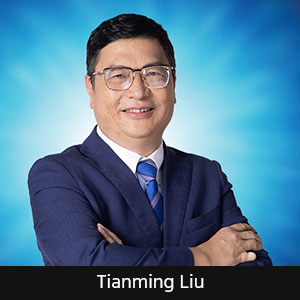
Column from: Leo Lambert

Leo Lambert is technical director at EPTAC. He oversees course content and provides expert consultation to customers, leveraging over 40 years of experience in the electronics manufacturing industry. Renowned for his specific expertise in soldering, metallurgy, and cleaning processes, Leo has co-authored leading industry publications such as the IPC-A-600 Training Program, The Acceptability of Printed Boards, and authored the seminal text “Soldering for Electronic Assemblies.” He has presented numerous papers, chaired major assembly committees, and participated in developing influential manufacturing standards while earning recognition such as induction into the Global Electronics Association’s Raymond E. Pritchard Hall of Fame and the President’s Award. Lambert’s contributions extend globally as a charter member of key IPC committees, technical advisor for manufacturing process development, and an active participant in United Nations environmental initiatives to reduce CFCs.


Connect:
April 01, 2026

Learning with Leo: Why Risk-based Auditing Is Reshaping Cable Assembly Quality

Effective product development requires early and active participation from all stakeholders. The design process must include input from supply chain, manufacturing engineering, purchasing, quality, and production. A design cannot be considered complete until it has been evaluated against the full manufacturing process, whether executed by an OEM or a subcontractor. Without this collaboration, designs are often released that are not manufacturable in real-world conditions.
March 11, 2026

Learning with Leo: Interpreting IPC Soldering Requirements and Acceptance Criteria

This month, I’m writing about IPC soldering standards and, specifically, structured linguistic conventions used to define mandatory requirements and conditional acceptance criteria for materials, processes, and workmanship. I selected this topic because of the high volume of questions requesting clarification and examples of bracketed criteria in IPC J-STD-001.
February 04, 2026

Learning With Leo: The Disappearing Manufacturing Engineer

Manufacturing engineers are the firefighters of the manufacturing process, but as the industry changes the roles of the manufacturing engineer and manufacturing facilities export their manufacturing offshore, what happens to the function, viability, and knowledge of the manufacturing engineer? Where design engineering was known as a profession, manufacturing engineering was known as a job, not a career path. Although I was disappointed about that at the time, now I look back and wonder about the truth of that statement.
January 07, 2026

Learning with Leo: The Cost of Training on Skills and Knowledge Development

The ability to manufacture electronic products requires specific skills and knowledge, which have traditionally been developed through on-the-job experience and training. These experiences and training programs are expensive to implement, yet they are necessary to meet customer demands and remain competitive in the marketplace. Today, manufacturers, including government contractors, rely on industrial specifications in the design, fabrication, and assembly of electronic products.
December 03, 2025

Learning With Leo: What Is the Cost of Quality Brought About by Training?

In electronics manufacturing, conversations about training often revolve around one narrow question: What does it cost? Training requires time, materials, instructor fees, and occasionally travel. Under tight budget constraints, it is understandable that organizations scrutinize these expenses. However, this perspective misses a far more important and financially meaningful point: What is the cost of quality brought about by training? Framed differently: What does it cost when training does not occur?
November 05, 2025

Learning With Leo: UHDI—The Next Leap in PCB Manufacturing

High density interconnect (HDI) technology has been a cornerstone of miniaturized electronics since Hewlett-Packard introduced the first chip-scale implementation in 1982. Over time, HDI processes became central to organic flip-chip packaging in the semiconductor industry. Today, the convergence of IC substrates and system-level PCBs has accelerated the adoption of UHDI.
Copyright © I-Connect007 | IPC Publishing Group Inc. All rights reserved. Log in