











 Beyond the Board: How a Diminished Supplier Base Affects Complex PCB Manufacturing Readiness in Defense
 Defense Speak Interpreted: Hypersonics Report Back After Six Years of Silence
 American Made Advocacy: American Microelectronics Power the Future of High Technology





Interview with Bob Cooke: IPC President’s Award Recipient
April 6, 2018 | Patty Goldman, I-Connect007Estimated reading time: 5 minutes
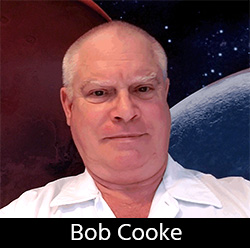
IPC first began presenting the President’s Award in 1966, and for many years it was the only award bestowed on IPC volunteers, to several individuals each year. In recent years, however, IPC has limited this award to one or two people each year. According to IPC:
The President’s Award is given to IPC members who have exhibited ongoing leadership in IPC and have made significant contributions of their time and talent to the association and the electronics interconnect industry. Individuals can receive this award only once.
This year’s recipient is Bob Cooke with NASA’s Johnson Space Center (JSC). After speaking with Bob, I understand why IPC chose to award him with this honor.
Patty Goldman: Bob, congratulations on this award. Please tell me a little bit about yourself.
Bob Cooke: I grew up in NASA. My dad started with NASA as a research physiologist studying the effects of high altitude flight environments on humans. At one point, my mom decided that I needed to be motivated to do something with my life, other than work on stage as a special effects technician or be a semi-professional photographer, and insisted that my dad take me to work. After he completed his flight experiment for the day, I got to play with the flight chamber. I’m probably the only person at NASA that has operated a flight chamber through explosive decompression multiple times at the age of 15! After that, I got interested in electronics, although I’m not sure mom was too happy about me dragging old TVs home from the dump, taking them apart, and then reassembling them.
The NASA design ethic of “design and assemble the hardware to survive the worstcase mission environment because someone’s life may depend on it” became a driving force behind my first job as a senior design engineer. I designed sensors for cryogenic (-195°C) and extremely high temperature (+350°C) applications for use in the petrochemical industry. I also designed sensor systems that could survive the electromagnetic pulse (EMP) and surge effects of lightning.
Eventually I went to NASA as one of the agency’s subject matter experts (SME) on electrical/electronics assembly. The work at NASA is both fun and challenging. I solve problems. Sometimes I’m a traffic cop enforcing the rules, sometimes I’m a design consultant helping a project, and sometimes I’m a referee between a project engineer and quality. I’ve worked with the astronauts on a couple of projects. They are real people with a very strange job, and they can have a very dry sense of humor at times.
Goldman: So, the President’s Award is all about your volunteering with IPC. How long have you been involved with committees?
Cooke: I seem to remember going to a couple of the conferences way back in the ‘80s, but I wasn’t really involved in the documents. I started actively working with the IPC documents in late 1995, when NASA JSC Engineering began investigating whether commercial design and workmanship standards could be used for the design and assembly of hardware for space flight applications. At one point I created a draft of a space addendum to J-STD-001B, which was (in retrospect) typical “Bob”—excessively detailed. Eventually, that draft was boiled down to what became the Space Addendum to J-STD-001C. For the past couple of years, I’ve been the general chair of the 7-30 group. I’m also the chair of 7-31K, which is the cable and harness task group, and 7-31M, which is the fiber optics task group. Those two task groups have created seven documents, so far.
Goldman: What were your thoughts when you got the call here about this award? What were your thoughts when you learned you were to receive IPC’s President’s Award?
Cooke: Well, the first call came into voice mail and it was, “IPC management wants to talk to you - click.” Okay, what did I do wrong? Am I about to lose all my chairman positions because someone’s decided that I’m not playing nice (I can be rather grumpy at times) or something like that [laughs]? I was surprised. It’s very humbling to have this type of recognition that you not only are doing good and you’re helping, but that you’re recognized for it. Getting this award… I suppose I’ll have to show up with a suit and tie, and I don’t wear suits and ties. It’s humbling to be recognized this way.
They said, “We want to nominate you for the President’s Award, so you can talk about what it’s like to come to some of these big meetings like the IPC-A-610 or the J-STD-001.” Well, if you’re a general chair, you’re trying to help the committee chairs control the chaos, and it’s kind of like herding cats. You’re in a room with 150 people, that all have different technical needs, and don’t always agree on the need for a requirement, much less the wording. Having a heavy hand won’t work, and sometimes the best thing to do is sit back and just enjoy the theater.
For folks who are considering attending the Standards Development committee meetings, I can advise you that (based on personal experience) it can be a bit intimidating when you first walk in. The major meetings on Saturday and Sunday (IPC-A-610 and J-STD-001) are kind of special, and the discussions can be rather spirited at times. But, don’t let that stop you from participating. You’ll soon discover that even though the attendees come from differing market sectors, and even other parts of the world, we all tend to have the same technical issues and we work together to help each other. All the committees have a common goal—to create documents that the industry can use. Plus, we always need more participants to broaden the IPC’s body of technical knowledge.
To read the full interview, which appeared in I-Connect007’s Show & Tell Magazine, click here.
Share on:


Testimonial
"We’re proud to call I-Connect007 a trusted partner. Their innovative approach and industry insight made our podcast collaboration a success by connecting us with the right audience and delivering real results."
Julia McCaffrey - NCAB GroupSuggested Items
IPC CFX Demo Line Debuts in Korea at EMK 2026
04/10/2026 | Global Electronics AssociationAt Electronics Manufacturing Korea (EMK) x NEPCON Korea 2026, the Global Electronics Association, in collaboration with 13 companies, showcased the IPC CFX Demo Line (Connected Factory Exchange demonstration line), marking its debut in Korea.
IPC-7712 Development Advances at APEX EXPO: Committee Aligns on Scope, Structure, and Industry Priorities
04/10/2026 | Circuit Technology Center, Inc.Significant progress was made in developing the proposed standard IPC-7712, Component Safe Removal for Failure Analysis and Reclamation, during in-person meetings held at APEX EXPO, March 16 to 18.
2026 IPC Masters Competition China Wraps Up With Record Participation
04/07/2026 | Blair Yan, Global Electronics Association East AsiaThe three-day 2026 IPC Masters Competition concluded March 27 at productronica China in Shanghai, bringing together the largest and most highly skilled group of electronics assembly professionals in the event’s 16-year history. With 623 participants from 77 companies across China—up 30% from last year—the competition reflected a growing focus on the practical application of electronics manufacturing standards.
IPC Masters Competition China 2026 Unveils Winners, Empowering Advanced Talent Development in Electronics Manufacturing
04/01/2026 | Global Electronics AssociationOn March 25–27, the IPC Masters Competition China was held in Pudong, Shanghai. This year’s competition brought together 623 leading professionals in the electronics industry from 21 provinces and municipalities.
Global Electronics Association, MIMOS Berhad Sign MoU to Advance Malaysia’s Electronics and Semiconductor Ecosystem
03/31/2026 | Global Electronics AssociationThe Global Electronics Association and MIMOS Berhad recently signed a Memorandum of Understanding (MoU) to collaborate in strengthening Malaysia’s electronics and semiconductor ecosystem, with a focus on advanced electronic packaging (AEP), industry alignment, and global best practices.